

A new collaboration aims to map potential heat network zones in England.
- Arup and Ordnance Survey have partnered for this pioneering project.
- Their work supports the Department for Energy Security and Net Zero.
- Heat networks offer a cost-effective decarbonisation method.
- The initiative is set to drive job creation and economic growth.
Arup and Ordnance Survey (OS) have entered into a strategic partnership to identify and develop heat network zones across England. This partnership combines Arup’s technical and consulting expertise with OS’s advanced mapping services, aiming to further the Department for Energy Security and Net Zero’s (DESNZ) initiatives under the Heat Network Zoning Consultancy Framework.
Heat networks are considered more economical and efficient in reducing carbon emissions than individual air source heat pumps for buildings. They leverage local waste heat sources, enabling low-carbon energy usage without the dependency on imported fuels. Additionally, they offer approximately 40% savings in costs compared to building-specific heat pumps.
Together, Arup and OS plan to deliver “trusted and authoritative data, digital, and energy modelling services” to enhance assurance processes associated with zoning models. This collaboration aims to build upon the Framework’s significant contributions to various DESNZ pilot projects, including the Heat Network Zoning Transition and City Decarbonisation Delivery programmes.
Zoning plays a vital role in planning heat network delivery. It facilitates the designation of geographic zones, allowing local authorities and developers to swiftly identify sites for new large-scale strategic heat networks. Government analysis suggests that heat networks, currently supplying 3% of the UK’s heat, could potentially provide as much as 20% by 2050.
Furthermore, the upcoming Heat Network Zone (HNZ) Policy is expected to streamline the heat network development process. This policy aims to attract multi-billion-pound investments necessary for scaling up heat networks to meet the nation’s net-zero targets. It marks the transition from policy planning to widespread implementation, supporting the growth of new network projects.
Stephen Cook, Arup’s urban energy director, emphasised the rapid growth of low-carbon heat networks across England as a result of zoning. Since 2021, Arup, alongside other partners, has collaborated closely with DESNZ to explore and develop practical options for heat network zoning.
John Kimmance, chief customer officer at OS, highlighted the value of OS’s geospatial data in aiding energy and utility sectors. He expressed pride in OS’s role within this consultancy framework, supporting strategic sustainable energy goals tied to the UK’s net zero ambitions.
In October 2024, six cities, including Leeds and Plymouth, were selected to share £5.8 million in funding for heat network development. Major construction efforts are expected to begin in 2026, potentially generating thousands of jobs in fields like engineering and manufacturing.
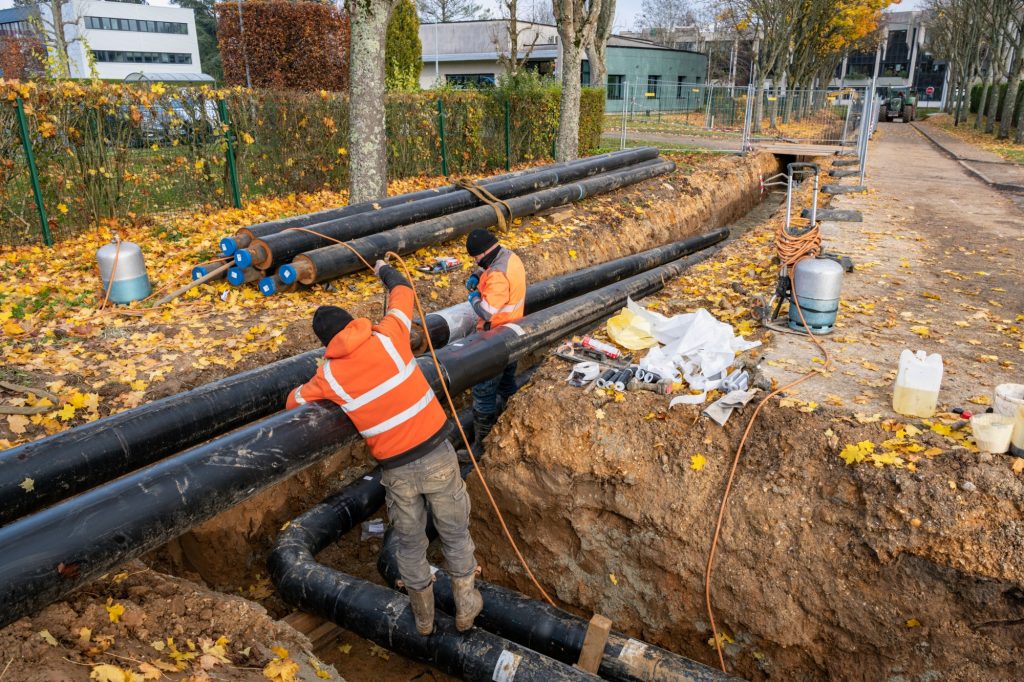
In a related move, the London area of South Westminster received £1 billion in funding for a specific heat network project. This network will distribute low-carbon heat using underground insulated pipes, potentially sourcing heat from the London Underground and the Thames.
The partnership between Arup and Ordnance Survey heralds a promising advancement in England’s sustainable energy efforts.

