
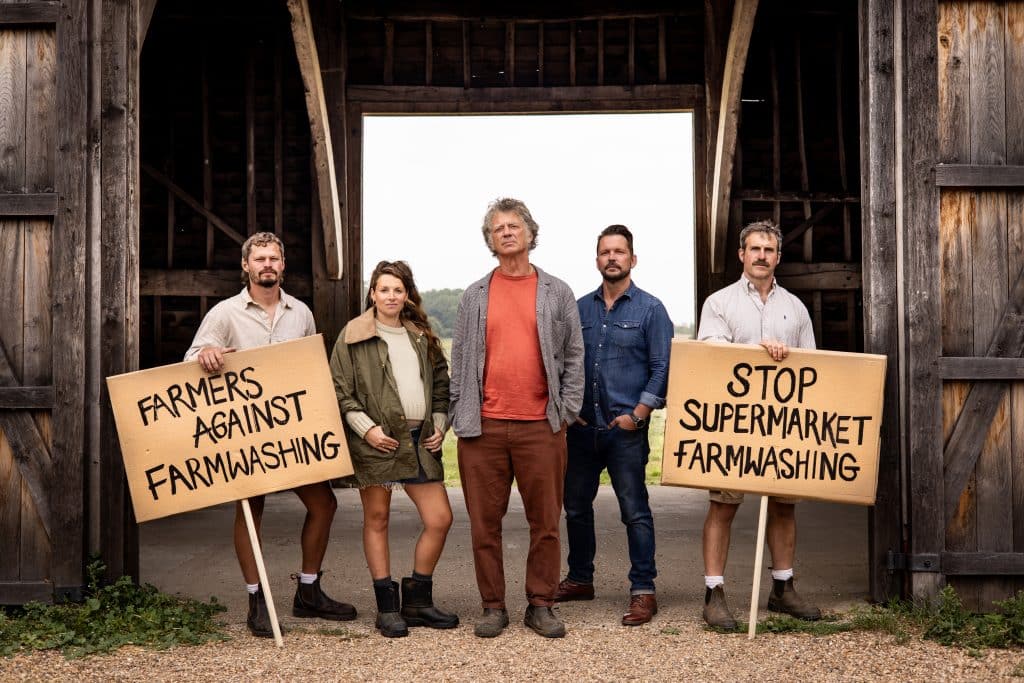

The ‘Farmers Against Farmwashing’ campaign shows strong public concern over deceptive supermarket tactics.
- Over 11,000 letters were sent to MPs urging tighter regulations to combat ‘farmwashing’.
- Supermarkets are accused of using misleading farm brands and British flags on products.
- The campaign calls for better protection for local farmers against corporate giants.
- Prominent public support highlights the urgent need for change in the agriculture sector.
The ‘Farmers Against Farmwashing’ campaign reflects significant public discontent with current supermarket practices that are perceived as misleading. Over 11,000 individuals have actively participated by sending letters to their MPs, indicating their apprehension towards what they term as ‘farmwashing’. This term refers to the use of fictional farm brands and British insignias to imply locally sourced products, which in reality may originate from large-scale industrial farms abroad.
The movement has brought attention to how these supermarket practices are adversely affecting Britain’s family farms. With an open letter directed at the leaders of major supermarkets such as Tesco, Sainsbury’s, Asda, Morrisons, Aldi, and Lidl, the campaign seeks to enforce more stringent regulations to halt unfair buying strategies that place smaller farmers at a disadvantage.
The letter advocates for an enhancement of the Groceries Code Adjudicator’s powers to ensure fair trading and to fill existing regulatory voids. This is pivotal in providing farmers with a safer platform to voice grievances over inequitable practices without fear of retribution. The campaign’s future plans include engaging with the Secretary of State for Business and Trade, Jonathan Reynolds, to discuss these regulations.
Research conducted by Riverford sheds light on the precarious situation faced by farmers, with 61% expressing concerns about potentially relinquishing their farms within a year and a half. Despite the major grocers’ assurances of supporting British agriculture, only 25% of farmers trust these declarations to be genuine. This discrepancy between perception and reality further fuels the campaign’s momentum.
Guy Singh-Watson, founder of Riverford Organic, remarked, ‘The public’s response to our Farmers Against Farmwashing campaign demonstrates their earnest interest in their food sources and supporting genuine British farmers. The backing from diverse stakeholders underscores the shared desire for a transparent and equitable food system.’ His statement encapsulates the collective call for a system where British farms not only endure but thrive.
The campaign underscores a public demand for transparency and fairness in supermarket practices, pressing for a system that supports genuine British farming.

