
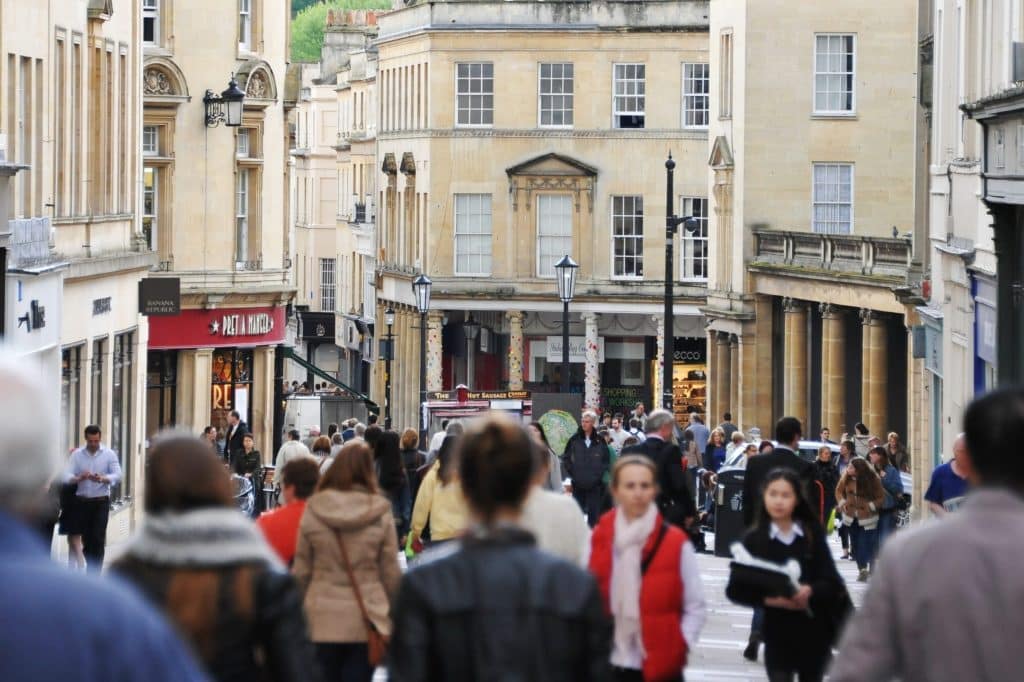

In October, Britain’s retail sector saw a slight decrease in shopper numbers.
- Yearly footfall decreased by 1.1% this October, following a rise of 3.3% last month, based on BRC and Sensormatic data.
- High street and shopping centre visitor numbers dropped, while retail parks observed growth.
- Changes in the half-term schedule contributed to the downturn, stated BRC’s CEO.
- Retail parks have maintained their attraction for shoppers despite overall declining trends since the pandemic.
In October, the British Retail Consortium (BRC) and Sensormatic’s recent data revealed a modest decline in UK footfall, with an annual decrease of 1.1%. This contrasts with September’s encouraging 3.3% year-on-year increase. These insights, encompassing the four weeks from 29 September to 26 October, highlight a fluctuating trend in shopper activity across the nation’s retail sectors.
High street and shopping centre footfall faced notable reductions. High street figures fell by 3.6%, deviating from a 0.9% rise in September. Similarly, shopping centres experienced a 1.6% year-on-year decline, a shift from the previous month’s 2.3% increase. This shift reflects changes in consumer behaviour affected by various factors, including the timing of the half-term break, as noted by Helen Dickinson, CEO of the BRC.
Conversely, retail parks showed resilience, recording a 4.8% increase in footfall compared to the previous year, although this was still below the 7.3% rise in September. Retail parks have consistently attracted shoppers for the past three months. This stable growth signifies a shift in consumer preference, possibly due to the convenience and accessibility offered by retail parks.
Dickinson further observed that northern towns such as Leeds and Liverpool performed well, indicating regional variations in footfall trends. The pandemic’s lingering impact on shopping habits is evident, with a general decline in overall footfall since its onset. However, regions demonstrating growth suggest a potential for recovery over time.
The BRC’s footfall data, encompassing a variety of retail environments – outlets, travel hubs, and standalone locations like garden centres – provides comprehensive insight into the retail landscape. Dickinson emphasised the importance of thriving high streets and town centres for local economies and the broader social fabric.
Overall, the data indicates mixed trends in UK retail footfall, with retail parks leading in growth amidst broader declines.

