
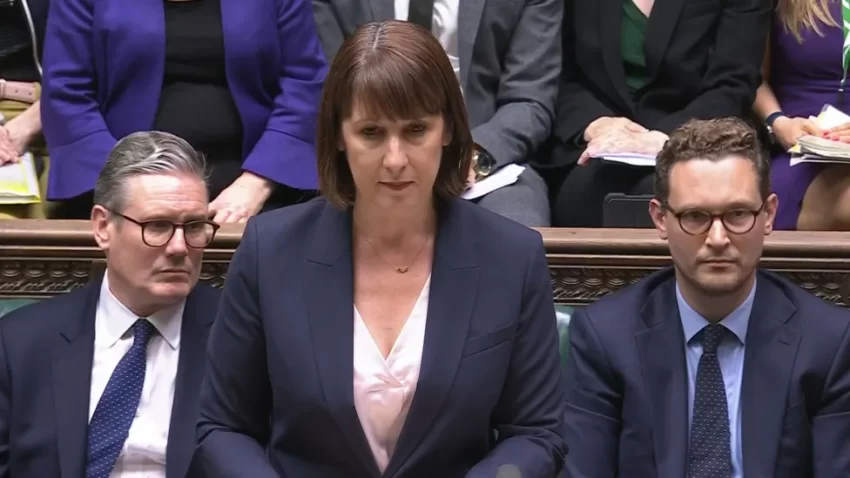

In light of the Office for Budget Responsibility’s (OBR) projections, the UK’s economic future requires urgent attention.
Rising public spending and demographic challenges highlight the critical need for policy reforms.
Rising Public Spending and Its Implications
The Office for Budget Responsibility (OBR) has issued a stark warning regarding the trajectory of the UK’s public finances. If no significant policy changes are made, public spending is anticipated to increase dramatically, accounting for over 60% of the Gross Domestic Product (GDP) by 2073. This sharp rise from the current 45% highlights the growing pressure on the nation’s fiscal framework.
Projected Debt Scenarios
Under the OBR’s baseline scenario, UK public debt could escalate to 274% of GDP by the late 2030s, a level unseen since wartime. In the face of potential geopolitical upheavals, projections have debt reaching as high as 300%. This trajectory presents a grave challenge to fiscal stability and requires urgent policy interventions.
David Miles, an OBR committee member, has emphasized the unsustainability of the current borrowing trend. “You can’t just expect the rest of the world to keep buying up UK debt that rises at an ever-accelerating rate,” he noted, urging immediate action to resolve these fiscal concerns.
The Transition to a Green Economy
Transitioning towards a greener economy introduces significant fiscal challenges. As electric vehicles become more prevalent, the decline in fuel duty revenues—a substantial source of government income—could exacerbate national debt.
Fuel duties currently represent about 1% of GDP, but are projected to drop to a mere 0.1%, adding significantly to the debt burden. This potential gap in revenue illustrates the urgent need for new motoring levies to mitigate further fiscal risks.
While proposals for a comprehensive carbon tax exist, they alone are insufficient to fully address the financial shortfall anticipated in the coming decades.
The Critical Role of Productivity Growth
The OBR underscores productivity growth as a pivotal factor in managing the nation’s debt. A mere 0.1% boost in productivity could reduce the debt-to-GDP ratio by up to 25 percentage points over the next few decades, highlighting the importance of economic efficiency.
Despite this, the UK’s productivity growth remains sluggish, languishing at an average of 0.5% per year over the last fifteen years. This is a stark contrast to the pre-2008 figures, which exceeded 2%.
Addressing this issue is paramount. Effective policies aimed at enhancing productivity could play a key role in averting the looming fiscal crisis projected by current trends.
The Influence of Demographic Shifts
Demographic changes further complicate the UK’s fiscal future. The OBR notes that high net migration could temporarily bolster the economy, increasing the UK population to 82 million by 2074. However, as migrants age, these benefits are expected to dwindle.
This demographic shift underscores a pressing need for sustainable long-term policies. As the population structure evolves, the fiscal demands of an ageing population will considerably strain public finances.
Policy Imperatives for Future Governments
Forthcoming governments face a taxing array of choices to stabilise public finances while promoting economic growth. This includes enhancing tax revenue, curtailing public expenditure, and prioritising productivity advancements.
The OBR’s findings stress the delicate balancing act required to maintain fiscal health without stifling economic prosperity, particularly as demands continue to mount from both environmental and demographic fronts.
Conclusion
The OBR’s report paints a sobering picture of the UK’s fiscal trajectory, urging urgent reforms. Without decisive action, public debt could spiral uncontrollably, undermining economic stability and future prosperity.
The UK’s fiscal future hinges on timely and decisive policy interventions.
Sustained economic growth and fiscal stability demand a commitment to reform.

