
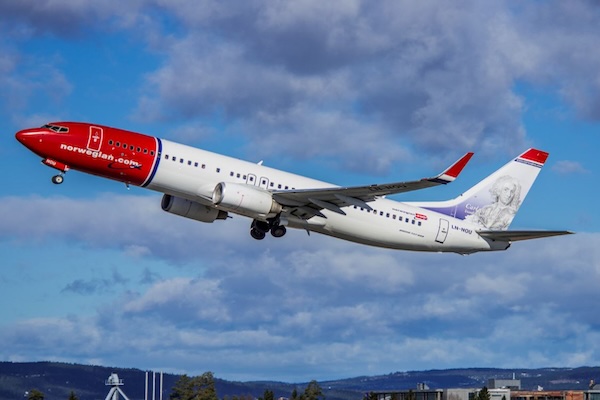

Norwegian Air Group has made significant strides in reducing its first-quarter financial losses.
Despite seasonal challenges, the airline has effectively managed to cut its losses, thanks to strategic acquisitions and operational adjustments.
Acquisition of Wideroe Impacts Fleet Size
In January, Norwegian Air Group completed its acquisition of regional carrier Wideroe, bolstering its fleet with an additional 49 aircraft. This strategic move has expanded Norwegian’s operational capabilities and potential market reach. The acquisition was crucial in enhancing the group’s capacity, offering promising synergies in operational and commercial efficiencies.
The fleet expansion, as a direct result of the acquisition, highlights Norwegian Air’s commitment to growth. Although the addition has increased operational complexity, the potential benefits in terms of market penetration and improved service offerings far outweigh the challenges.
Operational Performance and External Challenges
The first quarter saw Norwegian Air’s operating performance impacted significantly by currency fluctuations. With a weaker Norwegian krone, the airline’s profitability was adversely affected, leading to a net loss of over £9 million.
Weather conditions also posed logistical challenges, impacting both Norwegian Air and Wideroe. Despite these hurdles, the company managed to improve its liquidity over the quarter, partly due to cash settlements from the Wideroe acquisition.
Passenger and Capacity Metrics
Norwegian Air Group reported carrying 4.8 million passengers in the first quarter. Norwegian Air accounted for four million passengers, while the newly acquired Wideroe carried 800,000 passengers in the same period.
The capacity was deliberately reduced by 13% to align with the seasonal drop in demand. This strategic adjustment highlights Norwegian Air’s flexible operational approach to efficiently manage resources.
Growth Projections for the Summer
The airline anticipates a 12% increase in fleet capacity during the summer months compared to the previous year. This growth is expected to be driven by new routes and increased frequencies to popular destinations across Europe.
Geir Karlsen, the Chief Executive, expressed optimism about the upcoming season, emphasising new customer offerings and expanded travel options. He stated, “We are looking forward to a busy summer flying passengers to attractive destinations all over Europe.”
Exploring Synergies with Wideroe
Norwegian Air sees the Wideroe acquisition as an opportunity to enhance customer travel experiences, particularly for journeys from regional Norway to international destinations. The collaboration aims to establish more seamless travel options and significant commercial synergies.
Karlsen highlighted the potential for improved efficiencies, both commercially and operationally, as a key benefit of the acquisition. This partnership is poised to offer enhanced value propositions for both existing and new customers.
Financial Strategies and Future Directions
The reduction in first-quarter losses indicates a successful implementation of targeted strategies on both revenue augmentation and cost management. This financial performance improvement is crucial for the group’s future sustainability and growth trajectory.
With a focus on operational efficiency and market expansion, Norwegian Air is strategically positioned to leverage its newly acquired assets and optimise resource allocation for improved profitability.
Conclusion
Norwegian Air Group’s strategic initiatives have effectively reduced first-quarter losses, setting a positive precedent for future financial performance. With continued focus on operational optimisation and market expansion, the airline is well-positioned for sustained growth.
Norwegian Air Group’s strategic initiatives have effectively reduced first-quarter losses, setting a positive precedent for future financial performance.
With continued focus on operational optimisation and market expansion, the airline is well-positioned for sustained growth.

