
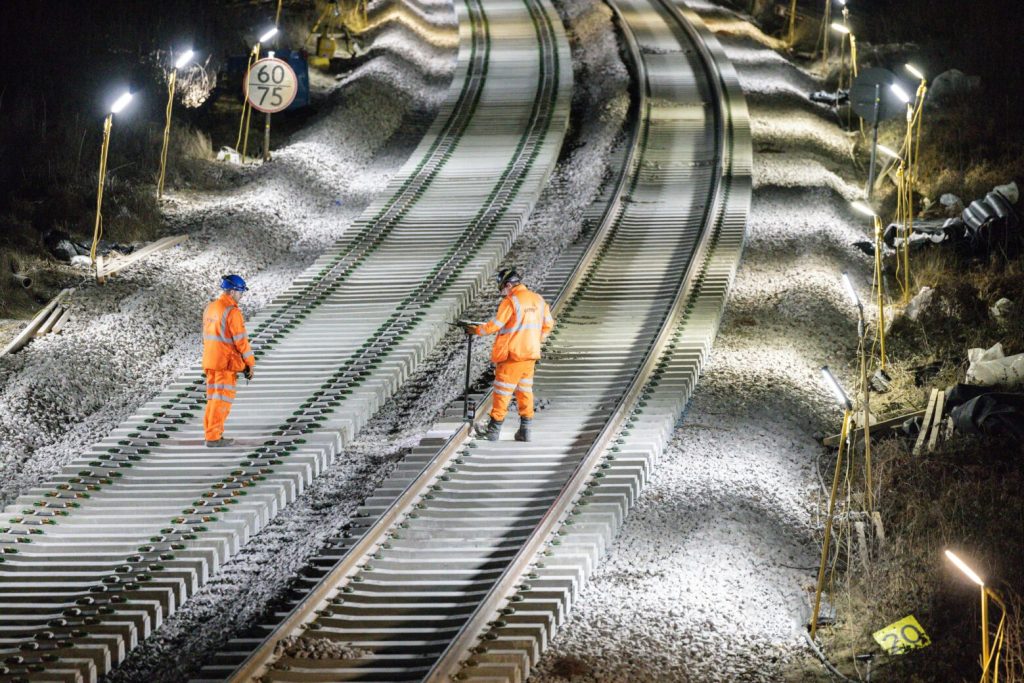

Network Rail is launching a substantial framework valued at £45M for track bed investigations in the UK.
- The framework aims to conduct in-depth investigations including standard and deep track bed analyses.
- A single supplier will be chosen for each of the two lots, covering England, Wales, and Scotland.
- Pre-qualification is underway, with interested parties needing to meet tight timelines for submissions.
- The framework’s initial term is five years, with potential extensions adding up to two more years.
Network Rail has initiated a significant opportunity for suppliers, opening a £45 million framework dedicated to track bed investigations across its extensive network in England, Wales, and Scotland. This framework is specifically tailored to the Engineering Services Design Delivery function within Network Rail and encompasses various essential investigative tasks critical for the design and specification of future track renewals.
The framework is structured into two primary sections: Lot 1 addresses track bed investigations in England and Wales, with a substantial budget of £40.5 million, while Lot 2 focuses on similar works in Scotland, allocated £4.5 million. Notably, Network Rail intends to appoint a sole supplier for each lot, although the same firm could potentially be selected for both, ensuring consistency and expertise in execution across regions.
In-depth investigations will cover both standard and deep track bed analyses. The standard investigations will involve assessing the condition of the current track bed and its underlying layers, evaluating the lineside drainage systems, and utilising techniques such as Dynamic Cone Penetration (DCP) and trial trenches to understand drainage pathways and the lateral variation of materials. Additionally, the categorisation of spent ballast for disposal and measuring structural constraints to support compliance with the Construction (Design and Management) Regulations 2015 are crucial components.
Deep track bed investigations will require broader sampling techniques, including Standard Penetration Tests (SPT) and the use of heavy probing techniques for track bed stabilisation sites. Complementary activities will involve stiffness measurement surveys, drainage and topographical surveys, concrete coring, and rail sleeper deflection monitoring, employing advanced tools such as geophones to ensure precision and reliability in findings.
Interested suppliers are urged to act swiftly, with initial responses due by 26 July for the contract notice, followed by pre-qualification questionnaire submissions due by 6 September. Network Rail plans to send out tender invitations by late November, with a closing date of 23 January 2025. Decision-making is scheduled for 12 June 2025, allowing the contract to commence on 17 July 2025, marking the beginning of a five-year collaboration, potentially extending to seven years.
The launch of this framework ushers in a strategic advancement in enhancing the precision and efficacy of rail infrastructure projects across the UK.

