

At the recent Bridges conference, Network Rail’s Andy Cross called for the industry to reassess its approach to bridge design and maintenance.
- Cross emphasised the need to shift away from outdated 1980s designs towards more sustainable solutions.
- The Flow Bridge project in Shropshire exemplifies innovative, low-carbon design despite challenges.
- Cross highlighted the importance of integrating weather data into bridge resilience strategies.
- Concerns were raised about the high costs and community impact of current bridge building practices.
During the Bridges conference on 18 July, Network Rail’s engineering expert, Andy Cross, presented a compelling argument for the industry to reevaluate the current standards in bridge design, construction, and maintenance. His remarks were focused on advancing the resilience and sustainability of the rail network by revisiting how whole life carbon management is approached.
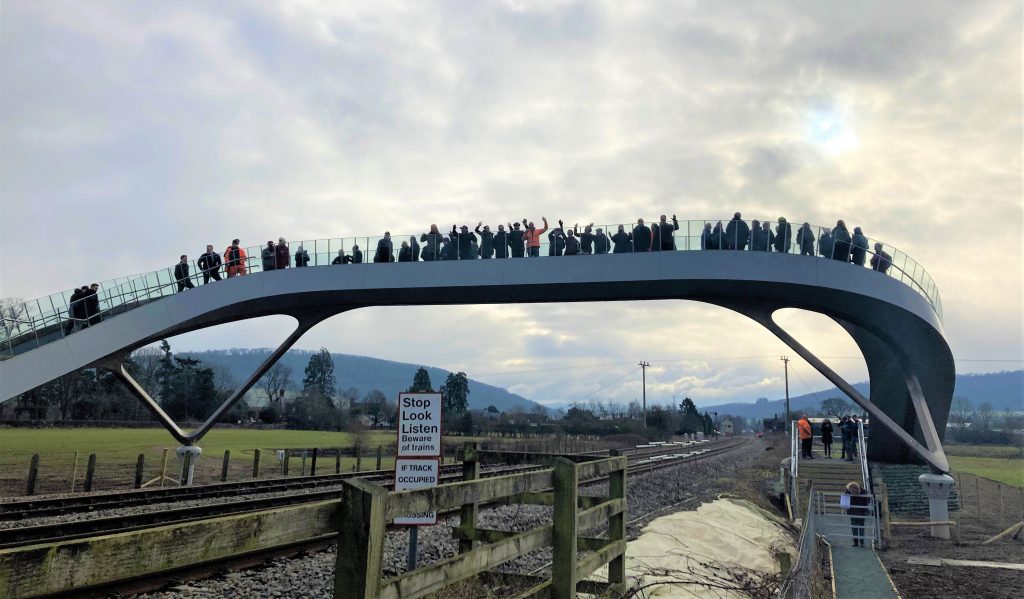
Andy Cross, who is also the programme manager for Network Rail’s Flow Bridge project, illustrated this need for change with the project’s example. The Flow Bridge, constructed in Shropshire, replaces a dangerous level crossing and utilises fibre reinforced polymer to achieve a lower cost and lighter weight design. According to Cross, “This was my attempt to say, ‘we can move forward as we will out there in the bridge world’.”
Cross detailed how current practices often revert to standard designs from the 1980s, which he finds particularly concerning. He advocated for a shift towards using technology with sustainable materials like bio resins and alternative fibres, emphasizing the lightweight nature of these components in reducing risks and costs.
Additionally, Cross pointed out that the absence of a clear programme for where and when bridges need to be built hampers progress. He urged for a rethinking of bridge objectives, highlighting that sporadic construction practices are not meeting societal or environmental needs.
The discussion further delved into the challenges of designing fully accessible bridges. Cross exemplified the new footbridge at East Linton station in Scotland, constructed with significant effort and impact, which he viewed as excessive for its function. He argued that the industry should innovate towards more efficient, lighter, and sustainable bridge designs.
Cross aimed to transform not only how bridges are built but also how they are maintained. By establishing maintenance plans that precede examinations, minor defects can be addressed upfront, thus allowing a comprehensive assessment of the bridge’s resilience without interruptions due to overgrown vegetation.
Looking ahead, Cross advocated for the incorporation of weather data into bridge management strategies. He illustrated the increasing prominence of heat expansion as a significant issue, necessitating new approaches to handling and anticipating such impacts on both movable and static bridges.
Cross’s insights call for a forward-thinking approach in bridge design and management to enhance sustainability and resilience.

