
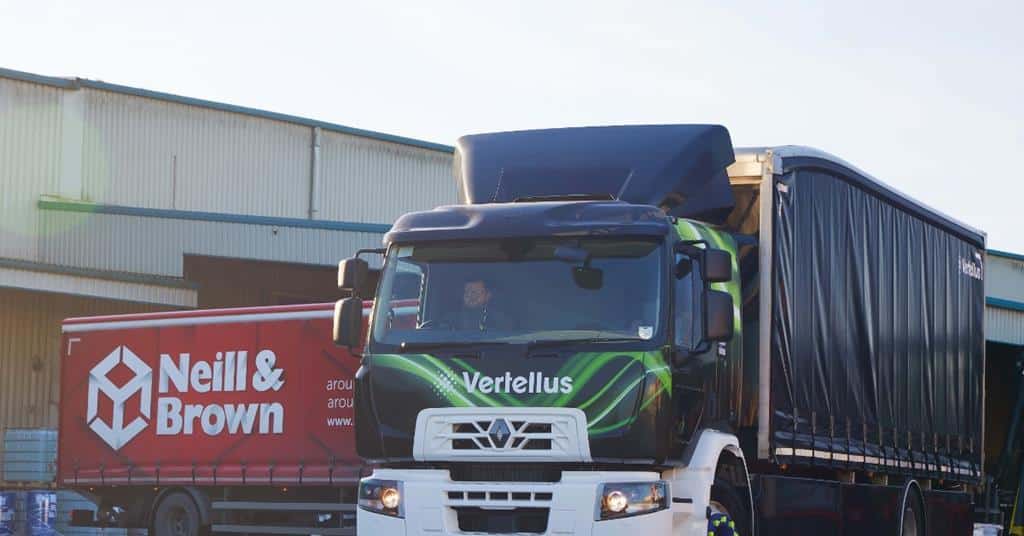

Neill & Brown Global Logistics is pioneering local sustainability by trialling an electric truck, exemplifying their commitment to reducing their carbon footprint.
- Hessle-based Neill & Brown is piloting an 18-tonne electric truck for deliveries across Hull with the support of Vertellus.
- The three-month trial includes the temporary installation of a DC charger, facilitating the evaluation of real-world electric vehicle performance.
- Fleet manager Michael Organ reports smooth and quiet operations, marking a shift from traditional diesel rigs.
- CEO Peter Brown highlights the importance of sustainable practices to meet customer demands for a greener supply chain.
Neill & Brown Global Logistics, based in East Yorkshire, has embarked on an ambitious trial to integrate sustainable practices into its logistics operations. The company is testing an 18-tonne electric truck provided by contract hire firm, Vertellus, specifically for deliveries within Hull postcodes. This initiative underscores Neill & Brown’s proactive approach to environmental responsibility, as it strives to achieve significant reductions in its carbon footprint.
As part of this progressive trial, a DC charger has been installed at Neill & Brown’s operating centre to support the electric truck during its three-month evaluation period. This strategic move allows the company to assess the vehicle’s capability in real-world conditions without the extensive commitment of outright purchase, thus enabling informed decision-making for potential future fleet transformations.
Michael Organ, the fleet manager, remarks on the operational efficiency of the electric truck, stating, “The electric truck is doing the work we would normally do with one of our 18-tonne rigids; it’s out by 7am and back on charge by 3pm, delivering two or three palletised loads a day.” This smooth functionality, coupled with its quiet operation, provides an insight into the potential benefits of transitioning to electric vehicles in the logistics sector.
Furthermore, CEO Peter Brown articulates the strategic importance of this trial in meeting evolving customer expectations and regulatory demands. He emphasizes that reducing their environmental impact is essential not only for the business but also for their clientele, who increasingly require evidence of decarbonisation initiatives within their supply chain operations. The Vertellus EV Discovery Programme thus represents an opportunity for Neill & Brown to explore electric vehicles without risk, aligning with broader commercial objectives.
The successful trial could position Neill & Brown as a leader in sustainable logistics practices.

