
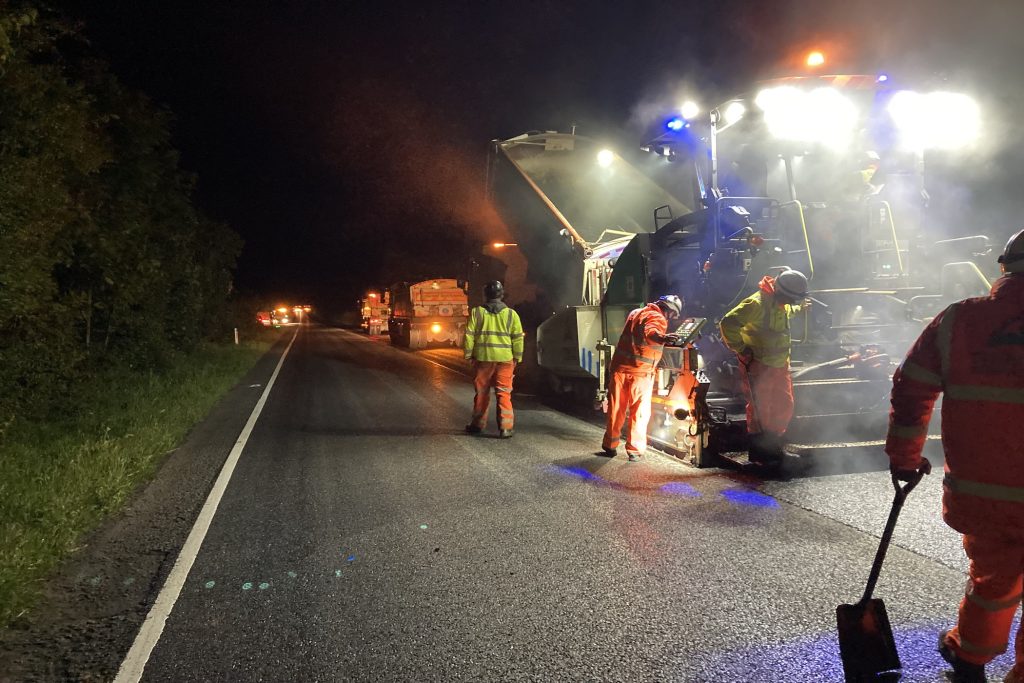

National Highways is advancing its innovative trials of biogenic binders in asphalt, with significant expansions on the A2 and A34 roads.
- The trials aim to assess the potential of bio-binders to lock in CO2, enhancing sustainability in road construction.
- Key aspects include testing warm mix asphalt and integrating reclaimed asphalt to improve durability and reduce carbon footprints.
- The trials, following successful tests on the A30, involve a collaboration with Heidelberg Materials and other key stakeholders.
- These initiatives align with the UK’s net-zero carbon goals, aiming to minimise environmental impact while maintaining road quality.
National Highways has embarked on an extended series of trials of biogenic binders on the A2 and A34, expanding beyond last year’s successful tests on the A30 and laboratory experiments at the University of Nottingham. By incorporating warm mix asphalt and reclaimed asphalt, these trials are set to evaluate the efficacy of different asphalt configurations.
Biogenic binders are distinguished by their ability to absorb and lock CO2, preventing its release even when asphalt is recycled. Produced by Heidelberg Materials, the CarbonLock asphalt used in these trials is designed as both hot and warm mix, with the inclusion of up to 30% reclaimed asphalt.
The sustainability of the biogenic binder is central to these trials, aiming to increase the asphalt’s durability and reduce maintenance frequency. On the A2, four distinct sections ranging from 700m to 1000m were laid to scrutinise different configurations within the National Highways’ A2 Kingston scheme. These included a control section with conventional warm mix asphalt, and various CarbonLock polymer mixed bitumen asphalts.
The A34 trials, part of the A34 South Isley to Beedon Scheme, mirrored the A2 with an additional fifth section incorporating 30% reclaimed asphalt. These trial sections are under constant monitoring to assess performance and total carbon reduction, aligning with the sustainability goals.
Heidelberg Materials UK’s Adrian Hadley highlights the collaborative effort to diminish the carbon footprint of road maintenance projects. Umesh Parajuli from National Highways underscores the significance of incorporating bio-binders and low carbon innovations to realise their 2040 net-zero carbon objective for construction activities.
Michael Wright of AtkinsRéalis emphasises the industry’s responsibilities in exploring innovative solutions that support the nation’s environmental commitments, with these trials being a testament to successful collaboration across sectors.
These trials signify important progress towards sustainable road construction solutions.

