
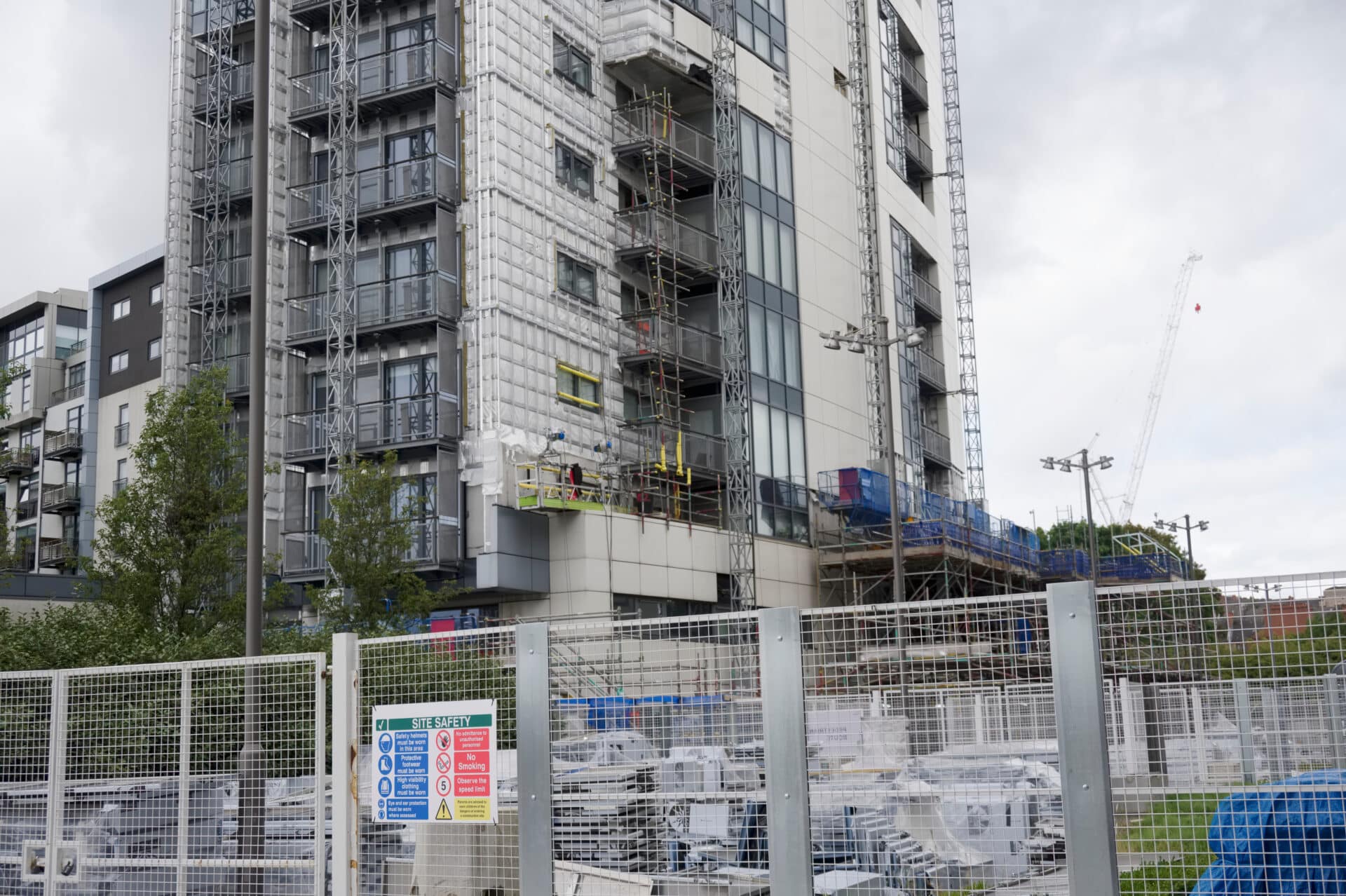

The National Audit Office (NAO) is pushing the Government to set a target date to address dangerous cladding.
- In its first report on the Government’s remediation work, NAO highlights ongoing delays and gaps.
- Changing approaches to building safety have led to varied engagement with remediation initiatives.
- Over half of medium-rise buildings still need cladding work, with only a small percentage completed.
- Financial and emotional distress persist for residents amid ongoing uncertainty about building safety.
The National Audit Office (NAO) has issued a call to action for the Government, urging it to set a definitive timeline for the remediation of dangerous cladding on buildings. This recommendation comes within the context of NAO’s inaugural report examining the Government’s efforts to streamline its building remediation programmes, which began unifying under one portfolio in 2023.
This initiative follows the findings of the Grenfell Inquiry, which delved into the tragic 2017 Grenfell Tower fire that claimed 72 lives. The inquiry sought to uncover the fire’s root causes, bringing to light significant systemic failures in building safety.
Currently, the Ministry of Housing, Communities and Local Government (MHCLG) is tasked with identifying and addressing unsafe buildings. The scope of their work has shifted as more is understood about the cladding issues and their impact. The NAO notes that substantial progress has been made in raising the number of buildings under scrutiny since its 2020 investigation.
As it stands, the Government estimates the necessity to remediate approximately 9,000 to 12,000 buildings, each exceeding 11 metres in height. Despite this, only 4,771 structures have been fully brought into the remediation portfolio, leaving a vast number yet to be thoroughly assessed. This delay in identification leaves residents in limbo, facing significant emotional and financial strains.
Building owners are responsible for initiating fixes, yet participation in governmental grant programmes is voluntary. This lack of universal engagement is compounded by problems such as incomplete building records and discrepancies between planned and actual building materials, alongside difficulties in tracing ownership.
The NAO’s findings reflect that seven years post-Grenfell, a significant 98% of estimated high-rise buildings deemed dangerous have been accounted for. Still, mandatory registration only covers these high rises, leaving medium-rise buildings, which range from 11 to 18 metres, outside obligatory scrutiny. This gap in regulation results in reluctance among some owners to engage, fearing the discovery of issues not covered by governmental funding.
Remediation has only been completed in a small fraction—12 to 16%—of the total buildings identified by the Government as needing work. Of the medium-rise buildings recorded, work has not yet begun on more than half, with partial progress on 20% and completion on roughly a third. This incomplete status exacerbates the uncertainty felt by residents, exacerbating financial and emotional pressures.
Financially, the remediation effort is projected to cost £16.6 billion, with the Government committing approximately £9.1 billion. The remaining sum is anticipated to come from developers and owners. The MHCLG is considering innovative funding strategies, including a new Building Safety Levy projected to recoup £3.4 billion. However, this levy will not be implemented until at least autumn 2025.
Gareth Davies, the NAO’s head, highlighted the necessity for a more effective deployment of funds and resources, underlining the importance of holding developers accountable while taking care to safeguard public finances. Yet this approach has not been without challenges, particularly regarding timeline extension and dispute over financial responsibilities.
In conclusion, the ongoing efforts to tackle the widespread issue of dangerous cladding on buildings reflect broader governmental priorities, including net zero ambitions and housing objectives. It remains a complex challenge with a pressing necessity for clear timelines and accountability.
The Government faces a pressing need to establish firm deadlines and ensure accountability in cladding remediation efforts.

