
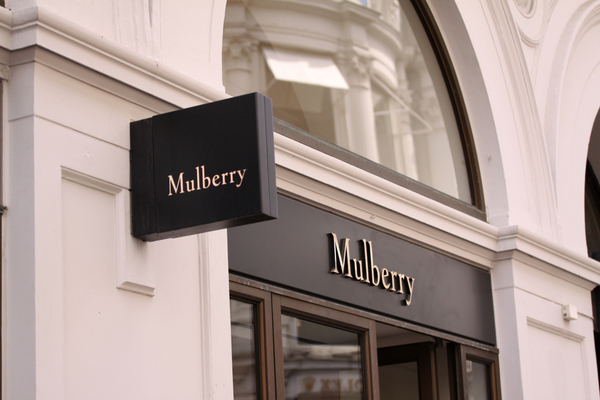

Mulberry has firmly declined Frasers Group’s revised £111 million offer, a decision led by its principal shareholder, Challice. The stakeholder holds a commanding 56% stake and has categorically expressed no interest in selling.
This resolute stance highlights the ongoing dynamics between the two companies, with Mulberry’s focus on maintaining independence amidst strategic internal developments. Frasers’ ambitions face significant hurdles without Challice’s support, indicating a complex interplay of corporate interests.
Mulberry has decisively turned down an increased offer from Frasers Group, asserting its strong stance on remaining independent. The company’s major stakeholder, Challice, who holds a 56% share, firmly declined Frasers’ revised bid of £111 million. Challice stated explicitly, “Challice has no interest in either selling its Mulberry shares to Frasers or providing Frasers with any irrevocable or other undertaking with regards the possible offer.” This clear refusal underscores Challice’s commitment to Mulberry’s autonomy.
Frasers Group, which already owns a 37% stake in Mulberry, had increased its offer to 150p per share following a previously rejected bid of 130p per share. This strategic move to raise the offer signifies Frasers’ keen interest in acquiring a more substantial stake in Mulberry. However, without Challice’s support, Frasers’ ambitions face significant obstacles. Frasers also participated in a recent fundraising round by purchasing £3.9 million worth of new shares, indicating ongoing commitment despite the setback.
Challice additionally commented on the distraction that Frasers’ bid could present to Mulberry’s management team amidst ongoing initiatives. The stakeholder asserted that the current circumstances are not conducive to such a substantial business manoeuvre. Challice remains steadfast in its belief that perseverance with the present strategy will fortify Mulberry’s market standing in the luxury goods sector.
Frasers’ interest, while partially thwarted, underscores its strategy to consolidate interests in luxury retail. The group’s prior investments and current stake in Mulberry reflect a calculated approach to expand its portfolio. For Mulberry, maintaining independence evidently aligns with its internal growth strategies and objectives for sustainable development.
The immediate future for Frasers and Mulberry will likely involve reassessing strategies to align with the evolving retail landscape. While Frasers navigates its expansion pursuits, Mulberry’s leadership seems intent on harnessing its recent changes for revitalised growth. Both entities will need to adapt to shifting market conditions while pursuing their distinct visions.
Mulberry’s rejection of Frasers Group’s increased bid, supported by Challice’s firm stance, marks a significant development in the luxury retail sector. This decision spotlights the pivotal role major stakeholders play in guiding corporate trajectories while reflecting the strategic priorities of both parties involved. As the landscape evolves, Mulberry’s commitment to autonomy contrasts with Frasers’ appetite for acquisition, providing a compelling narrative in contemporary retail dynamics.
In conclusion, Mulberry’s steadfast rejection of the enhanced bid from Frasers Group underscores the retailer’s commitment to its independence and strategic plans. Challice’s significant influence as a major shareholder has been pivotal in guiding this decision, setting a notable precedent within the luxury retail sector.

