
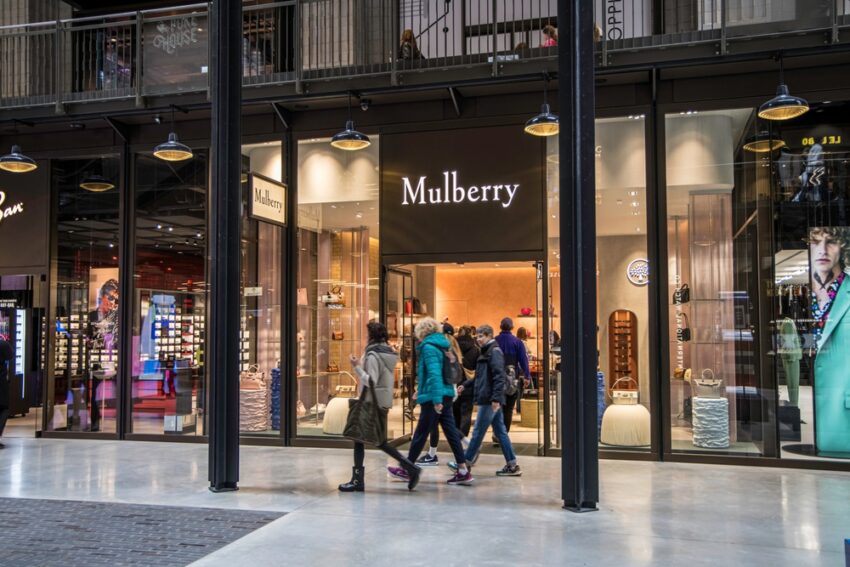

Mulberry has firmly declined the revised takeover proposal from Frasers Group, terming it as an “unwanted distraction” amid their strategic recovery efforts.
The luxury brand, renowned for its iconic Bayswater handbags, faces significant financial hurdles yet remains optimistic about its revitalisation under new leadership. The rejection underscores Mulberry’s confidence in its recovery plan, despite Frasers’ attempt to assert greater control by increasing their offer.
Challice’s Decisive Stance
Challice, which commands a substantial 56.1% stake in Mulberry, has categorically dismissed Frasers Group’s offer, which was recently increased from 130p to 150p per share. This solidified stance by Challice, controlled by Singaporean billionaires Ong Beng Seng and Christina Ong, signifies a substantial roadblock for Frasers in their pursuit of over 50% control of Mulberry.
The Ongs have labelled the bid as “inopportune,” criticising it for potentially disrupting Mulberry’s ongoing turnaround strategy. Challice’s firm rejection seems intended to dissuade Frasers from any further acquisition attempts, maintaining the status quo of ownership as the company navigates its financial recovery.
Frasers currently holds a 36.8% interest in Mulberry, and Challice’s resistance indicates significant challenges ahead for Frasers if they intend to pursue full ownership. The Ongs’ decision highlights their commitment to Mulberry’s independent recovery and strategic growth trajectory.
Frasers’ Ambitions and Deadline
Frasers Group, led by Mike Ashley, persists in its ambition to increase its stake in Mulberry, aiming to steer the brand towards profitability amidst challenging market conditions. Despite Challice’s rejection, Frasers continues to assert its belief in its ability to guide Mulberry toward success, distancing itself from comparisons to the troubled Debenhams scenario.
With a critical deadline set for 5pm on October 28, Frasers must decide whether to formalise its bid or withdraw. This time-sensitive decision adds urgency to the ongoing negotiations, placing considerable pressure on both parties.
The outcome of Frasers’ decision will be pivotal, potentially reshaping the competitive landscape in the luxury goods market. Mulberry’s response to this deadline will likely influence its strategic path in the near future.
Mulberry’s Recovery Efforts
Mulberry is proactively implementing measures to stabilise its financial standing, having recently announced a £10.75 million share placement. New CEO Andrea Baldo’s appointment is part of this strategic effort, reflecting Mulberry’s dedication to revitalising its brand identity and financial health.
The company’s recent financial performance has been marked by a £34 million pre-tax loss, highlighting the challenges faced in the global luxury sector. Despite this, Mulberry remains steadfast in its recovery strategy, banking on leadership changes and strategic investments to regain market strength.
Mulberry’s leadership expresses confidence in overcoming current financial setbacks, emphasising a long-term vision for growth. Their focus remains on leveraging new leadership and resource allocation to pivot towards financial recovery and sustainability.
Challenges in the Luxury Market
The luxury market has been volatile, affecting brands like Mulberry as they adapt to economic shifts and changing consumer behaviours. Factors such as fluctuating demand and competitive pressures have forced luxury brands to reassess strategies to maintain relevance and profitability.
Mulberry’s experience reflects a broader struggle within the luxury sector to balance heritage with innovation, a task further complicated by economic uncertainty.
The brand’s commitment to overcoming these challenges is evident in its strategic investments and leadership restructuring, aimed at fortifying its position in an unpredictable market landscape.
Market Reactions and Analyses
Analysts suggest that Challice’s rejection could influence market perceptions, potentially impacting Mulberry’s stock performance and investor confidence. The response from investors will likely hinge on the perceived effectiveness of Mulberry’s turnaround strategy amidst ongoing acquisition negotiations.
Market experts are closely monitoring the interplay between Challice and Frasers, considering how this tension might affect Mulberry’s strategic decisions. The rejection might also recalibrate Frasers’ approach and strategic priorities going forward.
As the October 28 deadline looms, market stakeholders remain keenly observant of potential shifts in Mulberry’s strategic direction and the broader implications for the luxury sector.
Future Outlook for Mulberry
Looking ahead, Mulberry’s focus centres on a robust recovery plan while navigating potential acquisition maneuvers. The brand remains committed to its identity and strategic initiatives, aiming to thrive independently amidst market turbulence.
The firm’s leadership remains confident in their chosen strategic path, despite external pressures and competing interests.
Mulberry’s future will depend heavily on the success of its recovery strategies and ability to adapt to industry trends, with leadership changes and resource allocation playing crucial roles.
Key Considerations Moving Forward
Mulberry’s strategic autonomy and market positioning remain central as the brand navigates its recovery and potential acquisition challenges.
Mulberry’s rejection of Frasers’ revised offer reflects a strategic decision prioritising autonomy and recovery amidst financial challenges. The unfolding situation between Mulberry and Frasers will significantly influence Mulberry’s strategic direction and market presence.
Future developments will be closely monitored by industry stakeholders, impacting both Mulberry’s market performance and broader trends within the luxury sector.

