
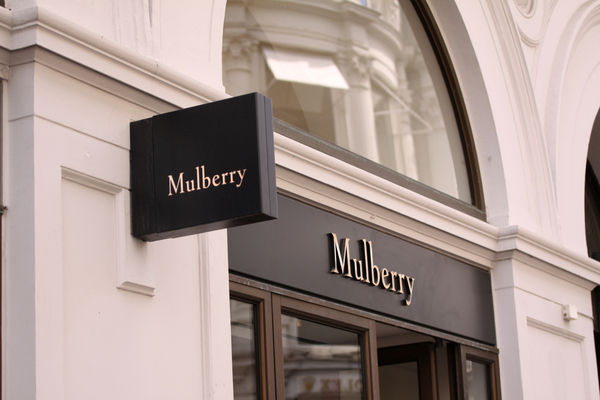

Mulberry has refused Frasers Group’s increased acquisition proposal, maintaining its independence amidst financial manoeuvres.
- The luxury retailer’s primary stakeholder, Challice, remains firm against divesting its 56% interest despite a £111 million bid.
- Challice’s position signifies Frasers’ inability to acquire Mulberry unassisted, as highlighted in recent declarations.
- Frasers Group increased its bid following a prior rejection, yet Challice urges no further acquisition attempts.
- Mulberry’s strategic leadership changes and financial bolstering support its stance against the current bid scenario.
Mulberry, a hallmark in luxury handbags, has decisively turned down the Frasers Group’s enhanced bid of £111 million. This move underscores the staunch stance of Challice, Mulberry’s principal shareholder, which holds a significant 56% stake. Such resolve was articulated by Challice, emphasizing an unequivocal disinterest in either selling its shares or forging any binding agreement with Frasers, thereby foreclosing any potential acquisition pathway Frasers might intend.
The Frasers Group, a prominent entity in retail, already possesses a 37% holding in Mulberry. Despite this, their aspiration for a controlling share was met with a rebuff, questioned further by Challice’s insistence that only with its backing could any takeover be plausible. Challice’s statement suggested a clear expectation for Frasers to rescind its pursuit of Mulberry, illustrating a strategic resistance to change in ownership dynamics.
In its quest, Frasers had augmented the share offering from an initial £83 million, equating to 130p per share, to a refreshed 150p per share proposition. This occurred after prior rebuffs earlier this month, reflecting heightened turns within corporate acquisition tactics. Nevertheless, Frasers’ attempt faced dismissal, despite their involvement in last week’s significant fundraising round by Mulberry comprising a £3.9 million share purchase.
The backdrop to these events includes strategic transformations within Mulberry’s executive sphere, notably the recent introduction of Andrea Baldo as CEO. Concurrently, a substantial cash infusion of £10.75 million has been secured to establish a robust foundation for the brand’s turnaround strategy. Challice expressed explicit support for this renewed leadership and strategic direction, while questioning the timing and potential distraction engendered by the takeover discussions.
Ultimately, Challice pledges steadfast backing towards Mulberry and its current administration, predicated on an enduring belief in the brand’s intrinsic value. Such institutional backing is critical, according to Challice, which noted the ill-timed nature of current buyout pursuits, hinting at future aspirations unaligned with Frasers’ objectives.
The decisive refusal by Mulberry’s major shareholder marks a significant moment in its strategic journey, focusing on long-term brand value.

