
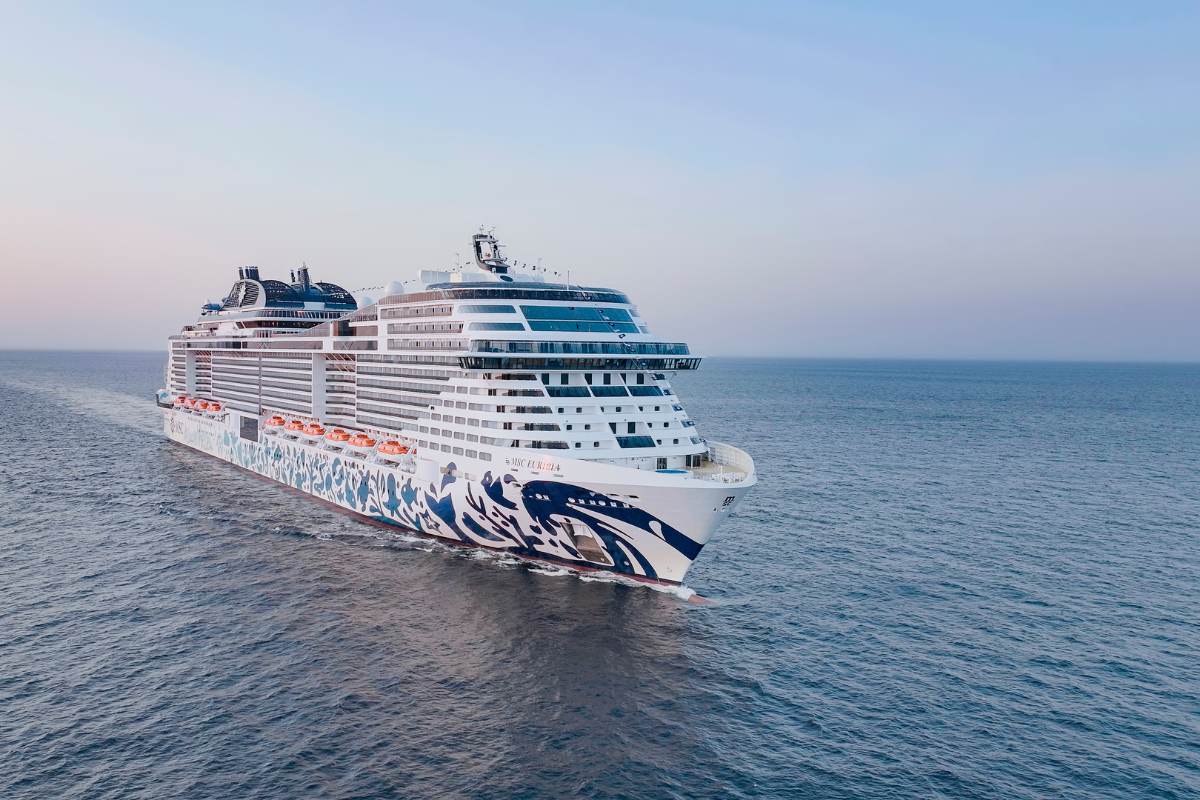

MSC Cruises has revealed critical insights from the world’s first net-zero greenhouse gas emissions cruise undertaken by MSC Euribia.
- The four-day journey has been acknowledged as a pivotal moment in the cruise industry, showcasing achievable net-zero emissions well ahead of the 2050 target.
- A digital twin technology appraised the ship’s performance, resulting in a significant saving of 43 tonnes of fuel.
- Strategic energy optimisation allowed minimal engine usage, recovering heat for onboard systems, setting a new efficiency standard.
- Partnerships for renewable e-LNG fuels mark a forward stride, emphasising support from global entities for future sustainability.
MSC Cruises has taken a groundbreaking step in the cruise industry by conducting what is claimed to be the world’s first net-zero greenhouse gas emissions cruise. This milestone was achieved during a four-day voyage aboard the MSC Euribia in June, which the company stated represents a significant shift towards sustainable cruising, accomplishing this goal well before the 2050 industry target.
Through innovative use of technology, a digital twin of the LNG-powered MSC Euribia was utilised to meticulously analyse and optimise its performance. The voyage concluded with an impressive conservation of 43 tonnes of fuel, demonstrating the ship’s advanced capabilities in operating efficiently.
Energy efficiency was further enhanced by strategising optimal speed profiles, routing, trim, and engine configurations, ensuring that only two of the ship’s four engines were required throughout the cruise. Moreover, the vessel’s design enabled the recovery of heat from its engines to supply the necessary power for galleys, heating systems, and hot water, thereby reducing energy consumption onboard.
MSC Cruises is not resting on this achievement but is using the data collected to improve the efficiency of its current fleet. Additionally, the company has taken proactive steps by entering into a letter of intent with Gasum, a supplier of e-LNG fuels. This partnership focuses on accessing liquefied synthetic gas made with hydrogen and renewable energy, signifying a bold move towards cleaner fuel alternatives.
Linden Coppell, MSC Cruises’ Vice-President of Sustainability and ESG, highlighted the importance of this endeavour by stressing the need for more suppliers like Gasum to contribute to the industry’s strides towards sustainability. The MSC Group is also advancing its shore power plan, with at least 15 new ports being equipped for vessels to connect to shoreside electricity between 2024 and 2026.
The MSC Euribia’s successful net-zero voyage paves the way for a sustainable future in the cruising industry, highlighting the urgency for continued innovation and collaboration.

