
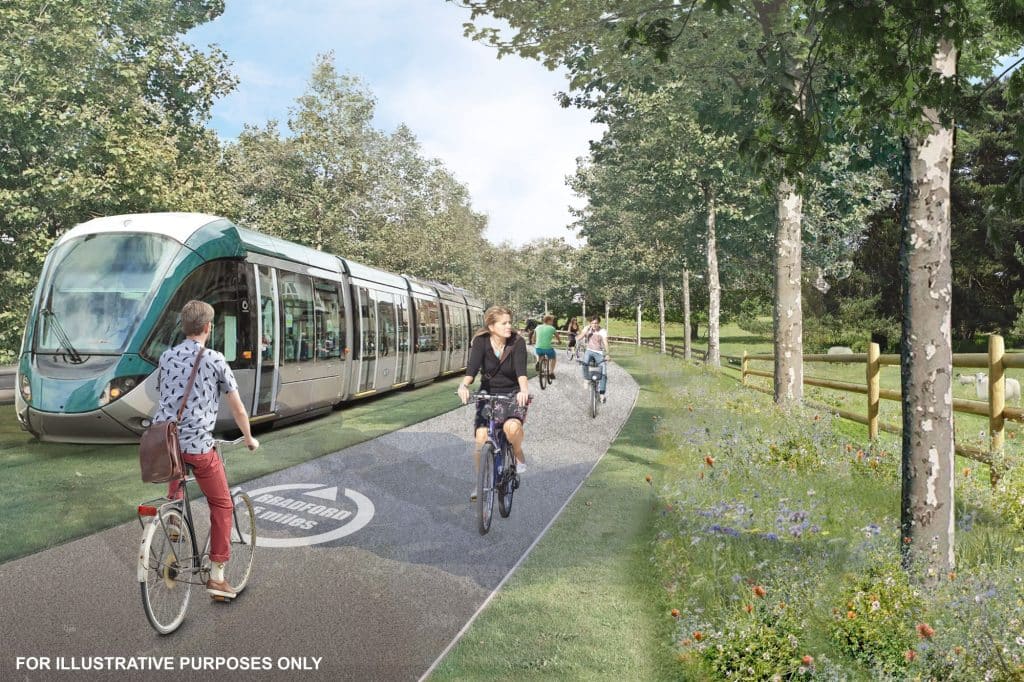

A pioneering consortium is spearheading the £2.5bn West Yorkshire Mass Transit initiative.
- West Yorkshire aims to transform its transport network to integrate cycling, walking, and rail.
- The area is Europe’s largest metropolitan region without a full urban transit system.
- Key routes are being considered to connect Leeds and Bradford city centres.
- This project is crucial for regional connectivity and economic growth.
A consortium comprising Mott MacDonald and Jacobs has been appointed by the West Yorkshire Combined Authority (WYCA) to lead the design development for the £2.5 billion West Yorkshire Mass Transit project. The objective of this initiative is to create a high-capacity public transport network that seamlessly incorporates cycling, walking, and rail systems, significantly enhancing connectivity across West Yorkshire, which is home to 2.3 million people and has an economic output nearing £70 billion.
Notably, West Yorkshire holds the distinction of being Europe’s largest metropolitan area currently without an urban transit system. The involvement of Mott MacDonald and Jacobs marks a critical progression in addressing this significant gap in the region’s infrastructure, emphasising the project’s role in boosting local transportation capabilities. The consortium’s task includes advancing the current concept design through to completion, aiming to implement the first phase of this transformative project by the decade’s end.
Jacobs has been actively participating in the project’s evolution since 2021 as the lead consultant. Mott MacDonald, leveraging its previous experience as a stakeholder engagement advisor for WYCA, will bring its global expertise to this large-scale transit project. Recent consultations have prioritised two primary routes for the first phase: one within Leeds and another connecting to Bradford.
For the Leeds line, options have been explored encompassing routes near notable landmarks such as the White Rose shopping centre and Elland Road stadium, serving critical sites including Leeds General Infirmary, The South Bank, Holbeck, and Beeston. The Bradford line proposals intend to link Bradford and Leeds city centres, potentially covering areas like Thornbury, Laisterdyke, Pudsey, Armley, and Wortley.
Ahead of construction, WYCA plans to conduct a statutory consultation in 2025 to finalise decisions regarding tram stops, depots, park and ride locations, and essential engineering undertakings. An application for a Transport Works Act Order, essential for the project’s legal compliance, will be submitted to the Department for Transport with the objective of obtaining approval by late 2026. The commencement of the early construction phase is anticipated for 2028, involving the initial two lines between Leeds and Bradford.
The collaboration of Jacobs and Mott MacDonald is expected to harness their extensive international experience in mass transit systems, presenting significant potential benefits to West Yorkshire’s public transport infrastructure. Over the summer, Simon Warburton, WYCA’s executive director for transport, elaborated on the project’s aspirational goals, with Mott MacDonald’s Stephen Luke highlighting their vast experience in urban transit systems globally.
Further emphasising the project’s transformative impact, Jacobs’ senior vice president, Kate Kenny, stated that the consortium’s contribution would involve creating environmentally conscious designs that enhance community connectivity and regional sustainability. This collaboration is a cornerstone of WYCA’s vision to integrate mass transit throughout West Yorkshire, potentially laying the groundwork for future network expansions.
The West Yorkshire Mass Transit project stands as a testament to strategic development in urban infrastructure, promising to revolutionise regional connectivity.

