
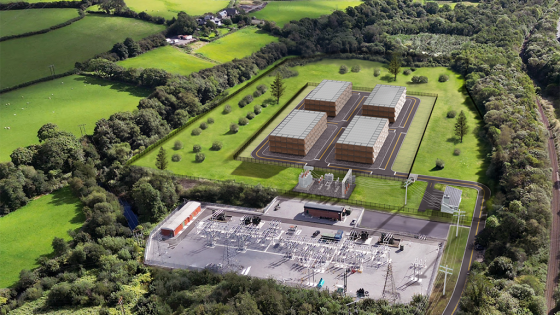

Last Energy aims to revolutionise energy production with micro nuclear reactors in South Wales.
- The company plans to install four modular reactors on a former coal power site.
- These reactors will provide uninterrupted power to local industries.
- The project promises significant economic benefits and operates without public funds.
- Licensing and planning approvals are yet to be secured for the development.
In an ambitious move to transform the energy landscape, Last Energy has announced plans to construct four micro nuclear reactors on the site of the former Llynfi power station in South Wales. These reactors are part of an initiative to deliver direct power to industrial sectors, thereby supporting local manufacturing with an uninterrupted energy supply.
The proposed reactors, each generating 20 MWe, are designed to be modular, allowing for swift assembly on-site. This method not only enables expedited construction but also relies entirely on private financing, eliminating the need for public investment. Last Energy’s commitment to achieving operational status by 2027 marks a significant step towards sustainable energy solutions in the UK.
Last Energy’s UK chief executive, Michael Jenner, highlighted the transformative potential of the project: ‘Last Energy’s Llynfi project will not only transform a vacant coal site into a hub for clean energy production, it will also create economic opportunity for companies throughout South Wales.’ Jenner emphasised the company’s focus on delivering benefits both timely and within budget constraints.
Adding to the discourse, Tom Greatrex, the Nuclear Industry Association chief executive, underscored the necessity for such projects. He noted that as industries transition towards decarbonisation, the need for reliable and cost-effective power sources like nuclear becomes paramount. ‘Potential projects such as that proposed by Last Energy, with an innovative business model of direct-to-industry power and co-location, will be required if deep decarbonisation is to become a reality rather than a slogan,’ he asserted.
The reactors, known as PWR-20s, are a testament to emerging nuclear technologies, being smaller than traditional small modular reactors. While Last Energy’s proposal is still in the developmental stage, with licensing and planning approvals pending, it signals a broader trend in the energy sector towards bespoke, scalable solutions for industrial power demands.
Last Energy has further secured commercial agreements for 80 units across Europe, with a majority slated for UK deployment. Notably, no micro nuclear plants are operational globally as of yet, which places Last Energy at the forefront of an innovative energy revolution poised to begin within the next few years.
This initiative runs parallel to efforts by other companies, such as Rolls-Royce SMR and Holtec Britain, who are also exploring the potential of small modular reactors within the UK. However, unlike these entities, Last Energy’s approach circumvents the complexities associated with large-scale nuclear projects by offering a more streamlined, manufacturing-centred model.
The proposed micro nuclear reactor initiative by Last Energy marks a pivotal shift towards decarbonised, industry-focused power solutions in the UK.

