
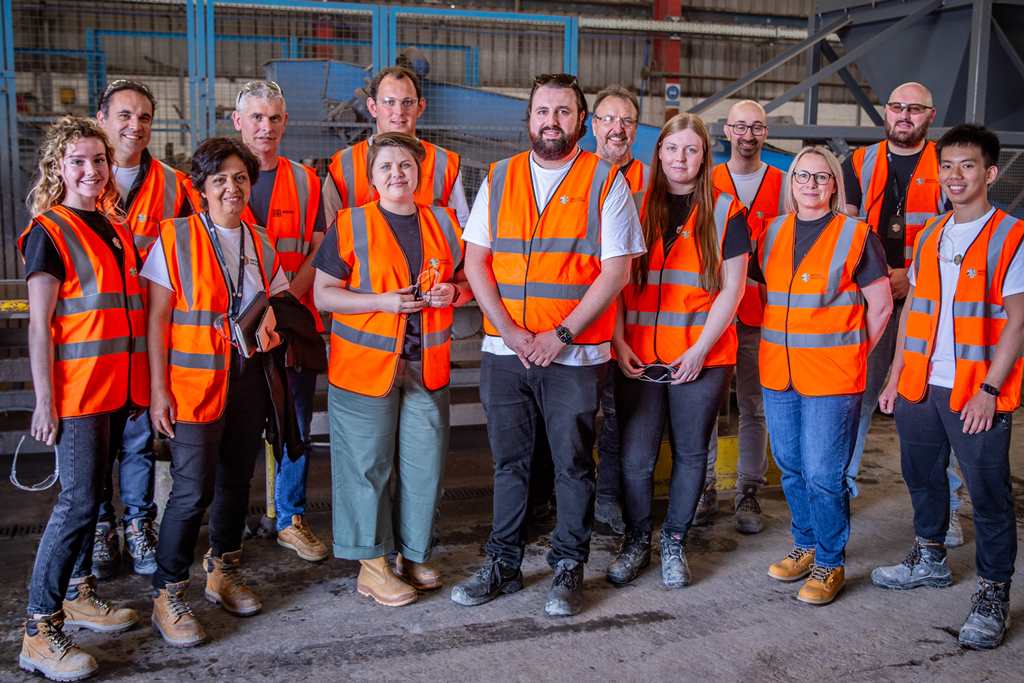

Material Evolution is set to commence production of its innovative low carbon cement, Mevocrete, backed by governmental support.
- In October, the company will begin producing Mevocrete, a ground-breaking low carbon cement developed in collaboration with academic and industry experts.
- The project, supported by a substantial £7.6m grant, utilises industrial waste to produce a sustainable alternative to traditional cement.
- Revisions to the industry standard for concrete have facilitated Material Evolution’s progress towards a greener future.
- The company’s ultimate aim is to significantly reduce carbon emissions in the construction industry by 2040.
Material Evolution is poised to commence the production of Mevocrete, a low carbon cement, in October. The company’s initiative is backed by government grants and has been developed in collaboration with academic and industrial partners. The low carbon geopolymer cement technology, devised for the Mevocrete project, employs waste materials activated by a low-energy chemical process known as alkali fusion. This method does not require heat and emits no carbon dioxide.
Established in September 2022, the project is founded at the Materials Processing Institute in Middlesbrough and is nearing the end of its research and development phase. With aspirations to become the leading producer of low carbon cement in the UK, Mevocrete aims to replace ordinary Portland cement (OPC) with industrial waste. Although Mevocrete currently carries a 20% price premium over OPC, it is anticipated that costs will diminish as production escalates.
David Hughes, associate dean at Teesside University and chief scientific officer of Material Evolution, highlights the project’s collaborative nature. He asserts that Mevocrete and new technology are pivotal in diverting untapped industrial by-products from landfill to create a more sustainable and carbon-neutral built environment. Hughes indicates that discussions are underway with prominent contractors and architects who influence cement manufacturing standards, asserting Mevocrete as a viable path to a sustainable future.
The revision of the industry standard for concrete (BS 8500) in October 2023, introduced by the British Standards Institution (BSI), has played a significant role in accelerating Material Evolution’s objectives. These revisions enable producers to use up to 65% less ordinary Portland cement by integrating alternative low-carbon cementitious materials. Additionally, the BSI Code of Practice Flex 350 now allows for the specification of lower carbon concrete varieties, thus aiding the decarbonisation of construction projects.
Material Evolution, founded in 2017 by Liz Gilligan and Sam Clark, started as a design business but has swiftly evolved within the industry. Liz Gilligan expresses confidence in launching the company’s first industrial-scale cement factory in Wrexham. She underscores their long-term vision to eliminate one gigaton of carbon by 2040, driven by collaborative efforts across various sectors in advancing the net-zero agenda.
Material Evolution stands at the forefront of transforming the cement industry towards a sustainable and low carbon future.

