
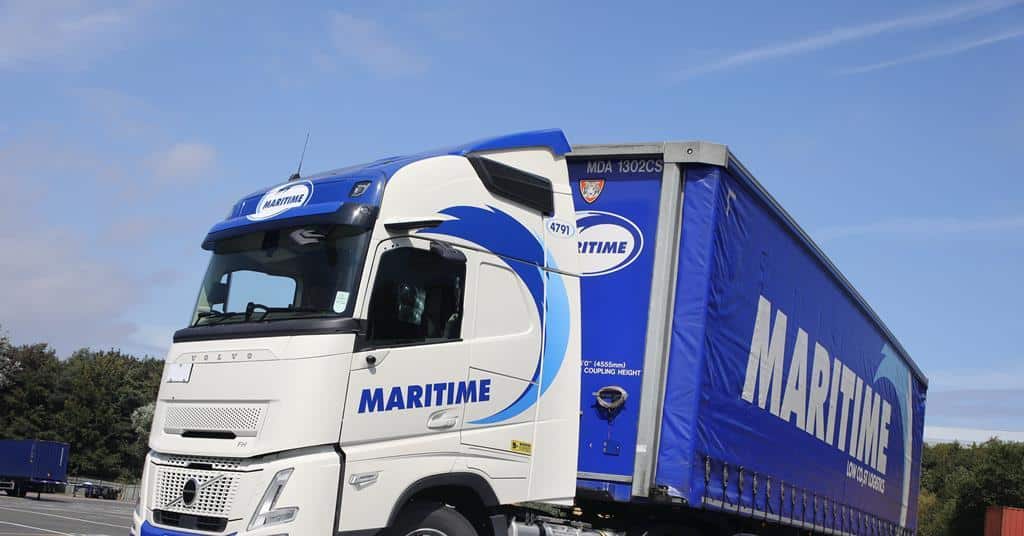

Maritime Transport has made a significant stride in its operations by purchasing 150 Volvo FH Aero trucks, marking the largest order of its kind in the UK.
- The initial batch of 20 trucks is already operational across multiple Maritime Transport sites, integrating with their existing fleet.
- This acquisition reflects a strategic move towards operating a cleaner, more sustainable supply chain.
- Maritime Transport plans to further enhance its fleet by introducing battery-electric vehicles from Volvo Trucks by early 2025.
- The new fleet is expected to achieve energy savings and emissions reductions through advanced aerodynamic design and technology.
Maritime Transport has made headlines with its strategic acquisition of 150 Volvo FH Aero trucks, the most significant order in the UK to date. This move aligns with the company’s long-term goal of enhancing operational efficiency and sustainability. The first set of 20 trucks is currently operational at Maritime’s 41 sites, including strategic rail freight terminals, joining the fleet of 525 Volvo FH I-Save models.
Paul Heyhoe, Fleet Director at Maritime Transport, emphasised the importance of this partnership with Volvo, describing it as vital in their efforts to maintain a clean and sustainable full-load supply chain across the country. Heyhoe stated, “Our long-standing partnership with Volvo Trucks is fundamental in our strategy to own and operate the cleanest, most sustainable full-load supply chain in the country.”
Furthermore, the incorporation of state-of-the-art technology underpins the strategic direction of Maritime Transport as it strives to maintain an efficient fleet. The introduction of the FH Aero models is a testament to this commitment, with further plans to integrate battery-electric vehicles by the first quarter of 2025, marking a pivotal step towards decarbonisation and sustainability in the UK’s freight industry.
The Volvo FH Aero, featuring a cab extended by 24cm over the standard model, offers up to 5% energy and emissions reductions via refined aerodynamic enhancements and cutting-edge technologies. These advancements, including an advanced camera monitoring system, significantly contribute to the Aero’s aerodynamic prowess.
Operating within the intermodal and distribution sectors, these new vehicles are expected to perform around-the-clock, covering an estimated 160,000 km annually. This commitment to innovation and efficiency demonstrates Maritime Transport’s forward-thinking approach in adapting to environmental and operational demands.
The acquisition represents a crucial step in Maritime Transport’s journey towards sustainability and operational excellence.

