
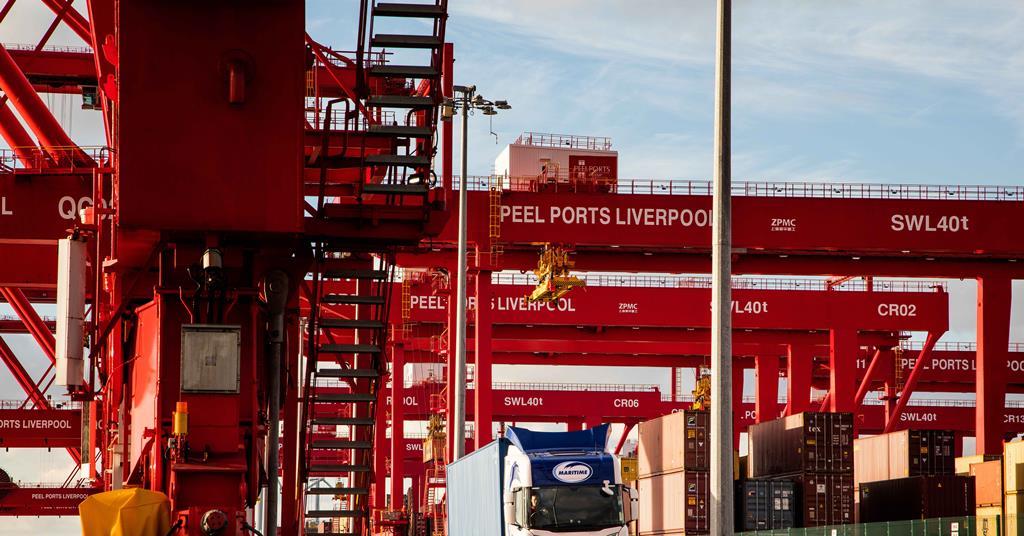

Maritime Transport opens a new terminal at the Port of Liverpool, enhancing freight capabilities.
- The facility expands Maritime’s operations, providing efficient distribution of goods to regional markets.
- New state-of-the-art equipment, including SANY H9 reach stackers, reduces fuel consumption by 20%.
- A significant expansion of facilities supports Maritime’s operational teams with modern amenities.
- The site underlines the strategic importance of the Port of Liverpool in national and international trade.
Maritime Transport has officially launched a significant new container storage terminal at the Port of Liverpool, marking a pivotal expansion of its freight capabilities. The opening of this state-of-the-art facility aligns with the company’s strategy to enhance the distribution of goods from the port to critical regional markets.
Operating 24/7, the terminal boasts a capacity for up to 2,000 TEU, enabling it to provide not only storage but also handling and maintenance services for both loaded and empty containers. The facility includes reefer plugin points and devanning services, alongside a comprehensive security setup, to support its operations effectively. Moreover, it functions with a large vehicle fleet dedicated to efficient first and last-mile transport, further boosting service delivery.
Crucially, Maritime Transport has invested in advanced container handling technology, integrating two SANY H9 reach stackers into its operations, which are noteworthy for their capability to reduce fuel consumption by a remarkable 20%. This investment demonstrates Maritime’s commitment to sustainable and efficient freight operations.
In addition to expanding its infrastructure at the Port of Liverpool, the company has significantly increased its transport depot size from four acres to 11.4 acres. The ongoing construction of a new two-storey building promises modern amenities, including shower facilities, kitchenettes, and ample office space, all designed to meet the evolving needs of the company’s drivers and operational teams.
Reflecting on the development, Tom Williams, Deputy Chief Executive of Maritime Transport, expressed enthusiasm for the new site’s role in meeting rising storage demands. He highlighted its capacity to accommodate the increasing volume of cargo activity at the port, especially with the introduction of MSC’s Britannia service.
David Huck, Chief Operating Officer of Peel Ports Group, lauded the terminal’s completion as a beneficial regional development amidst current economic challenges. He emphasised the Port of Liverpool’s strategic significance as a national and international trade hub and expressed optimism about ongoing collaboration with Maritime.
Presently, Maritime Transport operates container storage locations in Ipswich, Northampton, Liverpool, and Southampton, with a cumulative 30,000 TEU capacity. It also manages eight multi-user rail freight terminals across the UK, reinforcing its prominent role in the national logistics sector.
Maritime Transport’s latest terminal at the Port of Liverpool exemplifies its strategic growth and commitment to enhancing UK logistics.
