
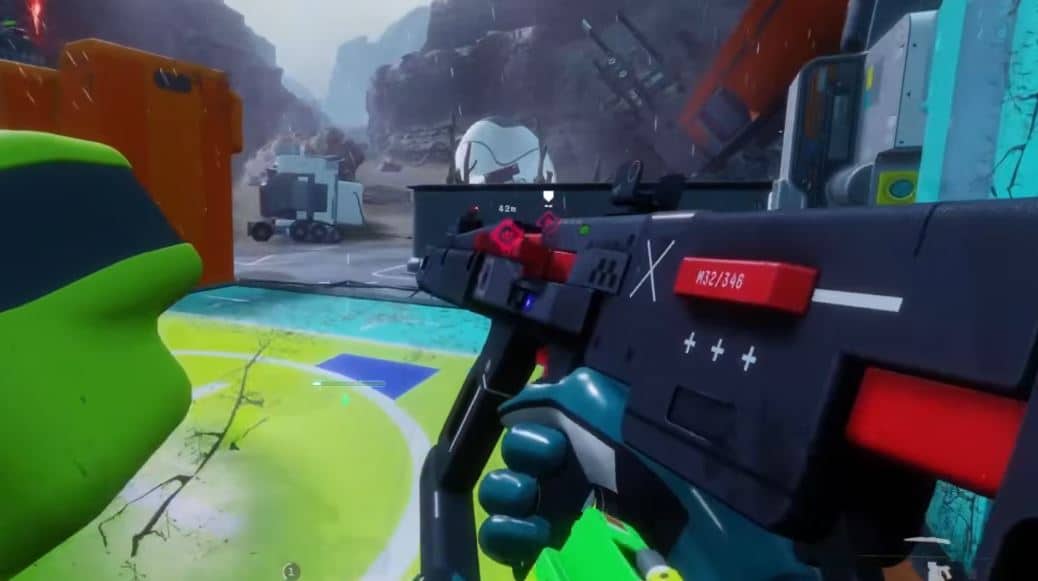

It was Thursday morning, exactly ten o’clock. Players on all three platforms hit “connect” nearly simultaneously during Pacific time. Minutes later, chat feeds were replete with screenshots of disconnection messages, login queues, and the occasional jubilant “I’m in.” Officially, the Marathon Server Slam had started.
This wasn’t your average beta. Bungie was clear about that. The intentional act of turning everything on at once and inviting chaos was a stress test. Cross-play is activated. Worldwide servers are operational. At the same time, thousands of players are breaking into Tau Ceti IV, stealing, extracting, disconnecting, and reconnecting. The concept was straightforward: break it now to prevent it from breaking on March 5.
| Category | Details |
|---|---|
| Game Title | Marathon |
| Developer | Bungie |
| Genre | Extraction FPS |
| Platforms | PC (Steam), PlayStation 5, Xbox Series X/S |
| Server Slam Dates | Feb 26 – March 2, 2026 |
| Full Release | March 5, 2026 |
| Official Website | https://www.marathonthegame.com |
As you watch it happen, you get the impression that new game releases have turned into endurance events for both developers and players.
For months, Marathon has been simmering. Skepticism persisted following a delayed September release and a lackluster early reception in 2025. With so many titles vying for the same time-constrained audience, extraction shooters are no longer unique. However, Marathon rose dozens of spots in just a few days on Steam’s top sellers chart ahead of the Server Slam weekend. Wishlists grew. Curiosity came back.
Free access might have been a contributing factor. Resistance is reduced on a weekend when there is no price barrier. However, it felt like more than just browsing when concurrent player counts reportedly surpassed six figures in the first hour. It was like a faith test.
Tau Ceti IV is a combination of a deserted research facility and a verdant alien landscape in the game. Faint mechanical echoes hum through metallic corridors. Under a sky flecked with far-off orbital debris, dense foliage sways. Players, referred to as Runners, move carefully while searching for equipment and keeping an ear out for enemy footsteps. Marathon embraces the tension that extraction shooters love. Thirty minutes of careful looting can be wiped out in a single encounter.
Only a portion of the entire experience is covered by the Server Slam. Not every map. Not every feature. There is no ranked mode. Up until later content is released, the Cryo Archive is locked. However, the atmosphere feels surprisingly complete—unfinished enough to show flaws, yet immersive enough to imply ambition. Those edges appeared rapidly.
Social media feeds were flooded with grievances about UI annoyances and overloaded servers within hours of launch. tiny icons for inventory. Slow-feeling click-and-hold confirmations. When ammo ran out, one player joked that everyone would be reduced to knife fights by the end of the weekend. Impatience is often concealed by humor.
Nevertheless, it’s strangely refreshing when a developer admits that instability is a necessary component. Bungie presented outages as “actionable data” rather than failures. Engineers observe when systems malfunction under load. They make adjustments. They adjust. It’s public engineering.
Before the Slam, game director Joe Ziegler gave players last-minute advice, telling them to think strategically and to extract early rather than overextend avariciously. It’s helpful guidance. Overconfidence is punished by extraction shooters. However, it also seems to be a subliminal message to the studio: don’t risk everything on one play; take what you can now.
It feels like the stakes are high. Bungie, the company that made Halo the first console shooter and later turned Destiny into a long-running live-service empire, is going into a new market. Different tempos and psychological approaches are required for extraction mechanics. Both fans and investors are keeping a close eye on things. Comparisons are unavoidable given Highguard’s modest peak numbers and Concord’s lackluster trajectory.
Even so, it’s difficult to avoid catching a glimpse of that classic Bungie magic as you meander through a wooded outpost while distant gunfire crackles—the precise gunplay, the satisfying recoil, the feeling of movement flowing rather than stuttering. This has potential. Another question is whether potential converts turn into longevity.
Numbers are often inflated by free weekends. The true test occurs after launch, when hype gives way to habit and a price tag enters the picture. How many people who participated in the Server Slam will be back on March 5? How many will dismiss it and consider it a curiosity?
Additionally, there is the issue of genre fatigue. The extraction format necessitates endurance in the face of loss, patience, and teamwork. Not all players desire that. Some people desire immediate satisfaction. Some people prefer narrative arcs to recurring risk loops.
However, the transparency of the Server Slam may be more intriguing than the gameplay itself. In essence, Bungie is saying, “This is the machine under pressure.” Observe the strain. See us make it right.
That openness feels strategic in a field where launches can fail due to their own hype. It’s acceptable to make a mistake on a free weekend. On launch day, a stumble is remembered.
Server traffic will increase and decrease throughout the weekend. As players advance in level, they will be able to access Arrival Caches and special emblems that will be available in the full version. Twitch streams will draw attention to shortcomings and magnify successes. Additionally, engineers will gaze at dashboards that are illuminated with traffic metrics in a monitoring room.
As this is happening, it seems like the Server Slam is more about stress-testing expectations than it is about stress-testing code.
The Marathon enters the actual race on March 5. The Slam is just the starting gun for the time being.

