
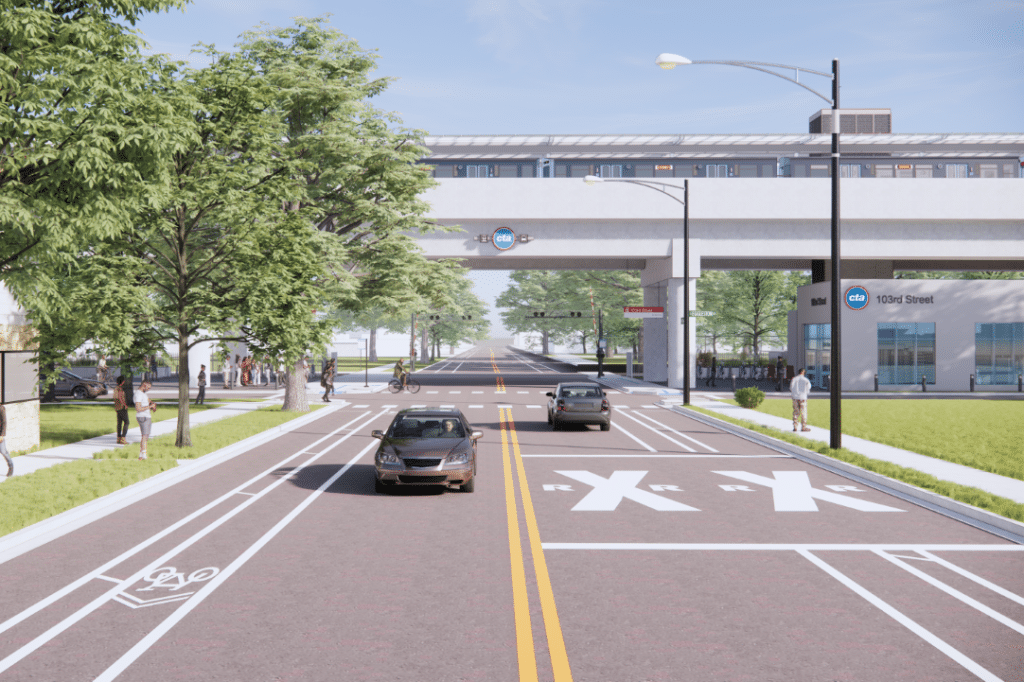

The Chicago Transit Authority has awarded a significant contract to extend the Red Line.
- The project aims to improve transit access in Chicago’s underserved areas.
- Four new stations will be built, enhancing multimodal connections.
- Economic and environmental commitments are key components of the project.
- Completion by 2030 will transform travel for many residents.
The Chicago Transit Authority has formally awarded a $2.78 billion contract to the consortium of Vinci Construction Grands Projets and Walsh Construction Company. This substantial agreement marks a decisive step forward in extending Chicago’s Red Line, a project that has been anticipated since 2006. Stretching 9 kilometres, with a significant portion being elevated guideway, this extension strategically positions four new stations at critical junctures: 103rd Street, 111th Street, Michigan Avenue, and 130th Street.
These new stations are set to dramatically improve access and convenience. Designed with full accessibility in mind, each station will accommodate individuals with reduced mobility, while also providing comprehensive facilities for buses, bicycles, pedestrians, and park-and-ride users. This initiative is part of a broader effort to enhance transit options for communities that traditionally have not benefited from robust public transport services.
The consortium leading the expansion is a partnership dominated by Walsh Construction and Vinci, split in a 60-40 ratio. Their approach incorporates strong social commitments: 10% of design hours and 35% of construction hours will be allocated to local residents from economically disadvantaged areas. In addition, 15% of construction labour is reserved for apprentices and trainees, and 22% of the total construction contracts are earmarked for businesses with disadvantaged statuses.
From an environmental perspective, efforts are being made to reduce the project’s carbon footprint. By optimising the design, the consortium aims to cut cement usage by 14%, with a commitment to ensuring that 50% of the concrete used is classified as low-carbon. These measures align with global sustainability goals and represent a conscientious approach to modern infrastructure development.
Preparation for this ambitious extension is already in motion. The CTA is engaged in the preliminary activities necessary for construction, such as acquiring and dismantling properties along the proposed track alignment between 95th and approximately 118th Streets. This phase is planned to continue into 2025, paving the way for the commencement of construction.
Once completed in 2030, the Red Line extension is expected to dramatically alter the public transit landscape for around 100,000 residents. It promises to significantly reduce journey times to downtown Chicago and accommodate approximately 40,000 daily trips by 2040, supporting a notable transition towards sustainable urban transport solutions.
This landmark project is set to redefine transportation for many in Chicago, making travel faster and more sustainable.

