
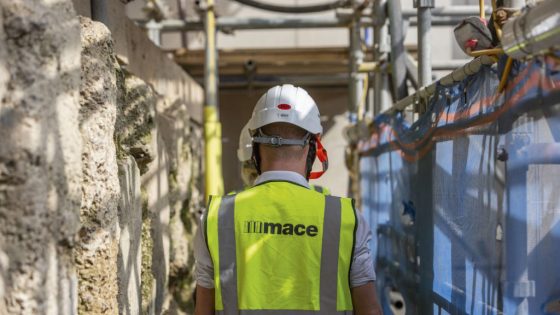

Andrew Jackson, head of Mace’s construction division, resigns three months into role.
- Jackson took over from Gareth Lewis, aligning with a broader executive reorganisation.
- Mace’s deputy chief executive, Jason Millett, steps in as interim leader for the transition.
- Jackson’s departure coincides with Mark Reynolds’ announcement to step down as CEO at 2024’s end.
- Mace is adapting its leadership to foster a forward-thinking growth strategy.
In a surprising move, Andrew Jackson has decided to step down from his position as head of Mace’s construction division after a short tenure of just three months. Jackson assumed leadership following a significant executive reshuffle in July, where he replaced former chief executive Gareth Lewis. This change comes as the company navigates through a transitional phase in its leadership structure.
During this interim period, Mace has appointed its deputy chief executive, Jason Millett, to oversee the construction division. Millett, who also heads Mace Consult, will serve in this role whilst the company searches for a permanent successor. This leadership transition is critical to ensuring continuity within the firm’s strategic operations.
Jackson, who prior to this appointment had been a part of Mace for nearly a decade, held significant roles including chief operating officer of Mace Construct and head of both the residential and data centre operations. His departure is attributed to ‘personal reasons’, though his influence during his tenure has been noteworthy, driving considerable growth and positively impacting Mace’s construction teams.
This executive shift is closely aligned with the forthcoming departure of Mark Reynolds, the current CEO, who will be stepping down by the end of 2024. Reynolds, who has declared his intention to continue as chair and co-chair of the Construction Leadership Council, had earlier communicated the necessity for a new executive structure to propel Mace into the next decade.
Reynolds expressed his gratitude towards Jackson for his years of commitment and substantial contributions, which have created a lasting legacy. He remarked on the organisational evolution aimed at adapting to a progressive growth strategy, which is pivotal at this juncture for Mace. As the company positions itself for the future, these leadership adjustments represent a strategic alignment with its long-term vision.
Mace’s leadership changes signify a strategic adaptation to future challenges and growth.

