
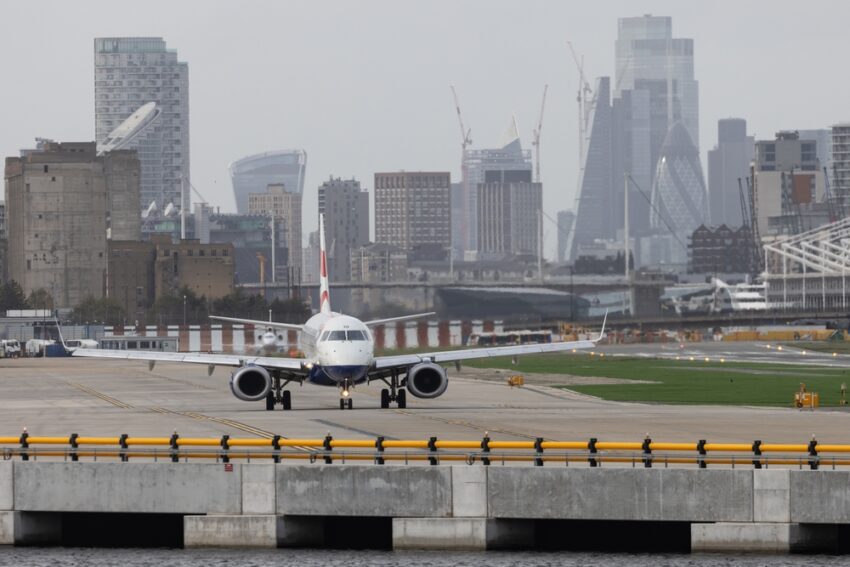

London City Airport, a key player in the UK’s aviation sector, has secured a significant financial lifeline of £130 million. This initiative aims to mitigate mounting debt amidst a sluggish recovery in business travel.
The capital, sourced from Canadian pension funds and Kuwait’s Wren House, is poised to support the airport’s operational stability as it navigates prolonged financial difficulties.
Financial Injection as a Strategic Move
In a significant move to bolster its economic position, London City Airport has received a vital financial injection totalling £130 million. This funding comes amidst a challenging period where business travel has not yet fully rebounded from pre-pandemic levels. The substantial sum has been provided by a consortium that includes Canadian pension funds such as AIMCo, OMERS, and the Ontario Teachers’ Pension Plan, alongside Kuwait’s Wren House.
Challenges in Passenger Recovery
Despite the fresh capital, London City Airport faces an arduous path to recovery. In 2023, it recorded 3.4 million passengers, a decrease from the 5.1 million passengers seen in 2019. This sluggish recovery is compounded by the government decision to block expansions of weekend services, potentially hindering efforts to reach increased passenger caps.
Forecasts for 2024 suggest a rise to four million passengers, yet this figure remains 20% shy of pre-pandemic statistics. The airport, heavily reliant on corporate travellers, lags behind larger counterparts like Heathrow in regaining its former passenger volumes.
The Shift in Travel Trends
The environment for London City Airport is evolving, with a marked shift in the type of travel. Leisure travel now constitutes close to 60% of passenger traffic, a notable change from its previously corporate-dominated demographics. This shift requires the airport to adapt to new market demands and transform its service offerings accordingly.
A spokesperson from the airport noted that they have observed consistent passenger growth each year since the pandemic, which aligns with increased leisure travel. This change provides a strategic opportunity to diversify and innovate service offerings that cater to a broader audience base.
“Since the pandemic, we have seen year-on-year passenger growth,” commented a representative of the airport, emphasizing that leisure travel now represents a significant portion of airport traffic.
Ownership and Financial Strategies
This financial boost represents another chapter in the airport’s complex ownership saga. Initially sold by Irish property tycoon Dermot Desmond, the airport was later acquired for £2 billion by a Canadian-led consortium in 2016. The current shareholder group has demonstrated a long-term commitment to the airport’s growth and sustainability.
The infusion of funds is poised not only to alleviate debt and support ongoing operational costs but also to prepare the airport for pivotal refinancing talks. These discussions will focus on over £700 million in loans coming due by March 2026, a critical juncture for the airport’s financial health.
Capital Utilisation and Strategic Goals
With this substantial financial injection, the airport intends to streamline its debt obligations and enhance its liquidity position. The funds will facilitate debt reduction and interest payment, reinforcing cash reserves and offering a buffer as economic conditions evolve.
By fortifying its financial foundation, the airport aims to navigate through complex refinancing negotiations. The support from committed shareholders allows the airport to maintain operational stability while focusing on long-term growth strategies.
“London City is a profitable company with supportive, long-term shareholders,” stated a spokesperson, underscoring the financial health and resilience of the enterprise in adapting to global travel dynamics.
Future Outlook and Strategic Planning
Looking forward, London City Airport’s strategy continues to adapt to changing market conditions with a focus on sustainable growth. Whether it involves tapping into emerging leisure travel markets or enhancing service capabilities, the airport is set on a path to resilience.
The financial backing assures stakeholders of the airport’s commitment to overcoming current challenges and positioning itself well for future opportunities. This strategic foresight is essential as the airport aligns its objectives with evolving passenger behaviours and market realities.
Industry Implications
The airport’s financial manoeuvres highlight the broader industry trend of reshaping post-pandemic strategies to secure financial stability. Such measures reflect an understanding of the fluctuating dynamics within the global travel sector, where resilience and adaptability remain key.
Stakeholders within the aviation industry are closely watching how London City Airport leverages these funds to stabilise operations and ensure long-term growth and competitiveness in an uncertain market environment.
London City Airport’s strategic financial move marks a crucial step in its recovery journey, aimed at bolstering its fiscal health amid prevailing travel challenges.
Through strategic investments and adaptive planning, the airport is positioning itself to meet both current and future industry demands.

