
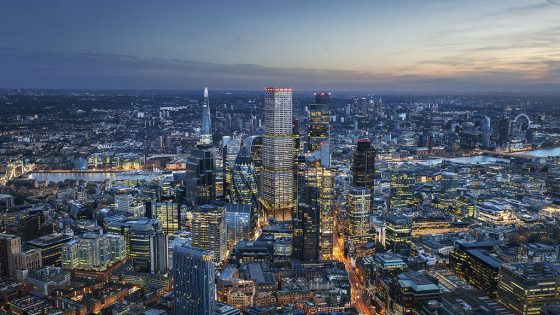

Following widespread concerns, City of London’s skyscraper project faces scrutiny.
- Lloyd’s of London objects to changes that impact public spaces.
- Revised plans propose the demolition of a historic building for new construction.
- Museums and educational spaces are central to the proposed tower’s new features.
- Future deliberations are planned following feedback from various stakeholders.
The City of London Corporation has called for additional discussions regarding the planned 73-storey skyscraper following strong objections from influential neighbours such as Lloyd’s of London. This development seeks to amend previous plans for 1 Undershaft, a site earmarked for both office spaces and public amenities. However, the recent revisions have sparked debate over potential impacts on local areas.
During a lengthy meeting exceeding three hours, the proposed changes were subjected to detailed scrutiny. The committee members postponed their decision due to unresolved ‘minor issues’. These discussions were generated after an application was submitted to modify the tower’s initial design approved in 2019. The alterations feature increased building height under the aegis of Stanhope as the development lead, backed by Singapore-based Aroland Holdings.
A significant point of contention arose from Justin Black of CC Land, who voiced concerns about the adverse effects on St Helen’s Square. The proposed changes could result in a drastic reduction of public open space, losing nearly a third of its current area. Such a development would not only affect the aesthetics of the city cluster but could also disrupt community accessibility and usage.
Bruce Carnegie-Brown, chairman of Lloyd’s of London, reinforced these apprehensions through a formal letter, indicating that the restructuring might detrimentally influence the insurance sector situated nearby. Moreover, Alderman Charles Bowman highlighted that this project might pose risks to the operational viability of the financial district, particularly the insurance industry, emphasising potential economic drawbacks.
Access to the promised public realm through elevators rather than at street level has also prompted concern among committee members. They urged negotiations between the developers and city officers to resolve these issues, ensuring that essential public engagements are not hampered by logistical constraints. The project’s repercussions, such as the planned demolition of the St Helen’s Building, remain under scrutiny.
Notably, the Museum of London has shown substantial support for the project, with its director Sharon Ament lauding the allocation of top-floor spaces for educational purposes. Viewing this as an opportunity for enriching the city’s cultural fabric, Ament envisioned this as a pivotal experience for schoolchildren, guaranteed by the funding of operational costs by the developers.
Further discussions are essential before finalising the skyscraper project’s future.

