
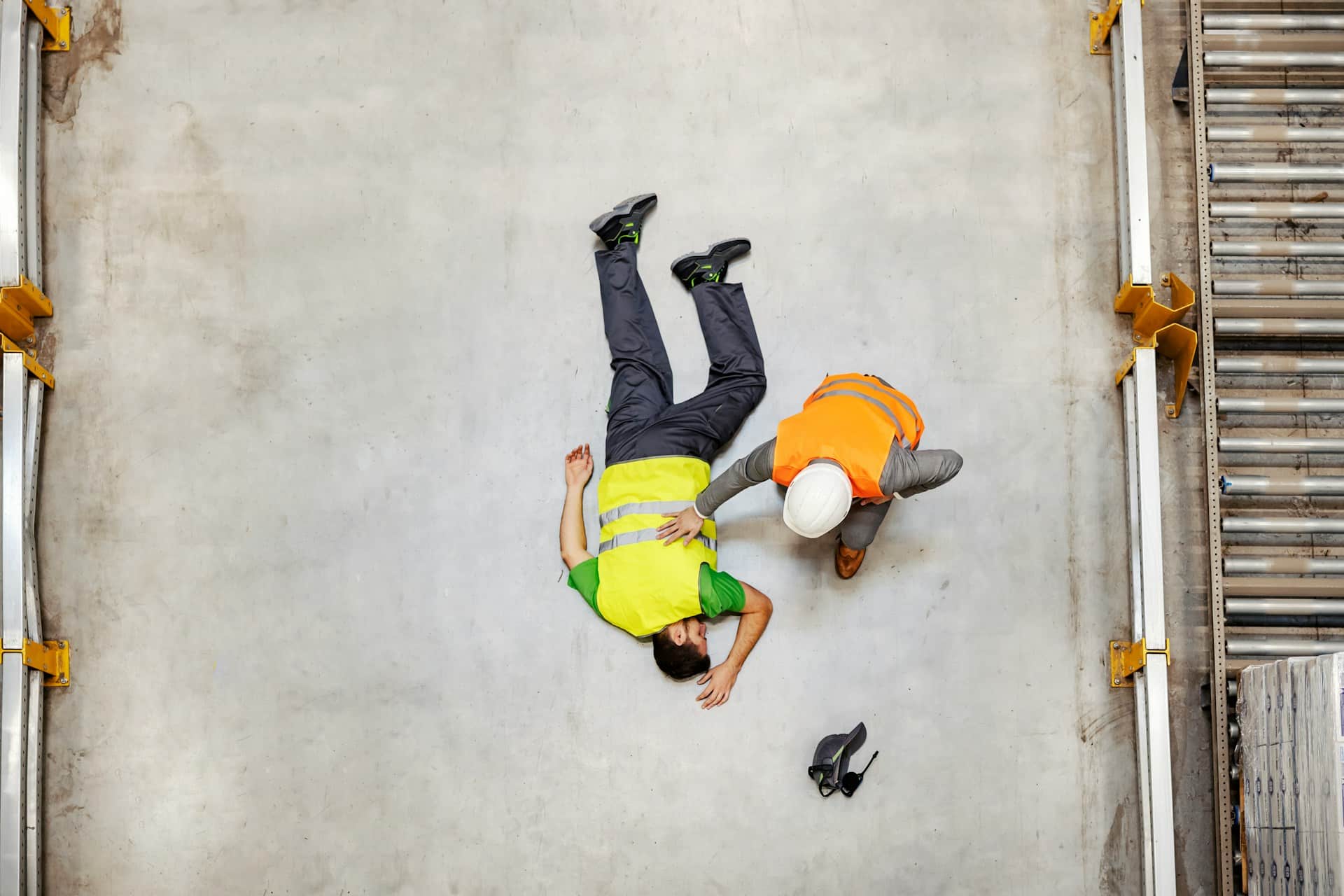

In the UK, thousands upon thousands of workers suffer an injury in the workplace each year. Given the legal, ethical and economic burden that these injuries can place on the employer, it’s essential that steps are taken to anticipate, mitigate, and prevent these injuries wherever possible.
In most cases, this means taking stock of the likeliest sources of danger.
Falls from Height and Slips, Trips, and Falls
In the UK, the leading cause of workplace death is a fall from height. While these incidents are rare, they are often fatal, especially if the height in question is greater than one storey.
According to the Health and Safety Executive, falls from height accounted for 35 fatalities out of 124. Putting guardrails around platforms, and providing staff with the right training, can help to reduce the risk.
Distinct from the problem of falls from height is that of ‘slips, trips, and falls,’ which fall into a different category in the statistics. These make up a sizeable chunk of workplace injuries. Though they occur on one level, by definition, they can still be serious. Signposting slippery surfaces, ensuring proper precautions are taken around ladders, and providing adequate lighting can be essential.
In cases where slips lead to injury, injured parties can claim compensation. If negligence contributed to the injury, then the claim might very well be successful.
Vehicle-Related Incidents and Machinery Hazards
Machinery can be a big problem, especially in factory environments where there’s a danger of a person falling into moving parts. Road vehicles tend to have a number of safety features built in, but there remains a chance that a worker will be struck or crushed by one if there aren’t sensible measures in place to prevent that from happening.
Problems might be prevented through a number of measures. Putting guardrails around dangerous machinery, providing clear segregation between vehicle-appropriate areas and walkways, and ensuring that signage is placed around these areas might all be worthwhile.
Manual Handling Injuries and Musculoskeletal Disorders
If you lift a load that’s too great for you to handle, then you put yourself at risk of musculoskeletal problems. These can occur after many seemingly safe lifts, as a result of repetitive strain. Or, the load in question might be too great for a given worker to handle unassisted.
It isn’t just lifting and carrying that can pose a physical problem. Repetitive strain injury is also a common issue for office workers. In either case, the solution is the same: make sure that workers are in good condition, and that they’re able to assess risk, and take regular breaks.
Hazardous Substances, Fires, and Environmental Risks
Sometimes, the risks are more subtle. This can make them difficult to address, since the problem can go unnoticed for years. The most famous example of this is arguably asbestos, which was causing respiratory problems for decades before it was finally banned. Mesothelioma and other asbestos-related conditions remain a problem – which is why employers have a duty to perform risk assessments, and to provide appropriate training and PPE.

