
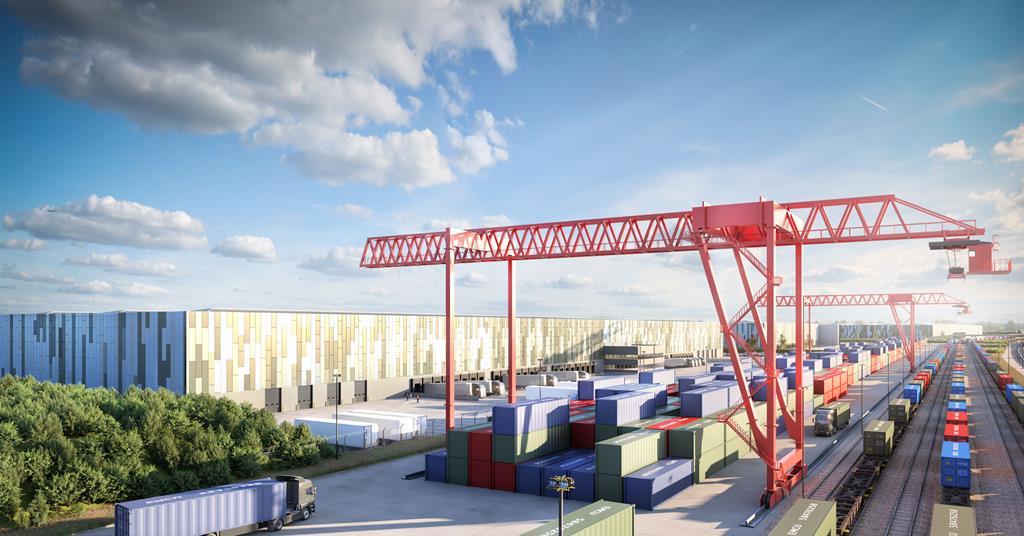

Maritime Transport has secured a pivotal role in UK logistics anew, marking a significant shift towards sustainable freight movement.
- The company has signed a major contract with Oxford Properties Group and Logistics Capital Partners to operate the strategic rail freight interchange at West Midlands Interchange (WMI).
- Located alongside 8 million square feet of prime warehouse space, WMI is poised to become the largest intermodal logistics site in the UK.
- The interchange aims to transfer freight movement from road to rail, reducing carbon emissions and congestion on the roads.
- This development is expected to yield approximately 8,500 jobs, significantly boosting the regional economy.
Maritime Transport has cemented its position in the logistics industry by securing an exclusive contract as the long-term operator of the West Midlands Interchange’s strategic rail freight interchange (SRFI), situated on the West Coast Mainline. This partnership involves collaboration with Oxford Properties Group and Logistics Capital Partners, who acquired the site in a joint venture in 2021.
Spanning 734 acres, the West Midlands Interchange includes 8 million square feet of warehouse facilities and is key to the UK’s largest intermodal logistics site. The first phase of development is currently underway, encompassing earthworks, infrastructure installation, and two community parks, reflecting its commitment to sustainability and community development.
The strategic focus of the WMI is to transition freight transport from roadways to railways, a move capable of replacing 44 to 72 HGVs per rail freight carriage and cutting carbon emissions by up to 70%. This shift not only promises environmental benefits but also aims to create approximately 8,500 jobs through development and operational phases.
John Williams, Maritime’s executive chairman, emphasised the alignment of this operation with their strategy to decarbonise logistics by increasing rail-based container movement significantly since 2019. Williams stated, “We are committed to creating the most sustainable full load supply chain network in the UK.”
James Boadle of Oxford Properties highlighted this phase as transformative for the UK’s logistics landscape, with the potential to decrease HGV traffic by 50 million kilometres annually. The demand for sustainable, connected logistics space is surging, ensuring that the project’s benefits will extend far and wide.
James Markby from Logistics Capital Partners underscored their confidence in Maritime’s ability to elevate WMI’s strategic value, stating that rail freight’s lower CO2 emissions make it essential to the future of UK logistics. The collaboration stands as a testament to Maritime’s expertise and the site’s potential.
The strategic partnership at West Midlands Interchange signifies a substantial step towards a sustainable, economically thriving future for the UK’s logistics sector.

