
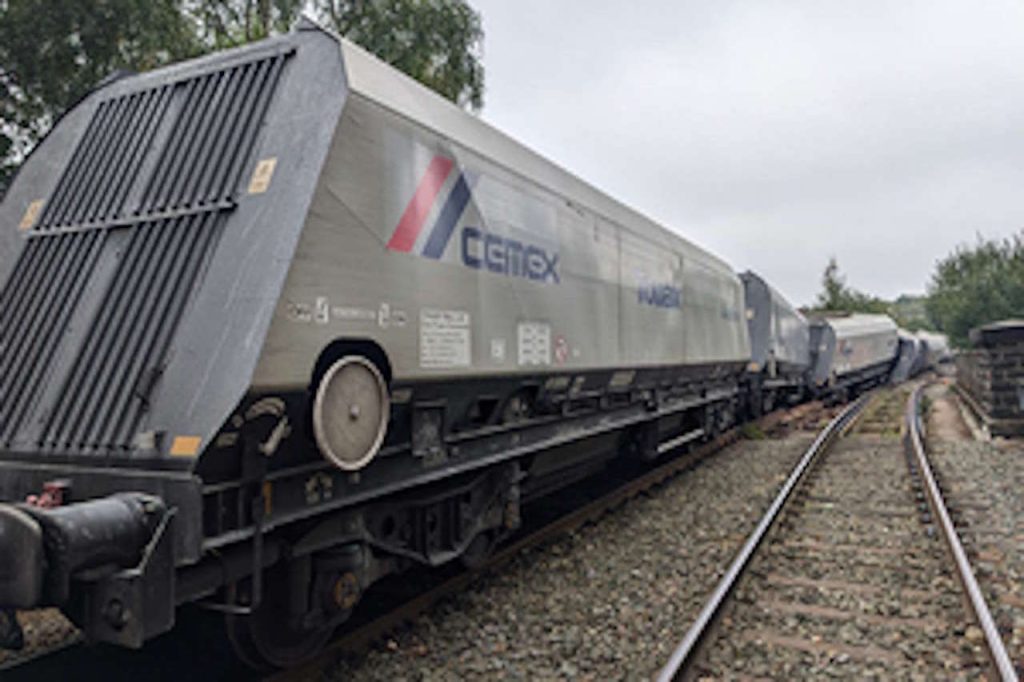

The Rail Accident Investigation Branch (RAIB) has initiated an investigation into a freight train derailment in Manchester, which caused substantial damage to infrastructure.
- On 6 September, a freight train derailment occurred over a bridge in Audenshaw, Manchester, causing damage to both infrastructure and wagons.
- No injuries were reported from the accident, however, significant damage was sustained by the railway infrastructure.
- The investigation by RAIB will look into the sequence of events, condition of wagons, and management practices that led to the derailment.
- RAIB’s findings will be published independently of railway industry investigations, aiming to enhance safety measures.
The RAIB’s launch of an inquiry into the recent freight train incident in Manchester underscores the severity of the derailment that occurred on 6 September. This derailment took place as the train traversed a bridge in Audenshaw, Manchester, and despite the absence of injuries, the damage to the railway infrastructure is extensive. The involved train comprised two class 66 locomotives and 24 wagons, all loaded with aggregate.
During the incident, although the first two locomotives and ten wagons crossed the bridge without incident, the following nine wagons did not share this fate. These wagons derailed, with the final one halting on the bridge itself. This chain of events raises significant concerns regarding the condition of the infrastructure and the wagons at the time of the accident.
The RAIB’s investigation aims to meticulously scrutinise the chronology of the derailment and assess critical factors such as the infrastructure’s state and the wagons’ condition. Additionally, the examination will delve into potential management shortcomings that may have contributed to this disruption. This analysis is solely conducted by RAIB, maintaining separation from any examinations carried out by the railway industry or its regulatory body, the Office of Rail and Road (ORR).
It is noteworthy that the RAIB has refrained from disclosing any preliminary conclusions at this stage. However, the promise to publish recommendations post-investigation is imperative for bolstering railway safety in the future. The independence of this inquiry from industry investigations ensures an unbiased perspective, crucial for unearthing all potential factors contributing to such occurrences.
The RAIB’s independent investigation aims to uncover critical insights to improve railway safety following the Manchester derailment.

