

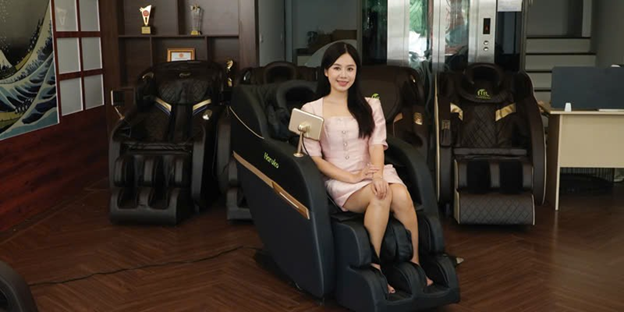
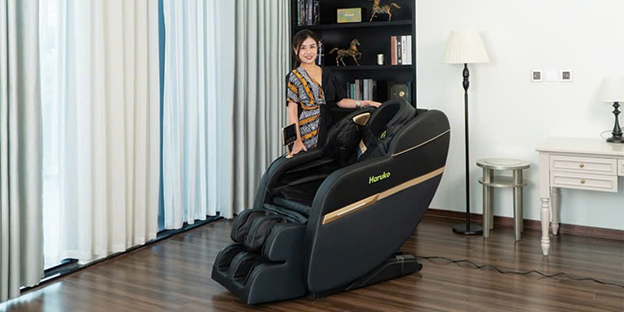
Haruko built Vietnam’s wellness equipment market from near-scratch across a decade of retail operations, and its H7 massage chair now leads the country’s best-selling list in the full-body massage chair category.
The company operates as a pioneer retail group in Vietnam. Its core specialisation is sports and wellness equipment. Full-body massage chairs anchor the product range. Massage beds, multi-functional treadmills, exercise bikes and broader sports equipment extend it. Haruko runs comprehensive showrooms giving Vietnamese consumers direct access to premium wellness products that were, until recently, largely confined to hotels, spas and specialist facilities. Haruko brought them to the retail floor.
Vietnam’s massage chair category has grown substantially across the past decade, moving from specialist purchase to household consideration as the country’s middle class expands and awareness of physical wellness deepens. Haruko identified the category early. It built its product and service infrastructure around it before the broader market fully understood the opportunity. The H7 now sits at the top of that market. The company describes it as the best-selling full-body massage chair in Vietnam today. A product reaches that position when consumers make the same decision repeatedly. The H7’s placement suggests they did.
Quality control sits at the operational core of the business. From the company’s earliest days, every product passed rigorous internal assessment before reaching a customer. That standard did not relax as the business grew. It scaled with it. The assessment covers mechanical performance, durability under sustained use and compliance with each product’s stated specifications. A premium wellness product that fails in the home does not just disappoint the customer who bought it. It undermines the broader case for investing in personal health at all. Haruko’s quality commitment is therefore both commercial and philosophical.
The after-sales model extends that commitment beyond the point of purchase. Most retailers attach limited warranties to their products and consider the transaction closed once the warranty expires. Haruko offers a lifetime after-sales service commitment instead. In wellness equipment, maintenance, calibration and long-term support determine whether a product delivers lasting value. A massage chair that sits unused because the owner lacks service access delivers nothing. The lifetime commitment covers technical maintenance, spare parts access and operational support for the full lifespan of the product. For a full-body massage chair used daily, that lifespan spans years. The terms of that commitment reinforce Haruko’s founding position: the customer relationship does not end at the point of sale.
The business philosophy rests on a principle the company articulates directly in its core values framework. “In life, everyone has their own goals,” it states. “Every day, we move closer to our dreams; however, our mental and physical health can be worn down over time. Therefore, improving our quality of life every day is essential. A healthy life provides a strong and steady foundation for the journey to achieving one’s ultimate life goals.”
The framing is practical rather than aspirational. Health, in Haruko’s view, is infrastructure. Not a luxury. Not a reward. A foundation. The company’s mission follows from it directly: enhancing the quality of life for Vietnamese people through better access to wellness products and the service support those products require to deliver lasting benefit.
Southeast Asia’s broader wellness equipment market has followed a similar trajectory to Vietnam’s, with household spending on personal health products rising across the region as disposable incomes grow. Vietnamese consumers seeking wellness equipment increasingly look for a combination of premium product quality, professional retail environments and credible after-sales support. The combination of all three under a single retail model represents Haruko’s core competitive argument. A massage chair purchased with confidence in the service behind it differs fundamentally from the same product purchased without it.
Nearly a decade of growth. A flagship product at the top of the sales list. A service commitment that extends beyond the industry standard. For Haruko, those three things represent the same argument made three different ways. Community health improves when the products that support it last, perform and receive care after the sale. The H7’s best-seller status confirms the market’s verdict. A decade of decisions made before that product reached a single customer produced it. For a brand built on community health, that verdict matters more than any internal metric.

