
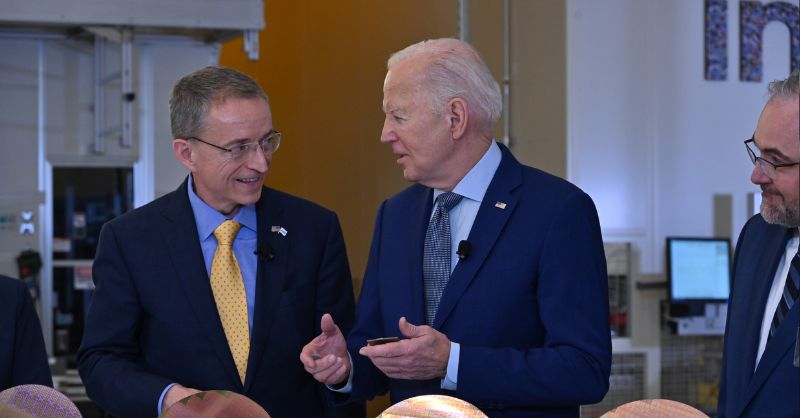

Intel is set to receive a substantial $3.5 billion in federal grants to bolster its semiconductor production. This initiative underscores a significant shift towards manufacturing autonomy within national borders.
These funds are targeted at reducing the U.S.’s reliance on foreign technology, particularly in military applications, as a strategy to ensure national security amidst global supply chain vulnerabilities.
Secure Enclave: Ensuring Domestic Advantage
The Secure Enclave initiative represents a strategic move by the U.S. government to establish a reliable domestic production line of advanced semiconductors. The plan emphasises the necessity of decreasing dependency on international sources, specifically those in East Asia. By allocating separate funding, the government is able to draw clear lines between military-focused semiconductor production and commercial chip manufacturing.
Despite facing stiff competition from global chip manufacturers, Intel has been positioned as a cornerstone of the Secure Enclave strategy. The initiative is inherently linked to efforts to mitigate risks associated with foreign reliance, notably from Taiwan Semiconductor Manufacturing Co. and Samsung Electronics. This decision reflects the strategic import of maintaining technological sovereignty.
Intel’s Financial Landscape and Strategic Adjustments
The semiconductor giant has weathered significant financial turbulence recently. Intensified competition from other chipmakers, particularly in the AI domain, has eroded its market share considerably. The recent announcement of $3.5 billion in funding has witnessed a modest stock price uptick, hinting at investor confidence in Intel’s direction amidst adversity.
Intel’s challenges extend beyond market competition. The company is also revising its global manufacturing plans, deciding to favour its domestic interests over certain international commitments. The emphasis remains on bolstering operations in Arizona and Ohio while handling external pressures from alternative global manufacturers like TSMC.
The Broader Implications of the CHIPS and Science Act
The CHIPS and Science Act of 2022 stands as a flagship initiative by the Biden administration aimed at revitalising American semiconductor manufacturing. Intel benefits significantly from the broader objectives of this act, aligning with national interests to curtail foreign dependency in technology-critical sectors.
Alongside the $3.5 billion grant, Intel is poised to receive substantial governmental support, including $8.5 billion in grants and $11 billion in loans. These financial injections aim not merely to fortify Intel but also to shore up the entire U.S.’s semiconductor supply chain, proving crucial for national security.
This act’s strategic importance cannot be overstated, as it dovetails with the Secure Enclave project to collectively reinforce the U.S.’s position within the global tech landscape.
Strategic Importance of Semiconductors in National Defense
Semiconductors have become indispensable components in modern military and intelligence systems. The Secure Enclave initiative is a pivotal milestone towards ensuring that the U.S. maintains autonomy over these critical technologies.
Intel’s participation in this project marks a significant step in the Pentagon’s efforts to establish a safeguard against potential geopolitical shifts that could disrupt supply lines. The dependency on foreign semiconductors embodies a vulnerability that the U.S. government is keen to rectify.
Future Prospects for Intel and Semiconductor Manufacturing
The outlook for Intel, underpinned by substantial federal backing, suggests a proactive approach to tackling existing challenges while capitalising on emerging opportunities within the semiconductor sector.
The U.S. government’s support through initiatives like the Secure Enclave positions Intel, and similar companies, to innovate and lead in semiconductor advances. This sets a trajectory not just for business growth but for technological leadership globally.
A resurgence in Intel’s fortunes could influence the broader industry, acting as a bellwether for future semiconductor manufacturing within U.S. borders.
Intel’s Role in Redefining the Semiconductor Landscape
Intel’s involvement in reshaping the semiconductor sector reflects its enduring influence and commitment to navigating the intricacies of this industry. With the Secure Enclave initiative, Intel ensures its relevance amidst evolving technological demands and geopolitical uncertainties.
The planned expansion and increased reliance on domestic facilities reflect a strategic decision to position the company at the forefront of a rejuvenated U.S. semiconductor industry. With these moves, Intel continues to solidify its foundational role in national strategic interests.
Concluding Thoughts on Intel’s Strategic Path
Intel stands at a crossroads, navigating complex challenges within the semiconductor space. The $3.5B Pentagon deal signifies a pivotal moment, underscoring the ongoing shift towards domestic technology reliance.
Intel’s strategic manoeuvres, bolstered by federal support, highlight a shift in global semiconductor dynamics.
The ongoing investment efforts signal hopes for a robust domestic manufacturing ecosystem, reducing vulnerabilities associated with foreign dependencies.

