
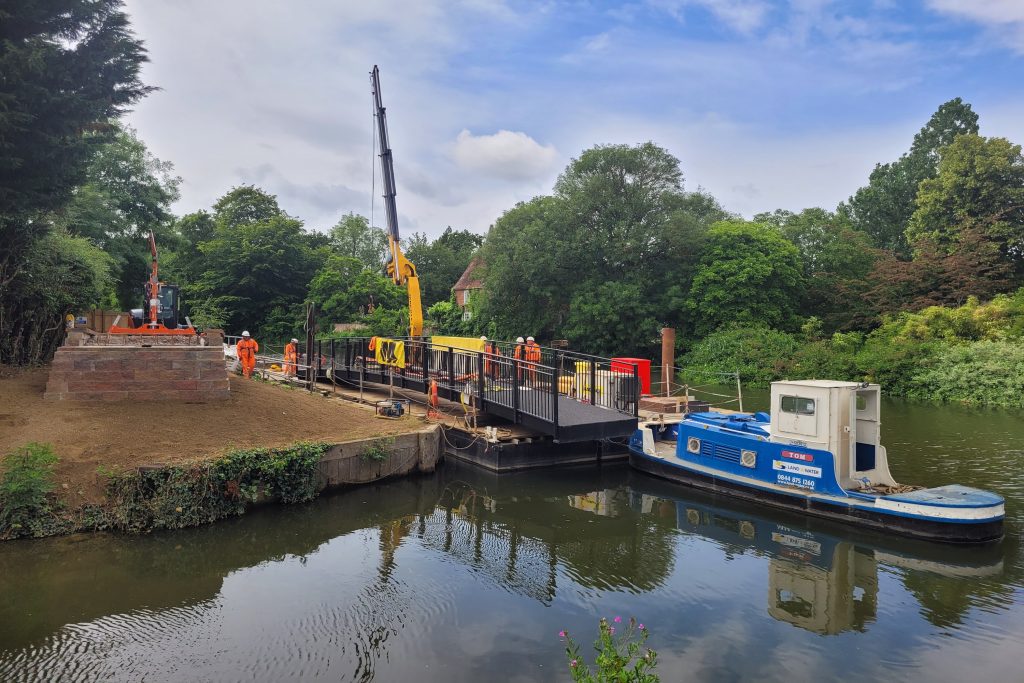

The River Medway’s new footbridge signifies a leap in sustainable engineering, constructed using innovative materials.
- Fibre-reinforced polymer recycled from fishing nets forms the bridge, blending modernity with sustainability.
- The installation process highlighted logistical expertise, with transportation from the Netherlands to Kent via road and river.
- Structural design of the bridge focuses on minimal maintenance and enhanced durability, crucial for environmental conservation.
- This engineering endeavour aligns with carbon reduction goals, a step forward in ecological infrastructure.
The Environment Agency and contractor Mackley have successfully installed a pioneering footbridge over the River Medway. The bridge, extending 16 metres in length, incorporates fibre-reinforced polymer recycled from obsolete fishing nets. This cutting-edge material marks a significant advancement in sustainable engineering practices, reflecting an innovative response to environmental challenges.
Fabrication of the bridge deck took place in the Netherlands. Subsequent to its construction, the 3.5-tonne deck was transported to Nottinghamshire where it was equipped with temporary handrails. This phase was executed with precision, culminating in the deck being transported to Yalding, Kent. The final transition involved moving the deck by barge along the River Medway, where it was then meticulously installed using a crane, showcasing adept logistical stewardship.
Strategically designed ramps on either side of the bridge utilise block forms laid by hand, reminiscent of assembling Lego bricks. This design technique notably circumvented the necessity for reinforced concrete walls, thus innovating conventional construction methodologies. This aspect of the project not only exemplifies structural ingenuity but also underscores a commitment to minimising environmental impact.
The bridge constitutes a component of the Medway Valley Walk, offering a passageway over the river’s entrance at Twyford Marina. Its strategic installation enhances the accessibility of the marina to boat users. Notably, the use of fibre-reinforced polymer significantly diminishes maintenance demands compared to traditional materials, as stated by the Environment Agency. Furthermore, the bridge’s lightweight nature necessitates smaller foundational structures, contributing to a reduced carbon footprint.
Aesthetic and functional completion of the bridge will see the addition of permanent handrails and the refinement of the ramps’ path surface later in the year. Environment Agency navigation manager for Kent, Jason Adams, remarked on the bridge’s dual advantages of lightness and strength, facilitating installation in challenging locales. He stated that the construction contributes significantly to carbon savings, thus assisting in efforts towards achieving the government’s carbon net zero target.
The River Medway footbridge project exemplifies a forward-thinking approach in environmental engineering, merging innovation with sustainability.

