
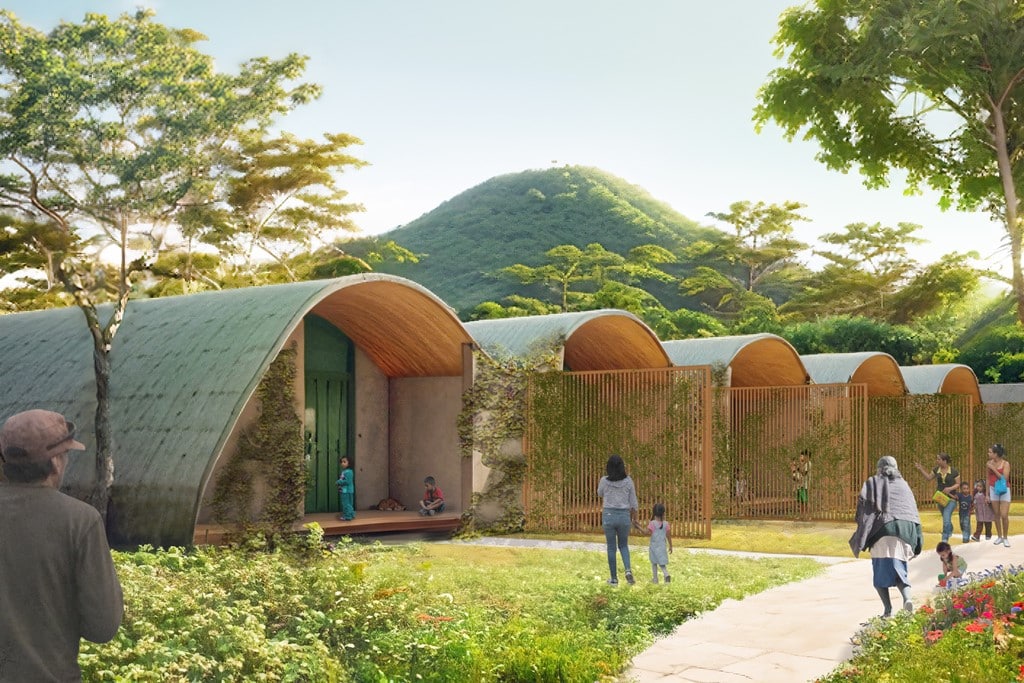

A groundbreaking new approach to refugee housing is turning heads at the Royal Academy Summer Exhibition in London.
- Spearheaded by the Norman Foster Foundation, the Essential Homes project offers a sustainable solution for long-term refugee settlements.
- The collaboration with Holcim delivers eco-conscious materials, ensuring both affordability and environmental responsibility.
- Initial insights from Latin America have been incorporated, with a focus on local adaptability and low-carbon construction.
- This pioneering initiative showcases a pragmatic response to the enduring refugee crisis, aligning with global sustainability goals.
In a bold and forward-thinking display at the Royal Academy Summer Exhibition, the Norman Foster Foundation, supported by Holcim, is showcasing an innovative design paradigm for refugee housing. The Essential Homes project, which originated as a pressing response to the protracted nature of temporary refugee camps, now presents a durable and sustainable housing alternative. These homes are designed not only to be erected swiftly but also to provide a semblance of permanency and dignity for displaced families.
The Foundation’s commitment to evolving refugee housing into economically viable and environmentally sustainable solutions is clear in this year’s exhibition. This project follows its initial prototype showcased at the 2023 Venice Biennale, which itself was the result of a creative workshop by young graduates focused on reimagining refugee accommodations. Through its collaboration with Holcim, the Foundation has advanced its original concept to now include a row house configuration, marking a significant improvement in both liveability and cost-effectiveness.
A particular focus has been placed on utilising local resources and low-carbon materials in the prototype’s development, with the Latin American landscape firmly in mind. Materials such as ECOPact low-carbon concrete and ECOPlanet low-carbon cement are pivotal in the construction, while the roofs boast a high-performance custom concrete blend. This emphasis on localised solutions ensures that the homes could potentially set a benchmark for future humanitarian constructions, particularly in regions facing similar housing crises.
The exhibition not only reveals the physical components of the Essential Homes but also delves into the conceptual underpinnings through detailed sketches and models. Norman Foster highlights the overarching narrative of this project, which began as an academic challenge to create viable housing within a matter of days. This narrative resonates strongly within the exhibition, stirring discussions on the potential scalability of such projects.
Nollaig Forrest, Holcim’s chief sustainability officer, expressed the organisation’s enthusiasm, stating: “We are excited to be continuing our collaboration with the Norman Foster Foundation on this important project to make sustainable building possible for all.” Such endorsements reflect the broader industry’s shift towards sustainability, affirming the Essential Homes initiative as a critical step forward in aligning architecture with ecological and humanitarian imperatives.
The Essential Homes initiative stands as a testament to the harmonious blend of innovation, sustainability, and humanitarian commitment in architecture.

