
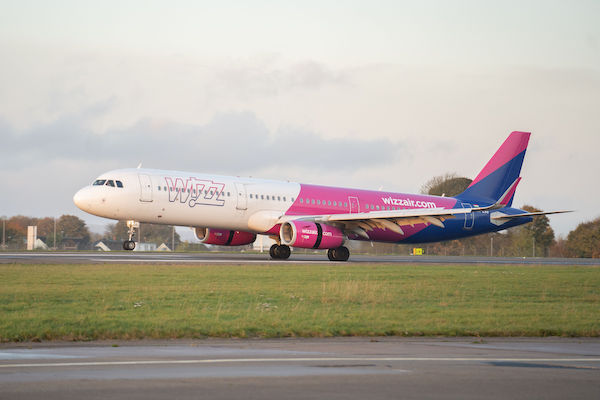

Wizz Air faced notable operational challenges in April, attributed primarily to engine issues and the timing of the Easter holiday. The Hungarian budget airline experienced a slight dip in passenger figures amidst these hurdles.
The maintenance-related grounding of several aircraft undeniably impacted Wizz Air’s operational capacity. This, coupled with an early Easter, led to a modest reduction in the airline’s performance metrics compared to the previous year.
Engine-Related Disruptions
Wizz Air encountered significant disruption as it grounded 45 Airbus aircraft due to issues with Pratt & Whitney’s GTF engines. This precaution was essential to ensure safety and compliance but resulted in a marginal decline in passengers, falling by 0.3% to 4.9 million. The load factor also saw a decrease, dropping 0.6 percentage points to 90.3%.
The necessity of recalling engines had a tangible impact on Wizz Air’s operational capacity. Despite efforts to maintain a stable level of operations, the recall led to a flattening of the capacity growth that was otherwise projected for the month.
Such technical issues underscore the challenges airlines face in maintaining fleet reliability while ensuring passenger safety. Wizz Air’s handling of the situation speaks to its commitment to upholding safety standards, albeit at a cost to short-term operational efficacy.
Seasonal and External Challenges
An early Easter further complicated Wizz Air’s April performance. The shift in this key holiday period affected typical travel patterns, with the seasonal peak in outbound travel moving to March, impacting April’s figures.
Competitively, Ryanair reported growth despite facing its own external challenges, including the Israel-Gaza conflict and a French air traffic control strike. Despite these adversities, Ryanair’s passenger numbers grew by 8%, highlighting the competitive pressures on Wizz Air.
Strategic Fleet Adjustments
In a strategic move, Wizz Air converted its Luton-based fleet to Airbus A321neos ahead of schedule. This decision aligns with their ambitious target to power 10% of flights with sustainable aviation fuel by 2030.
The investment in newer aircraft models not only promises enhanced fuel efficiency but also supports Wizz Air’s environmental goals. The decision to advance this transition illustrates a forward-thinking approach amidst operational setbacks.
Adjusting fleet composition is part of Wizz Air’s broader strategy to reduce carbon emissions per passenger kilometre by 25% by 2030. Such strategic initiatives, though initially disruptive, aim to position the airline favourably in an increasingly eco-conscious market.
Comparative Performance Analysis
While Wizz Air grappled with internal challenges, Ryanair’s April figures painted a contrasting picture. Despite operational hurdles, including flight cancellations due to geopolitical tensions and strikes, Ryanair’s passenger numbers rose to 17.3 million.
Ryanair’s load factor experienced a slight decline to 92%, yet the airline still managed to maintain significant growth year-over-year. Ryanair’s ability to sustain growth in adversity underscores the intensely competitive landscape of the budget airline sector.
The juxtaposition of these two airlines highlights different operational strategies and resilience in the face of unexpected challenges. Wizz Air’s emphasis on fleet safety and strategic investments contrasts with Ryanair’s agile management of external disruptions.
Looking Ahead: Sustainability Goals
As part of its future-forward strategy, Wizz Air aims to enhance its sustainability profile significantly. The airline aspires to lead in sustainable aviation practices within the budget airline segment.
By setting rigorous goals for sustainable aviation fuel usage and carbon emission reductions, Wizz Air seeks to align itself with global environmental imperatives. This commitment to sustainability is pivotal as the airline navigates through current operational challenges.
The transition to more sustainable operations is integral to Wizz Air’s long-term strategy, addressing both environmental responsibilities and market competitiveness.
Implications for Future Operations
The operational disruptions in April serve as a critical benchmark for Wizz Air’s future strategies. Learning from engine-related setbacks, the airline can better prepare for similar challenges.
By advancing its fleet upgrade schedule, Wizz Air is not only mitigating current issues but is also positioning itself for future resilience. This proactive stance may yield long-term benefits, both operationally and financially.
Wizz Air’s experience underscores the importance of adaptability and foresight in the aviation industry, particularly when facing technical and seasonal disruptions.
Conclusion
April’s performance for Wizz Air highlights the interplay of operational challenges and strategic initiatives. The airline navigates current disruptions while focusing on long-term sustainability goals.
Wizz Air’s proactive approach to fleet management and sustainability, despite immediate setbacks, underscores its commitment to future growth and resilience.
Wizz Air demonstrates adaptability amidst challenging circumstances, focusing on enhancing its operational capacity and sustainability. Its ongoing efforts to balance immediate operational needs with long-term strategic goals are crucial in maintaining competitive positioning.
Despite April’s setbacks, Wizz Air’s focus on safety, sustainability, and strategic growth reflects a robust approach to overcoming current challenges and preparing for future opportunities.
