
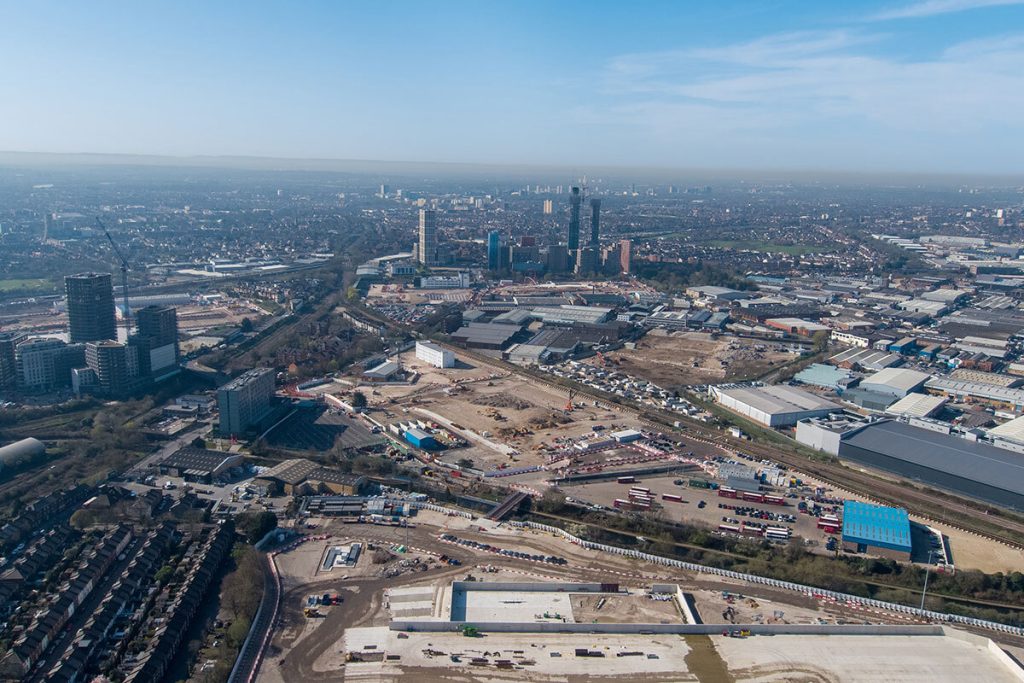

As construction advances at Old Oak Common station for HS2, train services into Paddington will face notable disruptions.
- GWR announces reduced services into Paddington as HS2’s Old Oak Common station construction progresses.
- The excavation of the “super-hub” box structure is complete, affecting future train schedules.
- Trains between London Paddington and key locations like Heathrow will face periodic disruptions from 2024 to 2028.
- The high-speed platforms under construction at Old Oak Common prompt changes in rail operations.
The announcement from Great Western Railway (GWR) clarifies that train services into London Paddington will undergo significant changes due to the ongoing construction of the High Speed 2 (HS2) Old Oak Common station. This new “super-hub” in West London requires extensive development, including the recent completion of the box structure excavation. This station will boast 14 platforms, with six dedicated to high-speed rail underground and eight for conventional services.
The strategic location of Old Oak Common will make it a crucial interchange for HS2 services and the Elizabeth line. As a result, GWR anticipates reduced service offerings between London Paddington and destinations such as Ealing Broadway and Heathrow Airport terminals in the upcoming years. While efforts are made to minimise the impact on train services, certain periods will see complete halts, especially during holidays when passenger volumes are lower.
Initial disruptions are scheduled for this year, beginning with no mainline services between London Paddington and other stations on specific dates, like Sunday, 17 November, and from Friday, 27 December to Sunday, 29 December. Reduced services will continue to impact Sundays throughout September, October, November, and December, extending potentially into early 2025.
The ongoing construction will necessitate further adjustments in the following years. By 2026, trains will need to navigate a temporary speed restriction of 96km/h through the Old Oak Common site, slightly extending journey times to London Paddington. GWR plans to reroute some services to London Euston to minimise delays, as this provides a more efficient alternative route.
An important aspect of the infrastructure development involves the proposed Euston Tunnel, which would solidify the connection between Old Oak Common and central London. Ongoing discussions with government bodies aim to finalise the funding and permissions required for this project. The future of a regenerated Euston station holds significant economic potential, with anticipated growth in both economic output and housing developments.
The strategic development of Old Oak Common station is set to reshape rail services, demanding adaptability from passengers and operators alike.

