
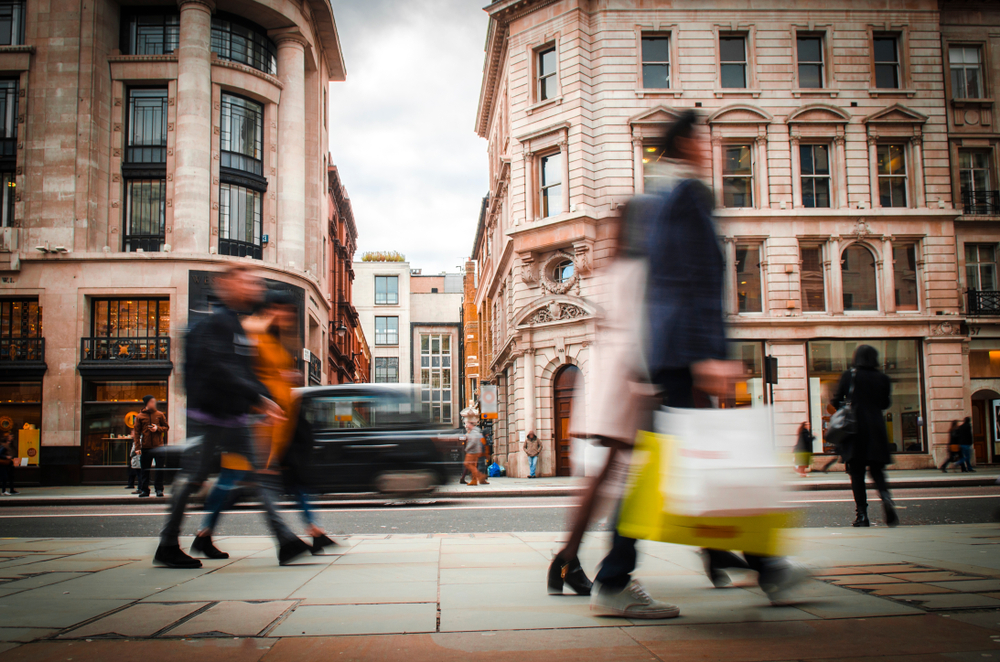

In July, the UK retail sector witnessed a notable decline in footfall, with overall figures dropping by 3.3% compared to the previous year. This downturn follows a 2.3% decrease in June, illustrating a continued struggle against consumer uncertainty.
Amidst the backdrop of political electioneering, the British Retail Consortium (BRC) has reported declines across various retail environments, including high streets, retail parks, and shopping centres. The largest drop was observed in England, with other UK regions also feeling the impact.
High Street Dynamics
According to BRC-Sensormatic IQ data, high street footfall fell by 2.7% in July, though this was an improvement from June’s 3.1% decline. These figures highlight the challenges faced by high street retailers amidst shifting consumer behaviours.
The election period, characterised by intense political activity, further contributed to a sense of hesitation among consumers, leading to a preference for online shopping and leisure expenditure over traditional retail visits. This shift underscores the need for high street retailers to adapt and innovate in response to changing consumer priorities.
Retail Parks and Shopping Centres
Retail parks experienced a footfall decrease of 0.8% year on year in July, worsening from a 0.4% decline in June. This indicates a continued trend of reduced consumer visits to these locations.
Shopping centres, traditionally seen as hubs of retail activity, saw a 3.9% drop in footfall. This marks a significant year-on-year decline, unchanged since May, pointing to persistent challenges in attracting visitors. Concerns around economic conditions and political instability have left consumers cautious, affecting retail performance.
Impact Across UK Nations
All UK nations, including Scotland, Northern Ireland, and Wales, recorded declines in retail footfall during July.
England, in particular, witnessed a substantial fall of 3.4%, reflecting the wider national trends. This aligns with the overall decline observed in other parts of the country.
Election-related uncertainty, combined with broader economic factors, has compounded the impact, requiring a strategic reconsideration by retailers nationwide.
Retailers’ Strategic Considerations
With the election behind us, retailers are now faced with making critical investment decisions. Many are optimistic about Labour’s proposals to reform business rates and planning laws, which have historically hindered local investment.
Retailers are closely monitoring these potential reforms, hoping they will revitalise retail destinations. The effectiveness of these policies in encouraging sector growth remains to be seen.
Consumer Behaviour Trends
Despite July’s warmer weather compared to June, consumer spending shifted towards holidays and leisure activities, detracting from in-store shopping.
School holidays, aligning with the election aftermath, have also influenced consumer focus away from retail, continuing a trend seen earlier in the summer. This calls for retailers to innovate in attracting consumer interest.
Physical stores must evolve to remain relevant in an increasingly competitive environment, as consumers prioritise experiential shopping experiences over routine purchases.
Industry Experts’ Insights
Helen Dickinson, of the British Retail Consortium, described the July footfall as reflective of a year-long declining trend, emphasising the need for strategic adaptation by retailers.
She stated, “Retailers welcomed Labour’s promises to reform both business rates and planning laws… If Labour can address these effectively, they could help breathe new life into retail destinations.”
Looking Ahead
As the summer season progresses, retailers remain hopeful that the easing political climate and school holidays may improve store performance.
The July downturn in UK retail footfall underscores significant challenges faced by the sector amidst political and economic uncertainties. An innovative approach and policy support are crucial for revitalising retail destinations and encouraging consumer engagement.

