
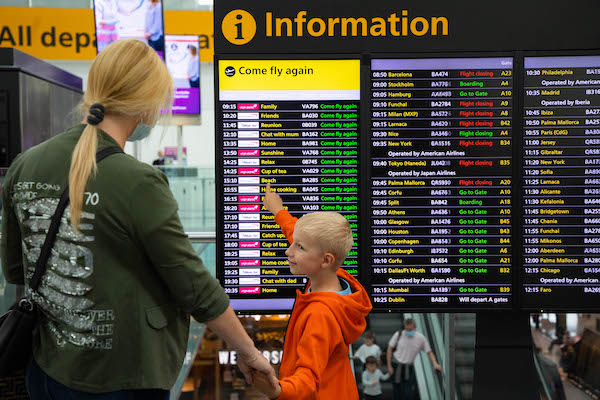

Global air passenger traffic recorded an 8% growth in July. However, supply chain issues threaten continued expansion.
Willie Walsh from IATA stresses urgent resolution of manufacturing constraints to support industry’s growth.
In July, global air passenger traffic saw a notable 8% increase compared to last year, with capacity also rising by 7.4%, as reported by IATA. This growth indicates a recovery trend, despite ongoing challenges within the industry.
Both international and domestic demand have shown positive growth, reaching new highs across several regions. Yet, the inability to meet rising demand due to supply chain bottlenecks remains a significant concern.
The aviation sector is currently grappling with severe supply chain issues that are impacting the industry’s ability to increase capacity effectively. Boeing has faced substantial delays owing to safety measures imposed by US authorities, exacerbating the situation.
Compounding these challenges, engine malfunctions in certain Airbus A320 models have led to multiple aircraft being grounded, further stressing capacity limits. Both manufacturers and suppliers are urged to expedite solutions to these crucial issues.
International travel demand climbed by 10% year on year, slightly trailing a 10.5% capacity increase.
European carriers matched demand with capacity growth at 8%, whereas the Middle East experienced a slight excess in demand compared to capacity.
In contrast, the Asia-Pacific region showed a robust demand increase of 19%, falling just short of a 20% rise in capacity, reflecting disparities across different regions.
Domestic air traffic in the United States, China, India, and Brazil stood out, witnessing a nearly 5% increase in demand.
This uptick was well above the 2.8% capacity growth, illustrating a positive upward trajectory in domestic travel.
Such growth highlights recovery in key markets, although capacity constraints could impede further developments.
Load factors, a critical measure of an airline’s efficiency in filling seats, showed promising signs with an average increase noted across IATA members.
Despite a minor decline in international load factor to just under 86%, domestic markets maintained solid performance, showcasing resilience.
Such statistics affirm the industry’s gradual move towards long-term stability despite current hurdles.
Willie Walsh, Director General of IATA, has reiterated the urgency for resolving supply chain disruptions. He emphasised the need for aircraft manufacturers to address these issues promptly to sustain growth.
These disruptions not only hinder airlines from meeting demand but also threaten the potential for market expansion, necessitating immediate attention.
While growth is evident, the disparity between demand and supply capacity underscores the need for rapid supply chain improvements.
Sustained recovery in the aviation sector will heavily depend on addressing these ongoing challenges proactively.
The aviation industry’s growth is evident, yet its future hinges on overcoming supply chain hurdles. Addressing these is vital for sustaining progress.

