
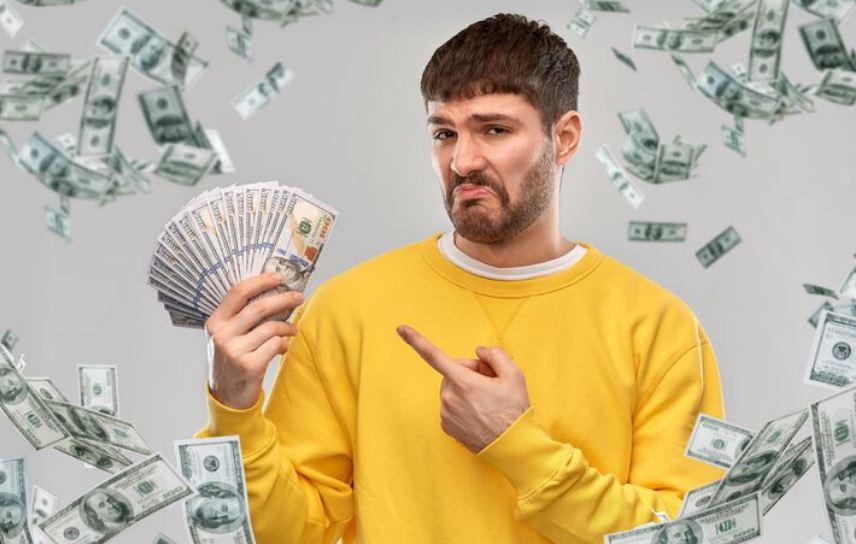

Somewhere in Lincoln, Nebraska, a man by the name of Kell Martin stood in front of a camera, confidently delivered a brief rap, and then, in a single beat, undermined the entire thing. It was easy enough to write on a Post-it note: “I got like hella money.” Before the arrogance had a chance to settle, the punchline arrived: “I got like five bucks. What?” Then, for some reason, the mention of Lincoln. The video was brief. The joke was clear. Like ten thousand other nearly successful bits, it ought to have disappeared into the feed in 48 hours. Rather, it became one of the more widespread audio memes of early 2026, garnering millions of views on various platforms, inspiring impression videos, breakdowns of explanations, ten-hour loop compilations, and at least two distinct Spotify releases from various artists who chose to turn the joke into a song.
This is how modern internet culture operates, and it’s important to focus on the process rather than just the outcome. The “I Got Like Hella Money” trend followed a pattern that consistently appears on TikTok: a piece of content that is small enough to be understood by everyone, humorous for reasons that are a little difficult to pinpoint, and structurally open enough for anyone to participate without having to comprehend context they weren’t already familiar with. In just twelve words, the difference between “I got like hella money” and “I got like five bucks” accomplishes a lot. Financial self-delusion is the subject of the joke. It’s a bravado joke. You don’t have to be broke to relate to it; all you need to do is have the slight embarrassment of thinking you had more than you actually did.
| Category | Details |
|---|---|
| Meme/Trend Name | “I Got Like Hella Money” |
| Origin Creator | Kell Martin (@shutthekellup / @thekellyeah) |
| Origin Platform | TikTok / Instagram |
| Origin Format | Short original rap/spoken word skit |
| Key Lyric/Punchline | “I got like hella money / I got like five bucks. What?” |
| Trend Peak | January–February 2026 |
| TikTok Views (Jake Benedict version) | 3.2 million |
| TikTok Views (Kai explanation video) | 1.7 million |
| TikTok Views (Faith Elizabeth impressions) | 3.5 million |
| 10-Hour Loop Version (YouTube) | 76,300+ views |
| Song on Spotify | “I Got Like Hella Money” — Warren Macoo; also Quozixx |
| GIF Indexed | Tenor (January 15, 2026) |
| Reference Link | tiktok.com/@thekellyeah |
With the caption “I got like hella money #originalrap #lincoln” and the Instagram handle @thekellyeah, Kell Martin’s original video received 1.4 million likes. For a twenty-second video from someone who wasn’t already well-known on the platform, that is a noteworthy figure. The sound moved to TikTok, where the machine for discovery and iteration is especially good at creating new content based on someone else’s audio. Jake Benedict, the creator, shared a version that attracted 3.2 million views by framing it as a trend explainer. Faith Elizabeth created an impressions-based version that achieved 3.5 million views by experimenting with different character voices saying the same lines. It’s interesting to note that a video explaining a trend received almost as many views as many of the trend videos themselves. Kai Lanier posted an explanation video that received 1.7 million views. This occurs when people hear a sound frequently enough to want to know where it originated.
76,300 people watched the ten-hour loop version on YouTube. Someone takes a brief audio clip, lengthens it to fit the duration of a workday, uploads it, and people actually watch it. This is a niche category of online content. The genre’s existence reveals something about how specific sounds become ingrained in a given situation. The meme was not made by the creators of the “10 Hour Everything” channel. Its saturation was measured. A ten-hour loop with more than 70,000 views indicates that something has truly reached a significant enough number of online users to maintain that level of ambient engagement.
Warren Macoo released a two-minute-and-thirty-four-second version of the song on Spotify, while Quozixx’s version was included with other trend-related songs in their catalog. Though their existence is instructive, neither of these is likely to become a streaming phenomenon in the traditional sense. The process of turning a viral audio clip into a Spotify single has become so standardized and condensed that it hardly qualifies as a business decision anymore. When someone hears a sound moving, they record a version, post it on DSPs in a matter of days, and capture any algorithmic or curiosity-driven traffic that the trend generates. Although the economics are weak, there is virtually no barrier to entry.
It’s difficult to ignore how much of the humor in this situation comes from the delivery’s assurance rather than the content. Kell Martin declares “hella money” with the assurance of someone declaring real wealth. Only because the setup is executed perfectly does the joke work. The punchline wouldn’t work if the video were winking at the audience right from the start. This is a recurring characteristic of the TikTok sounds that spread the furthest: they need at least one beat of sincere dedication to a premise before the undermining occurs. Even—possibly especially—when sincerity is a joke, the internet reacts favorably to it.
Observing trends like this one spread across the platform gives the impression that the entire process is moving at an ever-increasing speed. On January 15, 2026, the Tenor GIF was indexed. In a matter of weeks, the trend explanation videos began to frame it in the past tense, characterizing its arc as something that needed to be recorded rather than something that was still actively spreading. At this speed, meme culture is almost archaeological; the layers build up more quickly than most people can keep track of, and the gap between nostalgia and discovery keeps getting smaller. Within about sixty days, “I Got Like Hella Money” reached its peak, was clarified, looped, added to Spotify, and was graded as completed by the commentary class. The internet processed Kell Martin’s five words in roughly the same amount of time as it takes to plan a vacation. We are currently at that location. If the joke is true, five dollars goes a long way.
