
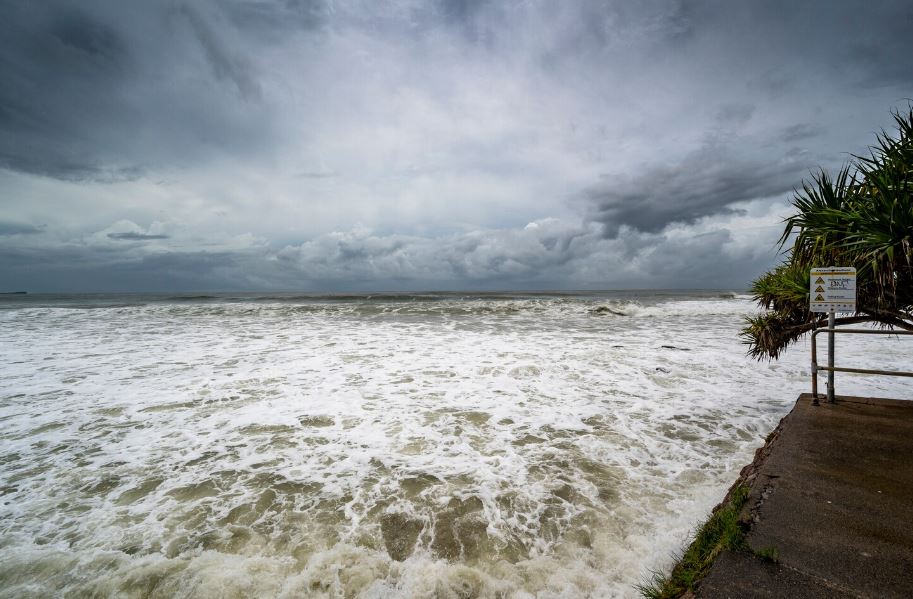

The initial pictures released from Jamaica didn’t appear authentic. The roof of Sangster International Airport retracted like foil. In Montego Bay, streetlights flickered and then disappeared completely. It seemed impossible for palm trees to bend at such angles. On October 28, Hurricane Melissa made landfall close to New Hope with sustained winds of 185 mph, which were later increased to 190 mph at their strongest offshore in post-season analysis. With that one change, Melissa unobtrusively joined a select group of people who are tied for the strongest Atlantic hurricane ever measured by maximum sustained wind.
In an era of yearly superstorms, it’s possible that speeds like 190 mph have started to lose their significance. However, the scale becomes visceral when one is standing in the aftermath, with fishing boats splintered against seawalls and roofs missing. In southern Jamaica, entire neighborhoods appeared to have been meticulously wiped out by the wind. Over 70% of the island was without power. Residents in rural parishes described the sound as a continuous metallic roar that sounded like freight trains circling overhead, rather than a howl.
| Category | Details |
|---|---|
| Storm Name | Hurricane Melissa |
| Basin | Atlantic Ocean |
| Peak Intensity | Category 5 – 190 mph (306 km/h) sustained winds |
| Lowest Central Pressure | 892 hPa |
| Hardest Hit | Jamaica, Haiti, Dominican Republic, Cuba, Bahamas |
| Fatalities | 95 total (45 in Jamaica) |
| Official Report | National Hurricane Center – https://www.nhc.noaa.gov |
Since Melissa first appeared as a small tropical wave off the west coast of Africa in mid-October, meteorologists had been keeping an eye on it. It appeared to be just another late-season system cruising over warm Caribbean waters for days. Then something changed from October 25 to October 26. Rapid intensification was fueled by sea surface temperatures of between 30 and 31 degrees Celsius, which increased the storm’s strength by more than 50 mph in a single day. Later, aircraft reconnaissance captured a startling dropsonde wind gust of 252 mph inside the eyewall, as well as a contracting eye that was only 10 nautical miles wide. Forecasters blinked at their instruments at that number alone.
The storm was one of the strongest Atlantic systems ever recorded, with a minimum central pressure of 892 millibars. Hurricanes like Wilma in 2005 were the only ones to drop lower. There is a feeling that warmer oceans are subtly changing the upper bounds of what storms can accomplish, though it is still unclear if such extremes are becoming more frequent or just better measured.
The neighbors were not spared by Melissa. In certain areas of Haiti, rainfall approached 37 inches, causing landslides and extensive flooding. Debris was carried through villages that had just begun to recover from earlier catastrophes as rivers overflowed in a matter of hours. In the Dominican Republic, hillsides swollen by rain collapsed. A second Category 3 storm made landfall in Cuba, destroying hundreds of thousands of homes and destroying infrastructure. Ninety-five people had died in the Bahamas by the time Melissa swept through and turned north.
The estimated economic losses in Jamaica alone amount to $8.8 billion, or about 41% of the nation’s GDP. Walking through flattened groves, coffee farmers in the Blue Mountains estimated that almost half of their harvest had been destroyed. Millions of livestock were reported to have been lost. It’s difficult not to feel that the statistics hide more subdued tragedies taking place far from television cameras when you watch footage of small farmers surveying devastated fields.
But even in the midst of destruction, there were oddly personal moments. Hurricane hunters flying through the eye captured what meteorologists refer to as the “stadium effect” in one widely shared photo: towering clouds arching inward like a massive amphitheater. Above, the sky seemed almost serene, with a blue hue cutting through the mayhem. Its symmetry is unnerving, giving it an eerie beauty.
Climate scientists advise against fully blaming global warming for any one storm. Melissa’s explosive strength over very warm water, however, begs uneasy questions. Recent decades have seen an increase in the frequency of rapid intensification events, which has decreased the amount of time that communities have to prepare. In areas that are vulnerable to hurricanes, insurers and investors have started to subtly modify premiums by recalculating risk models. The idea that something that was formerly uncommon is becoming more commonplace is becoming more prevalent.
Weeks later, cleanup workers were back in Montego Bay, working under an unremarkable sky. In ditches, power lines were coiled. Roofs were punctured and covered with blue tarps. On streets where trash had been piled unevenly, kids played soccer. With obstinate persistence, life resumed as it usually does.
However, something remains. The fact that Melissa tied a 44-year-old wind record that was first set by Hurricane Allen in 1980 might be the reason. Maybe it’s the unsettling knowledge that a storm that starts out as a straightforward tropical wave can, with the correct circumstances, turn into something historic in a matter of days. There is a sense that the Atlantic basin has entered a new era as we watch this develop, one in which the intensity ceiling feels uncomfortably higher.
Meteorologists will keep analyzing data, improving models, and discussing who is responsible. Reconstruction budgets and aid packages will be evaluated by governments. However, the memories of Melissa—the noise of roofs collapsing, the unexpected blackout when power grids failed—will probably outlive the data.
Caribbean history has always been shaped by storms. The speed at which they are redefining it is what feels different now.

