
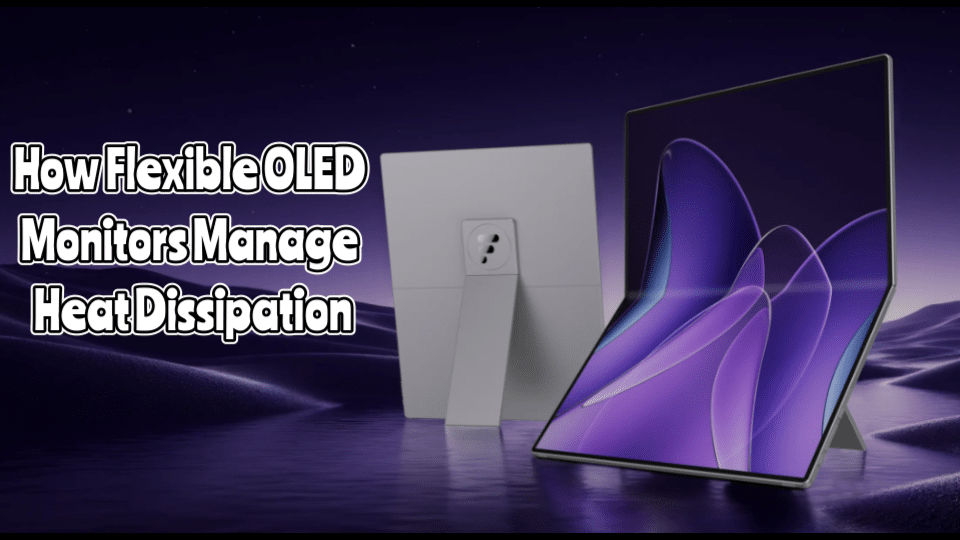

Let’s ditch the tech jargon and get real about these bendy OLED monitors and how they don’t roast themselves alive. OLED screens are one of the new inventions that are really going out of hand, but in a good way. You know those jaw-droppingly thin, insanely vibrant displays on the latest phones and TVs? Yeah, those.
Now they’re not just flat and pretty. You can fold, roll up like a poster, maybe even squish a little (don’t go full origami though, unless you’ve got money to burn). It’s basically sci-fi, but in your living room. The flexible oled display looks slick, but have you ever noticed your phone or tablet getting toasty? Yeah, it’s a thing, and with flexible OLEDs, it’s even more of a headache.
Heat Generation in Flexible OLED Displays
Alright, before we go off on a tangent about heat management, let’s actually talk about where all that heat even comes from. Now, get ready for a scoop: OLEDs are way different from LCDs, which means the invention that needs a backlight shining through. OLEDs? Yeah, they basically glow all on their own, thanks to some wild organic wizardry happening inside..
How Portable Monitor Designs Influence Cooling
Shrinking an OLED portable monitor? That’s not just a matter of making it tiny. There’s way more to it. (Seriously, it’s a whole thing.) There are many factors to consider, including size, weight, power use, and most importantly, heat. Manufacturers have to balance all of these carefully. Here’s how they do it:
-
Slim Designs with Smart Cooling
So, let’s talk portable OLED screens. These screens are insanely thin. Like, don’t even try to jam a fan in here, thin. No weird vents, no fans ready to take off like a mini jet. They just chill, literally, ‘cause the materials pull their weight. We’re talking fancy stuff with high thermal conductivity, and clever circuit designs that spread the heat around so nothing gets too toasty. No fan required.
-
Advanced Thermal Spreaders in Small Devices
Oh, and check this out, hidden under that shiny screen, you’ve usually got these crazy-thin copper foils or sometimes even sheets of graphite, just hanging out right below the OLED layer, keeping things extra chill. It’s like giving your screen a tiny superhero cape that whisks heat away from the hot spots, even if you’re binge-watching in direct sunlight or pulling an all-nighter. Pretty wild for something that fits in your backpack

-
Flexible Yet Reinforced Internal Architecture
Some brands are getting all crafted scientist, throwing in aluminum, or heck, even graphene, straight into the display for kicks. Little science magic: these materials pull double duty. They help spread heat around (so your screen doesn’t freak out when you binge Netflix for hours), and they add some backbone, too.
-
Passive Cooling via Structural Design & Heat Vents
Oh, and about cooling? The fancy models sneak in tiny vents along the edges or frame. Imagine telling your friends your screen’s got its own AC built right in. Kinda wild, right? No fans, nothing bulky. This is mainly one of the clever design techniques that let the heat move out of the screen without causing any harm.
Materials Used in Heat Dissipation of Flexible OLED Monitors
If you want to keep your flexible OLEDs cool, you can do that with the help of smart materials like copper nanowires, high-tech glue, and even graphene. So, next time you’re folding your fancy screen, just know there’s a whole lot of nerd magic keeping it from going nuclear in your backpack.
-
Copper Nanowires for Uniform Surface Cooling
Underneath the display, there’s this grid of copper nanowires just hanging out, keeping the temps even so your screen doesn’t have a meltdown. These microscopic structures reduce hot spots and help maintain steady brightness levels even under extended operational periods.
-
High-Performance Thermal Adhesives
State-of-the-art thermal bonding agents are employed to connect the OLED panel to its underlying support layers. These adhesives enhance interlayer heat transfer while maintaining flexibility and durability under repeated bending.
-
Flexible Thermo-Conductive Polymers and Films
Here’s the deal: slap some heat-friendly polymers between the OLED layers and the back support, and suddenly you’ve got a screen that doesn’t turn into a pocket-sized toaster. These things are so slim you’ll barely know they’re there, but they do all the heavy lifting for heat. No extra bulk, just better cooling.
Picking Out a Portable Monitor With Legit OLED Cooling
So, you want the best portable monitor that won’t melt after an hour of gaming or editing? UPERFECT’s got you. They’re kind of a big deal in the portable monitor world, cranking out screens with flexible OLED panels that actually stay cool. Honestly, if you’re a digital nomad, artsy type, or just hate getting your hands grimy while chasing crispy visuals, this is your jam.
Listen, if you’re shopping OLED, don’t just obsess over colour or refresh rates. Pay attention to heat management. A monitor that can’t keep its cool? You’re looking at washed-out colours, panel burnout, and sweaty palms faster than you can say warranty claim.
-
Prioritise High-Efficiency Thermal Materials
The real MVPs are things like graphene sheets or copper layers hiding right under the screen. These things? Total game-changers. They spread out the heat, so you won’t get those random lava-hot zones when you crank the brightness. No more fried fingertips. Go cheap, and you’ll end up with a monitor that’s basically a mini oven.
-
Heat-Resistant Structural Materials
Each OLED layer is made up of a material that has the ability to absorb a great amount of heat. This is super important for foldables, rollables, and any gadget you’re gonna bend or stuff in a backpack. Not having these hard films directly means the existence of faded color, burning effect, and scree that will wrap like a vinyl in a hot car.
-
Smart Brightness & Refresh Rate Control
Modern monitors? They’re kinda clever. Built-in software checks the temperature and tweaks the brightness or refresh rate on the fly. Hence, it clearly means if things started heating up, they are going to settle down by themselves, meaning no fuss. Keeps the picture sharp and your hands cool.
Bottom Line
Flexible OLED screens are now doing an amazing thing, shaking up how we imagined and utilise tech means striking visuals, wild colours with bendy structures. But if the thermal setup sucks? All that cool factor goes out the window. Heat messes up colour, destroys panels, and ruins your day. UPERFECT and brands like them are proving you can have slick, minimalist design and serious thermal engineering in the same package.
As this tech keeps evolving, expect even cooler (literally and figuratively) portable monitors that don’t sacrifice durability or looks. The future’s looking crisp, not crispy.

