
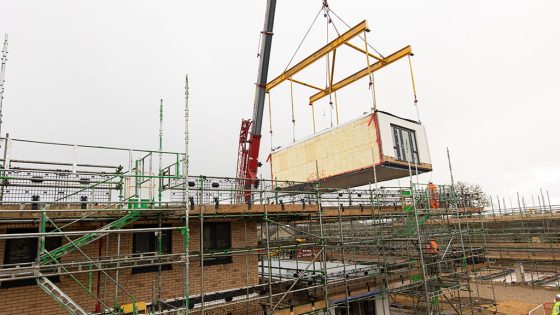

Following the collapse of Ilke Homes, Homes England has managed to recuperate a mere £128,000.
- The liquidator’s report highlighted Homes England’s role as the sole secured creditor able to recover funds.
- Unsecured creditors are unable to recoup £249.3m, with no assets remaining for distribution.
- Asset auctions, insurance claims, and halted orders contributed to the limited recovery.
- The collapse led to the loss of 1,000 jobs and left projects unfinished, including a development in Essex.
Following the financial downfall of Ilke Homes, an update from its liquidator has disclosed that Homes England has only recovered £128,000. Despite being the only secured creditor, they are still owed a substantial amount of £68.8 million. This stark difference between the anticipated recovery and actual funds reclaimed emphasises the serious financial shortfall that has occurred.
The recent liquidator’s update from AlixPartners, filed on 11 November, clarified that unsecured creditors are unable to recover any of the £249.3 million still owed to them. There remains no provision of funds or assets for these creditors, marking a bleak outlook for those financially tied to Ilke Homes.
Homes England had initially engaged in a facilities agreement with Ilke in 2021, securing fixed charges on the company’s assets. This included plant equipment and a high-speed assembly line, which were auctioned in August, yielding £908,000. However, these efforts fell short of covering what was owed.
Insurance claims helped slightly bridge the gap when Ilke’s factory was broken into, resulting in a £161,000 payout. Additionally, the cancellation of a production equipment order recovered £452,000, and the sale of build manuals and intellectual property added another £125,000 to the returns.
The consequences of Ilke’s collapse were severe, not just financially but also socially, as about 1,000 jobs were lost with the closure of its North Yorkshire factory, which halted all site activities immediately. The Meadow Grange development in Southend-on-Sea, Essex, was left unfinished, with some homes part-demolished, reflecting the tangible impact of the company’s financial ruin.
The scale of Ilke’s financial troubles was starkly apparent when the liquidators were appointed, with the firm having only £23,051 in bank reserves. Despite attempts to find a buyer, the directors were compelled to bring in AlixPartners in June of the previous year, leading to the shutting down of operational activities.
The situation with Ilke is not isolated in the modular housing sector, as demonstrated by another firm, TopHat, which recently announced workforce reductions and operational wind-downs. The market challenges faced by these companies underscore the volatility and uncertainty within the sector.
The financial collapse of Ilke Homes illustrates the harsh economic realities facing the modular housing industry.

