
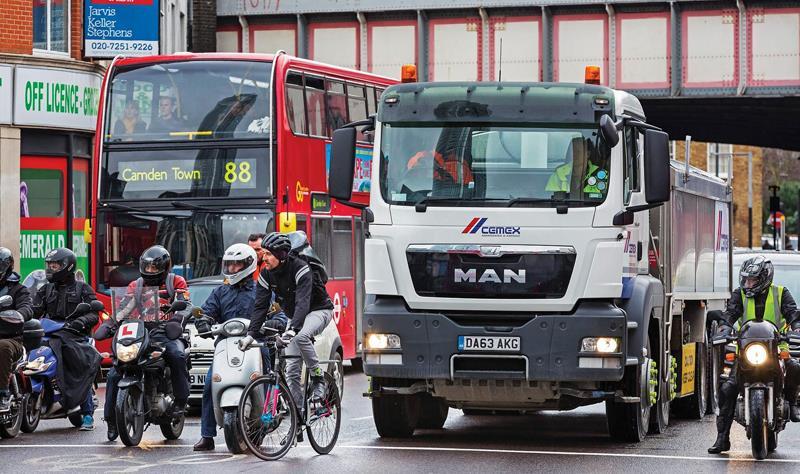

McCarron Coates warns fleet operators about the importance of the 2022 Highway Code.
- Over 25% of drivers haven’t read the Highway Code in a decade.
- A new hierarchy increases responsibility for HGV, bus, and coach drivers.
- Misunderstandings exist about cyclists’ and pedestrians’ rights.
- Fleet operators are encouraged to provide refresher courses.
Fleet broking insurance specialist McCarron Coates has issued a stark warning to fleet operators regarding the necessity of updating their drivers’ knowledge of the 2022 Highway Code. Independent research commissioned by the company reveals over a quarter of drivers have not reviewed the Highway Code in over ten years, with 20% neglecting it since passing their driving test. This lack of engagement is particularly prevalent among drivers aged over 55, a demographic likely to have passed their test several decades ago.
The 2022 Highway Code introduced significant changes, notably the ‘Hierarchy of Road Users’. This hierarchy places greater responsibility for road safety on drivers of heavy goods vehicles (HGVs), buses, and coaches, compared to other road users. Despite the importance of these changes, McCarron Coates’ survey found that 11% of respondents were unaware of the term ‘Hierarchy of Road Users’ and its implications. This figure increased to 15% among those aged over 55.
Another critical area of misunderstanding involves the rights of cyclists. The updated Code explicitly permits cyclists to ride in the middle of the road on quiet or narrow roads, as well as on roads with slow-moving traffic. However, 17% of surveyed participants incorrectly believed cyclists are prohibited from occupying this position at any time, a misconception more common among 25 to 34-year-olds, where it rose to 20%.
Equally concerning is the confusion surrounding pedestrian rights, with more than 6% of respondents, including 15% of those over 55, mistakenly believing that pedestrians lose the right of way once vehicles approach. This directly contradicts the Code’s mandate that drivers must yield to pedestrians who are crossing or waiting to cross at junctions.
Paul Coates, Director at McCarron Coates, emphasises the critical nature of understanding these rules, noting that ignorance of current safe driving standards can lead to catastrophic consequences. He highlights the importance of anticipating potential pedestrian actions as part of this responsibility. The challenges of interpretation can be mitigated by installing cameras in vehicles to provide evidence in case of disputes regarding pedestrian movements.
McCarron Coates strongly advocates for fleet operators to conduct refreshed training sessions and knowledge checks with their drivers. By implementing such programmes and maintaining records of driver participation, operators can ensure compliance and enhance safety for all road users. The firm also underscores the Code’s crucial role in legal liability, suggesting nationwide refresher tests to reinforce its principles.
Updating drivers’ knowledge of the Highway Code is vital for safety and legal compliance.

