
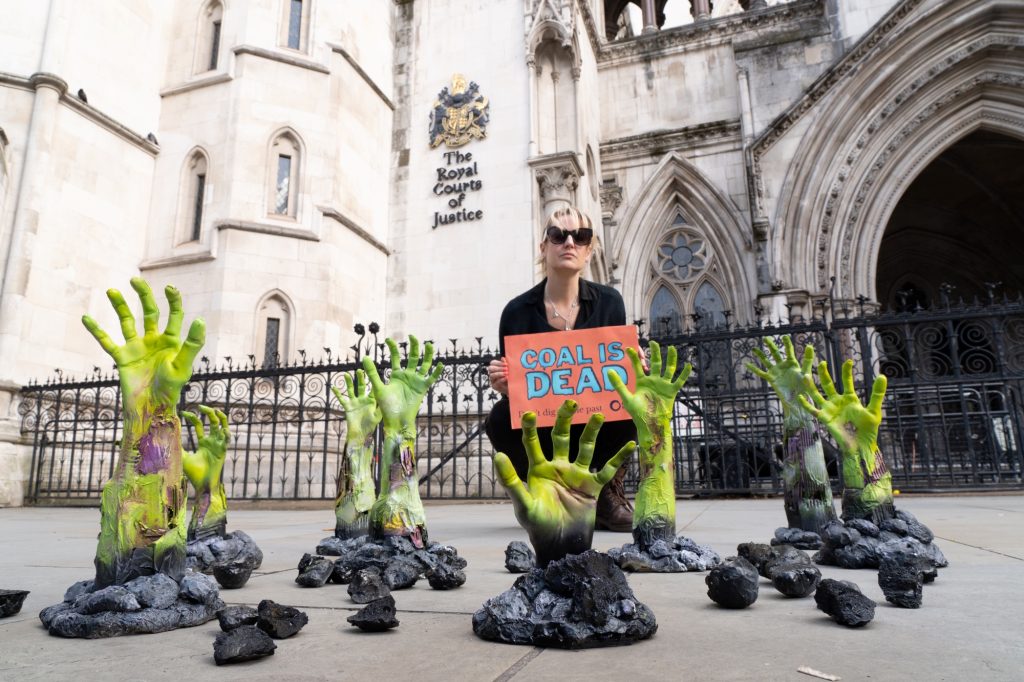

A significant legal challenge against the £165M Cumbria coal mine begins today in the High Court.
- The consent for the mine by the previous government has been admitted as unlawful by the current administration.
- Environmental groups claim the project’s lifetime emissions will exceed 220M.t of CO2 equivalent.
- The mine’s approval is criticised for neglecting climate impacts, countered by claims of potential benefits to steel production.
- Key legal arguments revolve around the use of carbon credits and international implications for new coal mines.
The High Court is set to deliberate on a pivotal case regarding the £165M Cumbria coal mine. Today marks the commencement of a legal battle where campaigners argue the previous government’s approval of the mine was illegal, a stance now echoed by the new government. The decision to allow this project has become a contentious issue, highlighting broader debates over climate policy and sustainability.
Approved in December 2022, the Whitehaven coal mine is poised to become the first new deep coal mine in the UK for three decades. The West Cumbria Mining project plans to exploit coking coal primarily for steelmaking, positioning it as a strategic asset for the industry. However, environmental groups and advisors have severely criticised the approval process, emphasising the environmental repercussions that were overlooked.
The recently established legal precedent by the Supreme Court demands that environmental impacts from burning fossil fuels must be considered in planning applications. In compliance with this ruling, it is argued that the mine’s overall emissions will surpass 220M.t of CO2 equivalent, raising questions about its sustainability. Consequently, the government has conceded the unlawfulness of its previous decision while the mining company remains resolute, defending its interests in court.
Friends of the Earth and South Lakes Action on Climate Change challenge the former Secretary of State, Michael Gove, for failing to account for the mine’s significant climate impacts. They assert that the acceptance of carbon credits as a means to offset emissions was flawed and emphasise the negative international precedent this project could establish, potentially impacting global coal markets.
The coal mine’s initial promise of bolstering the UK steel industry now appears diminished in value, as the sector shifts towards greener alternatives. Friends of the Earth argue the justification for the mine is rapidly diminishing, aligning with broader global movements towards sustainable energy sources. This sentiment has been echoed by SLACC and reinforced by recent Supreme Court judgments, highlighting the urgent need for green economic growth over resuscitating declining industries.
The Cumbria coal mine case embodies the ongoing conflict between economic development and environmental sustainability, under judicial scrutiny.

