
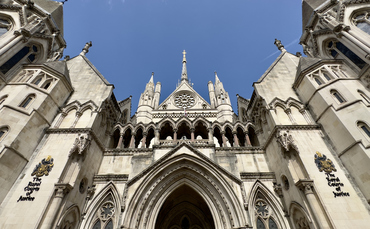

The High Court has ruled that London Capital & Finance (LCF) operated as a Ponzi scheme.
- Between 2013 and 2018, LCF collected £237 million from investors under false pretences.
- Funds were misused, with over £136 million siphoned to connected companies.
- Participants were deceived about 25% commissions paid to Surge Financial as sales agents.
- The scheme relied on new investors’ money to pay existing bondholders, leading to significant losses.
The recent High Court verdict has brought to light the deceptive operations of London Capital & Finance (LCF), labelling it as a Ponzi scheme. Over a span of five years, the firm raised a staggering £237 million from 11,600 retail investors. These transactions were presented under the guise of supposedly rigorous due diligence and promises of lending to UK small and medium-sized enterprises (SMEs). However, the reality was far from what was projected to the investors.
It was uncovered that a substantial portion of the funds, exceeding £136 million, was redirected to companies linked to the London Group. This network was under the influence of former LCF director Michael Thomson and his associates. Such actions were concealed from bondholders, who were also kept in the dark about the hefty 25% commissions provided to Surge Financial, the sales agent driving these investments.
The construct of the scheme hinged on continuously attracting new investors, which allowed the company to fulfil its obligations to existing bondholders. This characteristic is a defining element of a Ponzi scheme, where the sustainability of payouts relies not on legitimate profit generation but on an influx of fresh capital. The High Court’s findings underscore the manipulation and obfuscation employed by LCF, resulting in a catastrophic misappropriation of investor funds.
In summary, the deceptive mechanisms orchestrated by LCF and its affiliates led to severe financial losses for thousands of investors. The High Court’s decision underscores the necessity for vigilant due diligence and transparency in investment dealings to protect retail investors from such fraudulent activities.
The High Court’s ruling serves as a stark reminder of the critical need for transparency and scrutiny in financial investments.

