


- Healthcare systems around the world need to combat long-term growth of the budgetary constraints for healthcare providers.
- Analysis from Siemens Financial Services (SFS) shows healthcare delivery costs continue to rise faster than Gross Domestic Product (GDP).
- The cost for healthcare providers to deliver medical services persists in growing beyond the resources to pay for treatment and care.
- Specialist financing for healthcare technology investment is playing a key role to bridge the growing gap between resources and demand.
Healthcare spending: addressing the big issue? – a new analysis from Siemens Financial Services (SFS) – assesses the widening gap between healthcare resources and healthcare costs, and the role of financing in closing this rift.
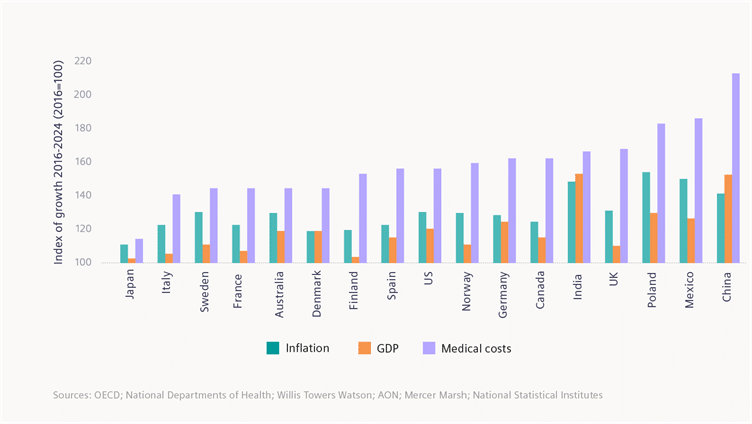
SFS’ analysis of the gap between costs and capabilities illustrates that throughout the world, healthcare delivery costs have grown over the last eight years and remain in excess of the development of Gross Domestic Product (a key indicator of a country’s resources to pay for healthcare). This is the continuation of a long-term trend. In addition, the pace of this cost growth has accelerated considerably beyond inflation.
The graph below plots the growth of healthcare delivery costs since 2016 and compares it to growth in gross domestic product and inflation, illustrating the continued widening of the gap between healthcare costs and the national resources needed to pay for them.
Accelerants of healthcare spending felt in common by all healthcare systems include an aging population, rising rates of chronic conditions, advancements in medicine and new technologies, staff shortages, regulatory and sustainability requirements, inflated energy costs, generally higher prices, and expansions of health insurance coverage[i]. The cumulative legacy of those factors has to be managed – to secure the long-term financial sustainability of healthcare systems.
Changing patterns of demand require a pivoting of services and resources. Everywhere, health professionals are seeking to harness new ways of working and modern technologies to deliver better patient outcomes at lower cost. However, reforming healthcare provision around the world comes at a price. If the capital burden of new technology acquisition could be softened, and precious funds not tied up in depreciating equipment, then healthcare systems reform, improvement and efficiency could be achieved more quickly. This is where the power of specialist financial services comes into play.
Penny Pinnock, Business Development Manager, Siemens Financial Services notes, “Financial efficiency is as important as technological efficiency. If capital costs can be converted into operating costs (by harnessing third party capital), then healthcare organisations can transform without tying up their financial resources. For instance, energy-efficiency initiatives can be financed by harnessing future savings in a flexible financing structure. Existing equipment can be upgraded to superior performance standards. This is how flexible, private sector finance can enable transformation and new ways of working.”

