
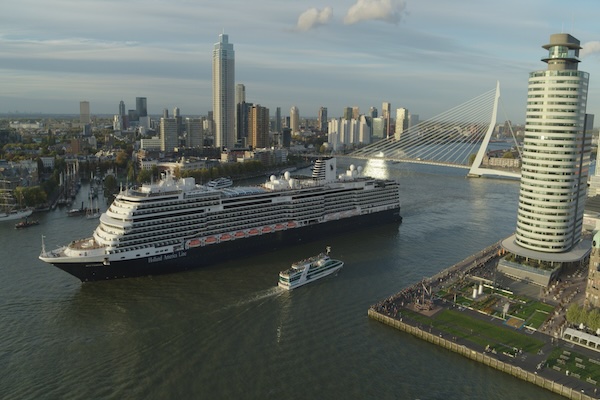

Holland America Line is leading innovation by testing biofuels in Norwegian fjords, offering a sustainable alternative for cruising.
- The cruise line’s ship Rotterdam is pioneering the use of low carbon intensity oil derived from organic waste, reducing emissions by 86%.
- Initial tests are successful, with plans to expand biofuel usage in Norwegian fjords’ Geirangerfjord and Naeroyfjord regions.
- HAL collaborates with suppliers to optimise biofuel sustainability without compromising engine performance.
- The initiative is in line with the Norwegian Maritime Authority’s endorsement of biofuels to significantly lower greenhouse gas emissions.
Holland America Line (HAL) is at the forefront of sustainability innovation within the cruise industry by initiating biofuel tests in the environmentally sensitive Norwegian fjords. Aboard their flagship, Rotterdam, one of its four engines is utilising low carbon intensity oil, derived from organic waste or residues, yielding an anticipated 86% reduction in greenhouse gas emissions.
These inaugural tests are scheduled throughout the cruises this month, with potential scaling during the summer within the Geirangerfjord and Naeroyfjord areas. HAL is distinctive as one of the initial cruise lines under Carnival Corporation to engage in a comprehensive 100% biofuel shipboard operation, building upon successful testing phases since August 2022.
Although biofuel applications have been explored within other facets of the shipping industry and at land-based research institutions, HAL’s initiative marks one of the primary, pragmatic assessments on active cruise ships. Biofuels, produced from certified organic waste or residue, avert the risks of land-use alteration and deforestation while remaining non-competitive with food production.
The methodology involves repurposing waste fats, oils, and grease, resulting in minimal emissions throughout production. The outcome is a significantly low carbon intensity with biofuels delivering an 86% emissions reduction when juxtaposed with conventional marine gas oil. Notably, HAL’s current fleet operates on biofuels without necessitating modifications to engine or fuel structures.
Collaboration remains pivotal to HAL’s sustainability endeavours, as the company aligns with partners to advance emission-reduction strategies and alternative fuel advancements. During this month, the biofuel utilised was procured at Rotterdam’s port through FincoEnergies, underlining the logistical collaboration essential for this initiative.
Endorsements validate HAL’s approach, with Alf Tore, Norwegian Maritime Authority’s director general of shipping and navigation, commending biofuels as a viable strategy to mitigate greenhouse gas emissions. He stated, “There is a need to look at all good alternatives to reduce greenhouse gas emissions in the future and we see biofuels as one of the alternatives that, with the right use and origin, will contribute to emission reductions, which we welcome.”
HAL’s president, Gus Antorcha, echoed this commitment, asserting, “Holland America Line is committed to reducing our greenhouse gas emissions and we are excited to demonstrate a next-generation fuel source that can help us toward our pursuit of net zero emissions. Converting items such as food waste into fuel is an innovative way to meet environmental challenges and we thank the Dutch government for its support.”
Further remarks from Johannes Schurmann, FincoEnergies’s international marine commercial director, highlighted the ongoing optimisation of biofuel sustainability and cost-effectiveness, ensuring no detrimental impact on engine or fuel system performance. His comments reinforce the symbiotic relationship between technological advancement and operational efficiency integral to this ecological approach.
HAL’s pioneering use of biofuels signals a transformative step toward sustainable maritime travel, aligning with global emission reduction efforts.

