
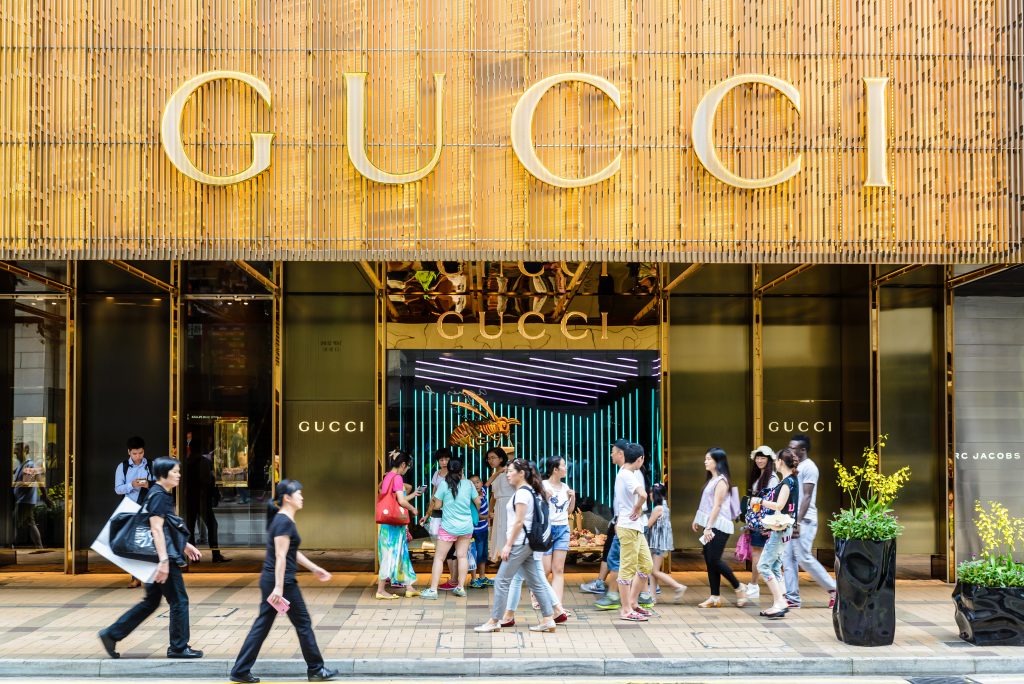

Kering, the parent company of Gucci, has recently announced a significant decrease in sales, reflecting the complexities of the global market.
Facing an 11% drop in overall revenue, Gucci’s own sales have plummeted by 18%, signalling tough times for luxury brands.
Kering’s Financial Setback
Kering, the prominent luxury group, has reported a significant financial downturn, with revenue figures showcasing an 11% decline in the first half of 2024. The total revenue amounted to €9bn (£7.57bn) in this period, affected by a reduction in both top-line figures and operating income, which fell by 42% to €1.6bn (£1.35bn). This financial strain is attributed to a challenging market environment, as reiterated by the company’s leadership.
The downturn was most prominently observed in the Asia-Pacific region, where declining store traffic and reduced consumer spending patterns exacerbated the situation. The luxury sector, historically resilient, is now grappling with unprecedented challenges that have impacted sales across all brands under the Kering umbrella.
Gucci’s Market Performance
Gucci has faced a notable decline in sales, recording an 18% decrease in revenue in the first half of 2024. This decline extended to a 19% drop in the second quarter, demonstrating challenges within the directly operated retail network, which saw a 20% fall.
Despite Gucci’s strong market presence, the brand has struggled to maintain its sales momentum amidst fluctuating market dynamics. This trend underscores the broader difficulties faced by luxury brands in adapting to the current economic landscape.
Saint Laurent and Bottega Veneta’s Contrast
Saint Laurent experienced a contraction with a 9% decrease in sales during the same period, further indicating a tough market climate.
Conversely, Bottega Veneta managed to achieve an 8% increase in sales from its directly operated retail network, despite a 19% decline in wholesale revenue. This growth signals the brand’s strategic investment in retail operations and brand exclusivity.
Such contrasting performances within Kering’s portfolio highlight the varied strategies luxury brands are employing to navigate these economic challenges. While some focus on expanding their retail footprint, others are recalibrating their wholesale operations.
CEO’s Strategic Vision
François-Henri Pinault, Chairman and CEO of Kering, has articulated a proactive approach in countering current market adversities. He emphasises continuous investments in the group’s brands to enhance product offerings and strengthen communication strategies.
Pinault asserts that these efforts are aimed at reinforcing brand exclusivity and long-term value creation, despite the current economic pressures. His commitment to strategic investments stands as a testament to Kering’s resolve to return to growth.
Impact of Global Economic Conditions
The luxury sector, including firms like Kering, is not immune to the broader global economic downturn. Reduced consumer spending, especially in key markets like Asia-Pacific, is a significant contributory factor to the sales decline.
Several luxury brands have reported similar trends, indicating that sector-wide challenges are affecting operational strategies and retail performances globally. The fluctuations in economic stability have forced companies to reassess their market positions and adapt accordingly.
Kering’s experience reflects a widespread recalibration within the luxury market, as firms strive to align their strategies with evolving consumer behaviours amidst economic uncertainty.
Kering’s Employee and Revenue Landscape
In 2023, Kering employed 49,000 people and generated revenues of €19.6bn (£16.4bn), showcasing the scale of its global operations.
The recent declines have prompted a reevaluation of growth strategies across its brands, indicating potential shifts in focus areas to bolster performance. While past achievements underline Kering’s stature, adapting to current economic conditions remains pivotal for sustainable success.
Outlook Ahead
Despite the reduced expectations for operating income in the second half of 2024, Kering remains determined to stabilise its market position. The focus remains on strategic investments and enhancing brand value to navigate the ongoing economic turbulence.
In summary, Kering’s challenges are emblematic of larger trends within the luxury sector, where adapting to economic shifts is crucial.
Through strategic investments and a focus on brand exclusivity, Kering aims to weather the current economic storm, highlighting a path to potential recovery.

