
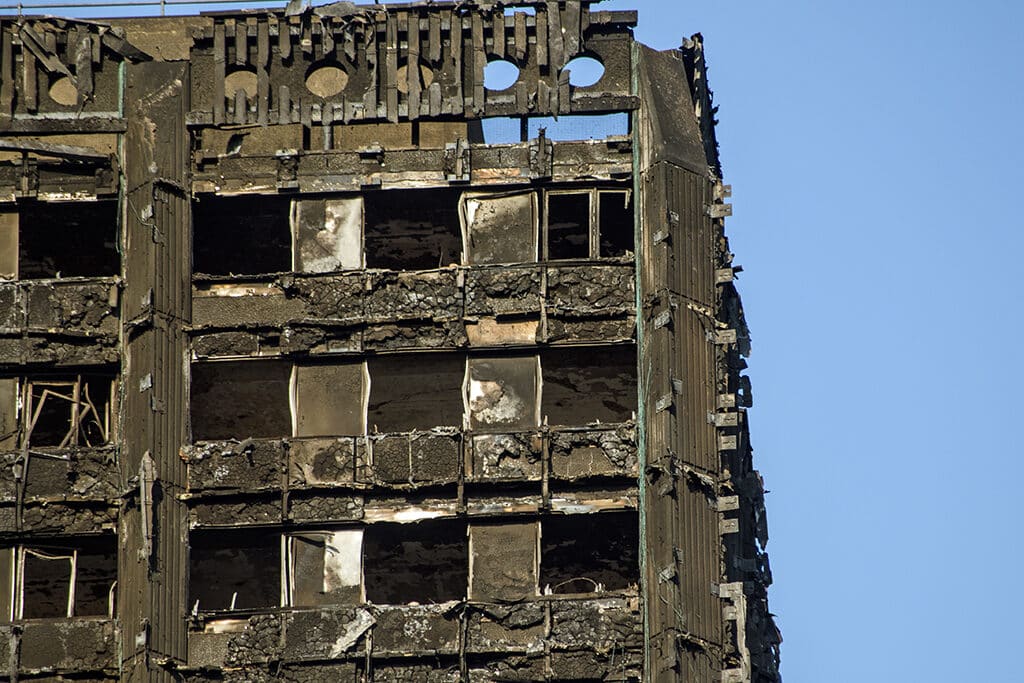

The Grenfell Inquiry’s phase 2 report delivers a damning assessment, highlighting dishonest practices among key manufacturers involved in the Grenfell Tower refurbishment.
- Kingspan is criticised for creating a false market for its K15 insulation, prioritising profit over safety.
- The British Board of Agrément and Local Authority Building Control are accused of compromising independence in product certification.
- Celotex engaged in misleading marketing of its insulation, exploiting a market for high-rise building materials.
- Arconic knowingly sold unsafe cladding, failing to rectify known fire safety issues.
The Grenfell Inquiry’s phase 2 report highlights significant dishonest practices by manufacturers involved in the Grenfell Tower refurbishment. Notably, Kingspan’s marketing of its K15 insulation was described as deeply entrenched in dishonesty, prioritising commercial gain over fire safety. Their actions not only misled the market but inadvertently created opportunities for competitors like Celotex.
Kingspan’s influence extended to regulatory bodies like the British Board of Agrément and Local Authority Building Control, which, despite being independent, were criticised for negotiating certificate wording with Kingspan. This compromised their role, leading to misleading product certifications that unintentionally facilitated the company’s dishonest marketing strategies.
Celotex came under scrutiny for its marketing of the RS5000 insulation, which falsely claimed compliance with fire safety standards through manipulated test reports. Although Kingspan was not directly responsible for Celotex’s deceptive practices, the environment they fostered encouraged such behaviour, allowing Celotex to thrive in an ethically questionable market.
The report further condemned Arconic for its prolonged knowledge of the dangerous fire performance of its Reynobond 55PE cladding. Despite being aware of its flaws as early as 2012, Arconic failed to withdraw the product from the market, continuing to endanger lives with its knowingly unsafe sales practices.
The inquiry suggests a significant overhaul in the construction industry, indicating deep-rooted failures and calling for a culture of accountability and comprehensive safety practices to prevent future tragedies.
The inquiry underscores the necessity for stricter regulations and ethical standards in the construction industry to safeguard public safety.

