

The establishment of Great British Energy’s headquarters in Aberdeen marks a significant step towards energy independence for the UK.
- Prime Minister Keir Starmer has officially confirmed Aberdeen as the headquarters for Great British Energy, with satellite offices in Edinburgh and Glasgow.
- The decision was influenced by Aberdeen’s renowned engineering prowess, expected to spearhead the UK’s clean energy transition.
- Parliament’s approval of the Great British Energy Bill signifies strong support for this initiative, with a notable majority in favour.
- Aberdeen’s ongoing advancements in green technologies further support its role as a central hub for the UK’s renewable energy efforts.
Prime Minister Keir Starmer’s confirmation of Aberdeen as the headquarters for Great British Energy, with branches in Edinburgh and Glasgow, underscores a strategic move towards securing energy independence for the UK. Officially unveiled in the King’s Speech on 17 July, this initiative seeks to ensure that British citizens benefit from domestically produced energy. The establishment of this company began with the introduction of the Great British Energy Bill to the House of Commons on 25 July, receiving subsequent approval with an impressive majority of 348 to 95 votes.
Aberdeen’s selection as the headquarters is attributed to its exceptional expertise in engineering, which is anticipated to ignite a nationwide clean energy revolution. The Department for Energy Security and Net Zero (DESNZ) emphasised that the city’s established engineering base will be essential in initiating this transformative movement. The two additional sites in Edinburgh and Glasgow are set to further capitalise on the local skills and expertise, with interim leadership from the forthcoming chief executive and the inaugural chair, former Siemens UK CEO Jürgen Maier.
John Underhill, director of the University of Aberdeen’s Centre for Energy Transition, praised the decision, recognising Aberdeen as the optimal location for this venture due to its extensive technical, commercial, and academic resources. The university, alongside institutions such as RGU and NesCol, has historically contributed to energy sector innovations and remains poised to support this initiative. Underhill highlighted the significance of Aberdeen’s over 50-year history as Europe’s energy leader, positioning it as crucial in facilitating the energy transition.
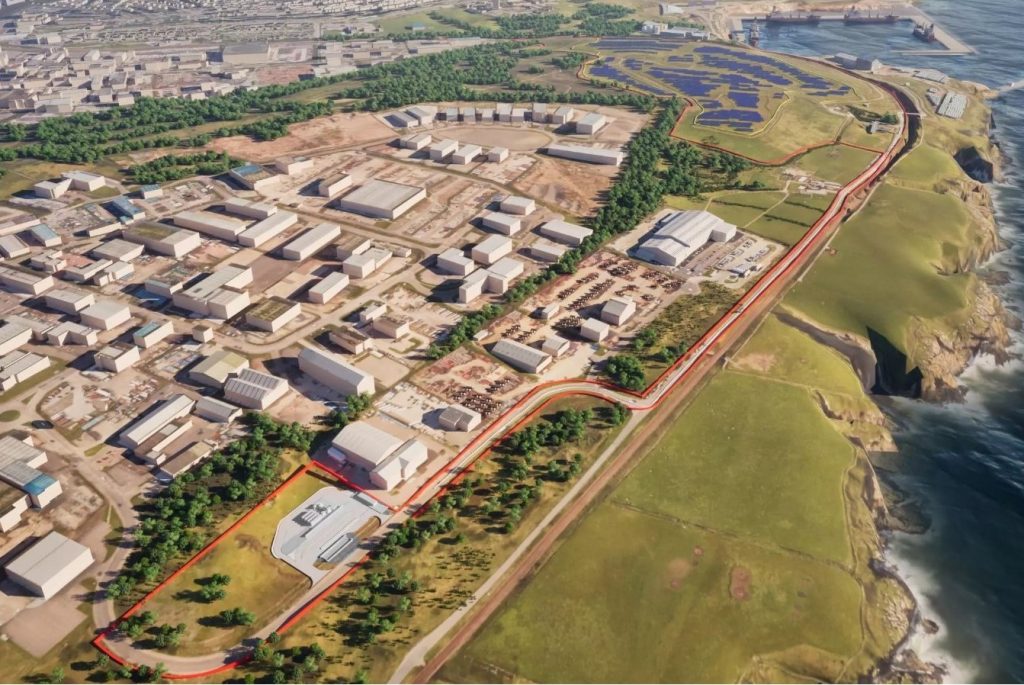
Aberdeen’s credentials in green energy are further evidenced by ongoing projects such as H2 Aberdeen, which aspires to establish a hydrogen economy. The upcoming Aberdeen Hydrogen Hub, powered by renewable energy in partnership with BP, exemplifies this vision. Additionally, the Port of Aberdeen is advancing a £4M commercial shore power project, aiming to become the UK’s first net zero port by 2040. Meanwhile, projects like the 400MW Green Volt offshore windfarm and TotalEnergies’ wind turbine-powered initiatives signal a robust commitment to sustainable energy.
In July, the government announced a collaboration with the Crown Estate to expand renewable projects, including wind farms and carbon capture. RenewableUK’s report on integrating Great British Energy highlights challenges and opportunities, emphasising the need for alignment with Great British Nuclear to achieve decarbonisation goals. Such collaborations are set to significantly boost the economy, with projections of a £25bn increase by 2035.
Great British Energy’s establishment in Aberdeen, complemented by sites in Edinburgh and Glasgow, represents a pivotal advancement in the UK’s transition to sustainable energy.

