
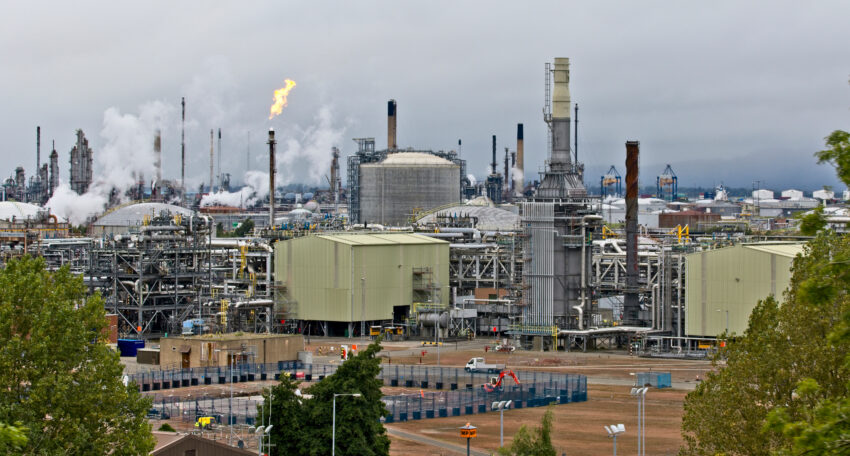

The impending closure of Grangemouth refinery in 2024 signals a significant shift for Scotland’s energy sector, impacting regional employment and the UK’s fuel supply.
As the nation transitions towards greener energy solutions, Grangemouth’s shutdown exemplifies the challenges of maintaining ageing industrial infrastructure amid declining demand.
Drivers of Closure
The decision to close the Grangemouth refinery was announced by Petroineos, a joint venture between Sir Jim Ratcliffe’s Ineos and PetroChina, reflecting a response to the declining domestic demand for motor fuels. The ban on new petrol and diesel cars set to take effect within the next decade accentuates the shrinking market for these fuels, as noted by Frank Demay, Chief Executive at Petroineos Refining.
Additionally, maintaining a refinery that has been operational for nearly a century presented significant financial burdens. The refinery’s infrastructure, opened in 1924, requires substantial investment to stay operational, which has become increasingly untenable.
Moreover, the continuous financial hurdles that the refinery has faced, accumulating losses of $775 million since 2011 despite a $1.2 billion investment, further necessitated this decision to close Grangemouth.
Impact on Employment
The refinery’s closure is anticipated to directly affect approximately 400 jobs, with significant implications for the local economy. Most notably, 280 jobs are expected to be lost in the three months following the cessation of operations, with another 100 roles maintained up to a year during decommissioning processes.
This move has elicited strong reactions from union leaders and political figures, condemning Petroineos and the government for failing to secure the workforce’s future. Sharon Graham, General Secretary of the Unite union, exemplified this sentiment, stating, “This dedicated workforce has been let down by Petroineos and by the politicians in Westminster and Holyrood.”
Economic and Supply Chain Repercussions
Grangemouth accounts for about 14% of the UK’s refining capacity, a critical role that supplies motor fuels across Scotland and northern England. The closure not only affects direct employment but ripples through the broader economy, impacting numerous small businesses linked to the refinery’s supply chain.
The Federation of Small Businesses in Scotland has expressed concerns regarding the broader economic consequences, highlighting potential risks to countless small enterprises nationwide.
Hisashi Kuboyama emphasised the repercussions, warning of the “knock-on effect on the supply chain”, which could pose risks to many more jobs than the ones directly affected at the Grangemouth site.
Future Prospects for the Site
To counterbalance the effects of the closure, Petroineos plans to transform Grangemouth into an import and export fuel terminal, aiming to continue supply to existing customers.
The UK and Scottish governments have embarked on studies to explore new uses for the site, including potential ventures into hydrogen and sustainable aviation fuel. However, realisation of these projects seems distant given the current timelines.
While initiatives such as the Falkirk and Grangemouth Growth Deal, with a total of £100 million in investment, aim to stimulate regional growth, they do not provide immediate solutions to employment or industrial activity concerns post-closure.
Governmental and Political Responses
The decision to close Grangemouth has sparked substantial political backlash. UK Energy Secretary Ed Miliband outlined his disappointment, joining Scottish officials and union leaders in decrying what they have called “industrial vandalism.”
This closure raises questions about the future of UK energy independence, especially as the nation’s reliance on imported fuel is set to increase.
In response to the energy landscape shifts, the UK government is considering utilising its National Wealth Fund to support alternative energy initiatives and repurpose the Grangemouth site for future industrial use.
Community and Industrial Impact
The situation at Grangemouth serves as a microcosm of the broader energy transition occurring across the UK. It underscores the tensions between preserving jobs in traditional industries and moving towards a more sustainable and environmentally friendly energy sector.
The complex dynamics between economic growth, employment, and new energy objectives remain at the forefront of national discussions, highlighted by reactions from affected communities and businesses.
Grangemouth’s closure inevitably prompts a reassessment of priorities as the UK navigates its path to achieving net-zero emissions while balancing economic imperatives.
The Grangemouth refinery closure embodies the challenging balance between economic survival and environmental evolution.
As the UK forges ahead with its energy reforms, decisions made today will indelibly shape the industrial and employment landscape of tomorrow.

