
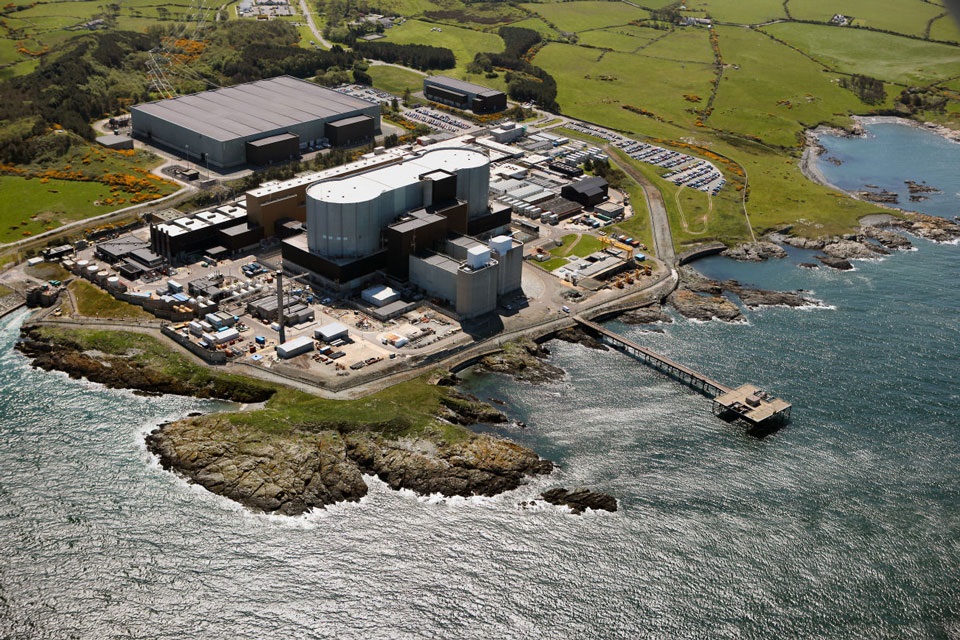

The UK government is reconsidering its nuclear strategy, particularly the Wylfa site and 24GW target.
- Energy Secretary Ed Miliband is reviewing nuclear plans, raising doubts about new development proposals.
- Wylfa’s acquisition from Hitachi aimed at boosting the UK’s energy security is under scrutiny.
- Labour’s manifesto lacks commitment to Wylfa’s large-scale nuclear development; options for SMRs are explored.
- Critics warn that abandoning nuclear projects could lead to higher energy imports and increased bills.
In recent developments, the UK government is assessing its nuclear strategy with particular focus on the Wylfa site in North Wales. Energy Secretary Ed Miliband’s initiative to scrutinise nuclear plans has cast doubt on proposals to advance the development of a nuclear power plant on the Isle of Anglesey.
The Wylfa site, having been acquired from Hitachi as announced in the Chancellor Jeremy Hunt’s Spring Budget, was initially earmarked as the preferred location for the next major nuclear power station within the UK. This £160 million deal, which also included the Oldbury site in Gloucestershire, marked the first instance of government land acquisition for nuclear projects since the 1960s, symbolising a significant step towards enhancing the UK’s energy security.
Historically, the grand £20 billion gigawatt-scale development plan for Wylfa by Hitachi was halted in January 2019, primarily due to soaring costs and unsuccessful financial negotiations with the UK government. The current reassessment by the government has brought these long-standing plans back into the spotlight, though not without controversy.
Labour’s manifesto does not pledge to develop large-scale nuclear facilities at Wylfa. However, it maintains the possibility of exploring new nuclear opportunities at the site, suggesting that small modular reactors (SMRs) might be a viable alternative. According to reports, Miliband’s approach not only affects Wylfa but also includes reconsidering the UK’s 24GW nuclear capacity target intended for 2050. This target, outlined in the Civil Nuclear Roadmap, is essential for the projected growth of the sector.
The potential shift has stirred strong reactions. Former energy secretary Claire Coutinho criticised the perceived abandonment of nuclear ambitions, suggesting that reliance on renewable energy alone is economically reckless. She argued that such a strategy could lead to increased reliance on energy imports and consequently, higher consumer bills. Meanwhile, the Department for Energy Security and Net Zero has clarified that no definitive decisions have been reached regarding the technologies to be deployed, indicating that future announcements are pending.
The reevaluation of the UK’s nuclear plans reflects broader energy policy considerations that weigh heavily on future energy security and economic impacts.

