
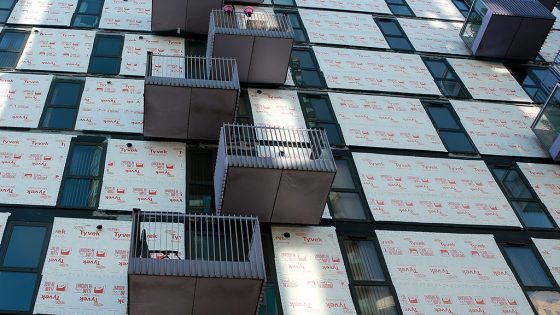

The government’s plans to remediate dangerous cladding by 2035 are falling behind schedule.
- Only 60% of buildings needing cladding remediation have been identified so far.
- Building owners are hesitant to engage due to fear of uncovering additional issues.
- Delays in the creation of the Building Safety Regulator have slowed down progress.
- Funding challenges are hindering timely remediation, especially for social housing providers.
The government is struggling to meet its 2035 target for removing unsafe cladding from buildings, a priority set post-Grenfell tragedy. The National Audit Office (NAO) highlights that only 60% of the 12,000 buildings requiring action have been identified. These buildings are predominantly over 11 metres tall, where remediation efforts are crucial to ensuring safety.
A significant factor contributing to the delay is the reluctance of building owners to come forward. The fear of discovering problems that may not be eligible for government funding has discouraged many, particularly in cases involving Right to Manage companies who may lack the resources to address such issues independently.
Compounding the problem are delays related to the new Building Safety Regulator (BSR). This body is essential for approving works on buildings over 18 metres, and issues with the quality of applications have hindered progress. The slow pace of remediation is exacerbated by protracted debates between freeholders and developers over the necessary scope of work.
Funding mechanisms also pose a challenge, especially for social housing providers. High thresholds for obtaining full remediation costs mean many providers are wary of declaring financial instability. This hesitancy further stalls the process, leaving many buildings awaiting necessary work.
The financial aspect of cladding remediation has also seen setbacks. While £2.3bn of the allocated budget has been spent, expenditure still falls short by over £1bn. The Ministry for Housing, Communities and Local Government (MHCLG) is exploring technological solutions like artificial intelligence to better identify affected buildings. However, the NAO warns of the risk that some buildings may never be included in the remediation programme.
Amidst these challenges, political figures have made recent promises to expedite the process. Prime Minister Keir Starmer proposed measures following recommendations from the Grenfell Tower Inquiry’s second phase, and Chancellor Rachel Reeves announced over £1bn for cladding remediation in the latest Budget. These developments coincide with the House of Commons Public Accounts Committee’s decision to investigate the government’s progress on this front.
Significant challenges remain for the government’s cladding removal efforts, requiring urgent attention and action.

